Buying Guide
This guide compares the best metal tool boxes using documented storage organization, steel construction, portability, closure and security, and dimensions and capacity.
A metal toolbox is useful when you need a rigid container that can be carried, stored in a vehicle, or placed on a workbench. The products in this comparison range from slim single-compartment cases to multi-drawer chests. The right choice depends less on the nominal inch size than on the interior layout, closure, and the weight of the loaded box.
Choose the storage layout first
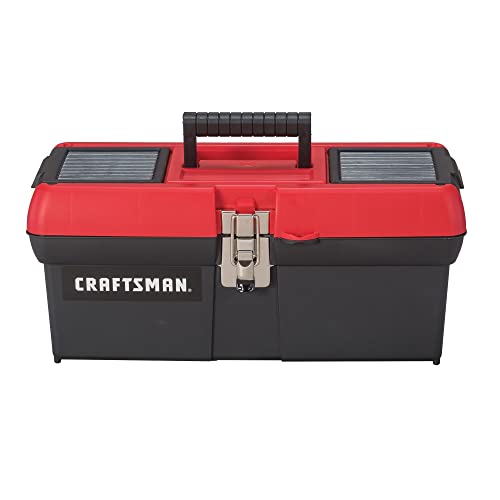
Single-compartment cases are the simplest option for a small collection of hammers, screwdrivers, pliers, and wrenches. The DURATECH, CRAFTSMAN, and BIG RED hip-roof style designs focus on a main compartment with a top handle and latch. They are generally easier to lift and place in a car than a drawer chest, but loose tools can stack together unless the design includes a tray.
A removable tray creates a useful middle ground. The Jack Boss has a removable tray divided into four compartments, while the Tosnail adds detachable dividers that can create up to 10 sections. These layouts are particularly suitable for screws, nails, bits, and other small hardware that can disappear beneath larger tools. Check the supplied inner dimensions against your longest wrench, hammer, or driver before choosing.
Drawer models are better when tool separation is a priority. The WORKPRO has two drawers and a top compartment; the Gornoxblif and VEVOR each add three drawers to a top area; and the Winado provides five drawers plus a tray. Drawers improve sorting, but they also add weight and increase the box’s overall footprint. The VEVOR and BIG RED 20-inch models offer more structured capacity while remaining portable, whereas the Winado is aimed at the largest documented load and drawer count in this selection.
Compare steel and surface details
The listings describe several steel constructions, but they do not provide identical technical details. Other cases identify carbon steel, alloy steel, or steel without a thickness. These details can help distinguish products on paper, but thickness alone does not establish real-world durability without standardized testing.
Powder-coated or painted surfaces appear across many selections. They are described as helping with cleaning or rust resistance, but users should still follow the care guidance supplied with the product. A metal case is not automatically weatherproof, and none of these listings should be treated as a substitute for a documented water-resistance rating.
Check portability before loading the box
Portability includes more than the presence of a handle. Empty weight, dimensions, grip style, and drawer count all affect how practical a fully loaded box may be. The DURATECH listing gives a 3.3-pound item weight, the Jack Boss gives five pounds, and the larger VEVOR, BIG RED, and Winado models list substantially higher weights. A heavier chest may hold more tools, but it may be less comfortable for repeated movement.
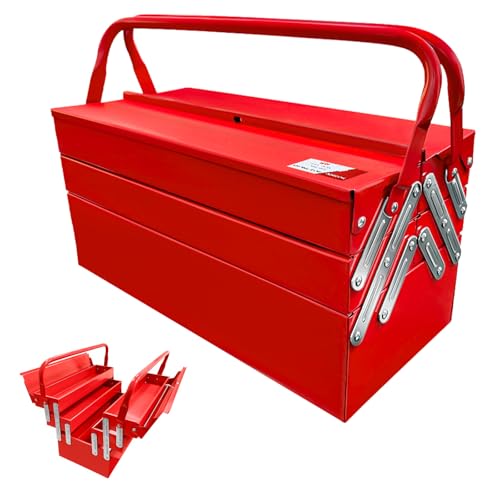
Handles also differ by design. The CRAFTSMAN uses a comfort-grip handle, the DURATECH has a plastic non-slip handle, and the Winado uses handles on both sides. The YATOINTO is designed around a central handle for its folding trays. For a vehicle toolbox, measure the trunk or storage bay and leave enough clearance to lift the lid fully. For a workbench, check both width and height so drawers or trays can open without obstruction.
Review closure and transport security
A basic metal latch keeps a lid closed, while a padlock eye allows the owner to add a compatible lock. The DURATECH, CRAFTSMAN, Tosnail, Jack Boss, and several compact cases use this kind of approach. The Jack Boss adds two stainless-steel latches, and the VEVOR uses a heavy-duty latch with an additional lock hole.
Drawer chests need another form of transport control. The Gornoxblif, BIG RED 20-inch model, and VEVOR describe automatic locking when the top lid is closed. The Winado has a steel safety lock and key. These features can help prevent drawers from sliding open while the box is moved, but they do not mean the entire toolbox is theft-proof. Check whether a padlock or key is included, because the DURATECH listing specifically notes that its lock is not included.
Use the listed dimensions as a screening tool rather than assuming the advertised inch size is usable interior space. The Tosnail separately identifies the lower interior and removable tray dimensions. Those details are more useful than the title size when you need to fit a specific tool.
For basic household repairs, a 13- to 16-inch case may be sufficient. For mixed automotive or workshop tools, a 20-inch drawer chest can offer more separation. The Winado’s five drawers and stated 330-pound maximum load are aimed at a much larger collection, while the compact CRAFTSMAN is better suited to a smaller hand-tool set. Avoid filling any box beyond its stated limits, and remember that the contents can make a portable case difficult to lift.
Final recommendation
VEVOR 20.5-Inch Metal Tool Box, 3 Drawers ranks first overall in this specification-based comparison under the published weighted criteria.
The final choice among the best metal tool boxes depends on the documented features that match your intended use.
VEVOR 20.5-Inch Metal Tool Box, 3 Drawers is the highest-scoring returned product and the first overall specification-based choice. It combines three drawers, a top compartment, EVA liners, dual ball-bearing tracks, 0.6 mm steel, a top handle, and auto-locking transport protection. Among the top metal tool boxes, it offers one of the most balanced layouts for users who want organized storage without moving to a stationary cabinet.
Choose the BIG RED Torin 20-Inch model if its three-drawer layout, two latches, and EVA liners fit your garage or workbench routine. Select Winado when five drawers and the highest stated load capacity matter most. The WORKPRO is a smaller organized chest, while Gornoxblif provides a compact three-drawer alternative.
For fold-out access, YATOINTO is the specialist choice. Jack Boss and Tosnail are better fits when a removable tray matters, with Tosnail offering the more adjustable small-parts layout. DURATECH and CRAFTSMAN remain straightforward options for lighter, simpler transport. In every case, compare the actual dimensions, empty weight, and closure style with your tools before ordering.
Frequently Asked Questions
Start with the layout: a main compartment for simple storage, a removable tray for mixed tools and hardware, or drawers for more separation. Then compare steel details, exterior and interior dimensions, empty weight, handle design, and closure features. A product with more storage is not automatically better if it is too heavy or too large for your intended location.
They are better for users who want tools separated and visible by category. The VEVOR, BIG RED 20-inch, Gornoxblif, WORKPRO, and Winado document drawer layouts. A single-compartment case can be easier to carry and may suit a smaller tool set. Removable-tray designs such as Jack Boss and Tosnail provide a compromise between open storage and portability.
The supplied listings identify the DURATECH at the current price and Jack Boss at five pounds, making them lighter documented options among the selected products. CRAFTSMAN also emphasizes a comfort-grip handle. Actual carrying comfort will depend on the tools inside, so compare empty weight and dimensions before selecting a box for frequent vehicle-to-worksite movement.
Closure systems vary. Some use a latch or padlock eye, while drawer models may use an integrated lock or automatic drawer lock. The Winado includes a steel safety lock and key in its description, while the DURATECH listing says its padlock is not included. Always check the product’s supplied contents and do not assume that a lockable eye includes a padlock.
The supplied evidence does not establish waterproof performance for these products. Several listings describe powder-coated or painted surfaces and rust resistance, but those features are not the same as a waterproof rating. Keep the box in a dry location, follow the product’s care instructions, and protect tools separately when exposure to water is possible.