Buying Guide
Choosing the best oil paints starts with identifying how you work. A painter building a limited palette may prefer eight or nine carefully selected colors, while someone teaching, experimenting, or painting varied subjects may want 20, 24, 36, or 40 colors. Tube size matters as well: the selected products range from 10ml and 12ml tubes to 50ml tubes, so the same color count can represent very different quantities of paint.
This comparison uses listing specifications and feature statements. It is not a hands-on test, and it does not treat customer opinion as evidence. The editorial scores consider pigment and color statements, working consistency, permanence or lightfastness information, palette range, and documented surface or format compatibility.
Most products here are conventional oil-based paints. Winsor & Newton Artisan is the documented exception: its linseed and safflower oils are modified so the colors accept water, allowing water-based thinning and cleanup without hazardous solvents. The listing says Artisan is intended to appear and work like conventional oil color, while also retaining a short, buttery consistency.
That distinction affects studio setup. If you share a workspace, work at home, or prefer not to use hazardous solvents, Artisan offers a clearly documented alternative. If you specifically want the conventional oil workflow, compare the consistency and medium guidance of the other selected sets instead. Do not assume that a conventional oil set has the same cleanup method as Artisan.
Match consistency to your technique
Consistency determines how paint behaves under a brush or palette knife, but the supplied evidence describes product characteristics rather than measured performance. PHOENIX Studio and MEEDEN are described as thick, creamy, or buttery. Magicfly is also listed with a thick, smooth, creamy texture. These descriptions may appeal to painters who want substantial paint on the surface or who mix colors directly.
Winsor & Newton Winton is explicitly described as slightly stiffer and as retaining brush and palette-knife strokes. That makes it the clearest choice in this group for a firmer body. Gamblin Artist Oil Colors are described as luscious, intense, and pigment-rich, while Gamblin 1980 is identified as a student-grade oil range. The supplied evidence does not give a directly comparable consistency description for every set, so avoid treating the numeric scores as laboratory measurements.
Decide how much palette variety you need
Palette size should reflect whether you prefer mixing or immediate color choice. Gamblin Artist Oil Colors Introductory Set has nine colors, and Gamblin 1980 has eight. Those compact assortments can suit a controlled setup, but they provide fewer ready-made options than the larger sets.
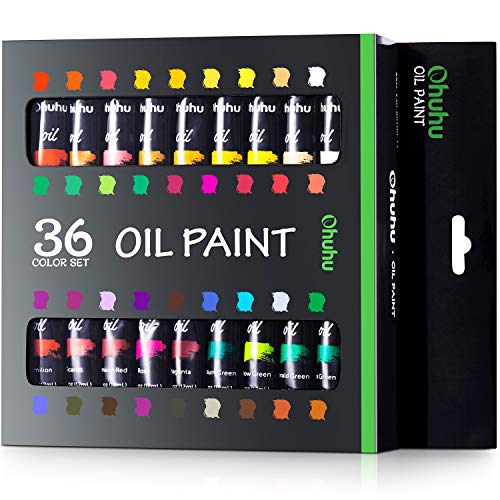
At the other end, Magicfly lists 40 colors, including metallic gold and silver plus two additional white tubes. Ohuhu lists 36 colors, and both MEEDEN and ARTEZA list 24. Paul Rubens and PHOENIX Studio each supply 20 colors. A larger palette can reduce the need to mix every starting hue, while a smaller palette can make color relationships easier to manage. The right choice depends on your preferred process, not on the color count alone.
Check tube size before choosing a set
The selected products vary substantially in tube size. Paul Rubens and PHOENIX Studio use 50ml tubes, making them the clearest options when generous quantities are central to the decision. Gamblin Artist Oil Colors and Gamblin 1980 use 37ml tubes. MEEDEN uses 22ml tubes, Magicfly uses 18ml tubes, and Winton uses 12ml tubes. Ohuhu, ARTEZA, and Artisan also use compact formats, with Artisan listed at 10ml per tube.
Tube size can affect how often a color needs replacing, especially when a painter uses a large amount of white or works on large surfaces. However, the supplied evidence does not establish actual coverage or consumption rates. Compare the stated tube volume with the number of colors and your intended project scale.
Permanence and lightfastness are important when a finished painting is expected to retain its appearance. PHOENIX Studio specifically describes excellent lightfastness and permanence. Winton says that permanent pigments were selected where possible and refers to a permanent paint film.
MEEDEN and ARTEZA provide less specific information on this criterion in the supplied evidence. Treat those differences as documentation differences rather than proof that one paint will perform better in every situation. For archival work, check the pigment information for the individual colors you plan to use.
Consider the painting surface and extras
PHOENIX Studio also lists canvas board, oil-color pads, and wood panels. Gamblin Artist Oil Colors includes a handcrafted birch panel, while Gamblin 1980 includes a cradled wood panel and solvent-free gel. These included items make those two products distinct formats rather than simple paint-only assortments.
The extras should not replace a check of the paint specification. A kit that includes a panel may be convenient for a project, but the paint selection, tube size, and formula remain the central buying considerations.
Read safety statements carefully
Several listings include safety or certification language. PHOENIX Studio cites EN 71 and ASTM-4236. These statements are included as supplied and should not be expanded into claims beyond the listing. A certification reference does not describe every studio practice, pigment, medium, or solvent used with a painting.
Final Recommendation
PHOENIX Studio Oil Paint Set, 20 Colors x 50ml ranks first overall in this specification-based comparison under the published weighted criteria.
Paul Rubens 20-Color Oil Paint Set, 50ml Tubes is the first overall specification-based choice. Its combination of 20 colors, generous 50ml tubes, fine-art pigment language, creamy texture, refined linseed oil, and stated lightfastness gives it the most complete balance across the comparison criteria. PHOENIX Studio is a close alternative for a thick, textured approach, while Gamblin Artist Oil Colors is better suited to a focused nine-color palette.
For the top oil paints in a shared studio or home setting where water cleanup is important, Winsor & Newton Artisan is the specialized pick. Winton is the better documented option for a stiffer body and stroke retention. MEEDEN, ARTEZA, Ohuhu, and Magicfly emphasize broader color assortments, with Magicfly offering the largest listed palette. Gamblin 1980 remains a compact option with an included panel and gel. In short, the best oil paints for you should match your desired consistency, tube quantity, palette strategy, and formula rather than simply maximize the number of colors.
Frequently Asked Questions
Which best oil paints are suitable for a water-mixable workflow?
Winsor & Newton Artisan is the selected product specifically developed to accept water for thinning and cleanup. Its listing says the formulation uses modified linseed and safflower oils and is designed to retain conventional oil-color working characteristics. The other selected products are presented as traditional oil-based or conventional oil colors and should not be assumed to share Artisan’s water-cleanup feature.
Are larger oil paint tubes better for large paintings?
Larger tubes provide more listed paint per color, but the supplied evidence does not establish actual coverage. Paul Rubens and PHOENIX Studio use 50ml tubes, while Gamblin’s selected sets use 37ml tubes. These formats may suit artists who expect to use substantial quantities, but the appropriate size still depends on surface area, application style, and how often a color is mixed.
Which selected set has the widest color range?
Magicfly lists 40 colors, the largest palette in this comparison. Ohuhu lists 36, while MEEDEN and ARTEZA list 24. A wider range gives more ready-made hues, but a smaller Gamblin set may suit painters who prefer to mix from a controlled group. Review the named colors as well as the total count, since two sets with the same number of tubes may cover different color families.
What should I check for permanence in oil paints?
Look for explicit lightfastness, permanence, pigment, or paint-film statements for the individual colors. PHOENIX Studio directly states lightfastness and permanence, and Winton describes selecting permanent pigments where possible. Other sets provide varying levels of information. If long-term color stability is important, consult the manufacturer’s color-specific documentation before choosing individual replacement tubes.
Which oil paint set is most focused on a compact palette?
Gamblin 1980 contains eight colors, while Gamblin Artist Oil Colors Introductory Set contains nine. These are the smallest selected palettes and may suit painters who want to organize a limited mixing setup. They offer fewer ready-made colors than the 20- to 40-color sets, so confirm that the included hues fit your preferred subjects and technique.