Buying Guide
Choosing the best organic alfalfa supplements is less about a single headline ingredient and more about how each product is grown, processed, certified, and delivered. Alfalfa (Medicago sativa) is a legume with a long traditional use as a nutrient-dense green, and modern supplements package the leaf, top, or whole herb in several formats. Buyers comparing options should weigh organic certification depth, ingredient purity, dosage strength, format, and manufacturing quality, since these factors shape both the practical daily routine and the transparency of what is actually inside the bottle. The guide below walks through those considerations in plain language so the best organic alfalfa supplements can be matched to the buyer’s routine rather than chosen at random.
Why Organic Certification Matters
Organic certification is the first signal of how the alfalfa was grown and processed. Products labeled USDA Certified Organic, or certified by equivalent bodies, document that the crop was grown without synthetic fertilizers, pesticides, or GMOs and was processed under defined organic handling rules. Look for the certifying body’s name on the label rather than a generic “organic” claim, and check whether the company also documents third-party verification of non-GMO status.
When comparing the best organic alfalfa supplements, treat organic certification depth as a hierarchy: a single USDA organic seal is the baseline, while multi-certification programs (USDA plus BioAgriCert or NPOP, for example) confirm the supply chain at multiple stages. Some products also rely on certifications such as One Cert International or Oregon Tilth, which are recognized under USDA’s National Organic Program. Reading the certification language carefully helps separate verified claims from marketing language.
Ingredient Purity and Clean Label
Clean-label supplements minimize the number of non-active ingredients. For alfalfa, the cleanest options are typically single-ingredient products containing just alfalfa leaf, alfalfa tops, or alfalfa grass powder, alongside a plant-derived capsule or a binder like gum acacia. Watch for explicit allergen exclusions (gluten, dairy, soy, nuts, eggs, fish, shellfish, yeast, sugar) and the absence of artificial colors, flavors, and preservatives.
Broader green blends can be useful when alfalfa is one ingredient among many, such as spirulina, beet root, spinach, or kale, but they shift the formula’s focus away from alfalfa-specific dosing. If the goal is to center on alfalfa, single-ingredient products will generally deliver a higher proportion of alfalfa per serving.
Dosage Strength and Serving Design
Alfalfa supplements vary widely in how much alfalfa they deliver per serving. Capsules and tinctures often provide 450 mg to 670 mg per unit, tablets commonly deliver 750 mg per tablet for a 1500 mg serving, and bulk powders are measured in teaspoons or grams. Higher-dose tablets and caplets can be convenient when a buyer wants fewer units per day, while lower-dose capsules make titration easier for newcomers.
Buyers should look at both the per-unit strength and the suggested use on the label, since serving size shapes how quickly a bottle is consumed. The best organic alfalfa supplements will state the alfalfa content clearly in milligrams per serving rather than burying it in proprietary blends.
Format is where routine preference matters most. Capsules and tablets offer pre-measured doses and travel easily. Caplets combine tablet-style dosing with a smoother swallow profile. Powders lend themselves to smoothies, juices, and recipes, while loose-leaf alfalfa is brewed as tea. Tinctures, which use glycerin or alcohol extracts, offer a liquid option for buyers who prefer drops to capsules.
Bioavailability depends partly on processing. Whole-herb powders preserve the plant’s natural matrix, while extracts concentrate specific compounds but lose others. Buyers prioritizing a traditional herbal preparation often prefer whole-herb options, while those wanting a concentrated dose may lean toward extracts.
Manufacturing, Testing, and Transparency
Manufacturing quality adds another layer of confidence. Look for products made in facilities that follow current Good Manufacturing Practices (cGMP) and, ideally, additional food-safety systems such as HACCP or FoodChain certification. Third-party batch testing for purity, potency, and contaminants (heavy metals, microbes, pesticides) provides independent verification beyond the brand’s own quality control.
Documentation such as certificates of analysis, lot numbers, and expiration dating further signals that a brand treats alfalfa as a serious herbal product. Even the cleanest formula benefits from consistent manufacturing standards.
Matching Product to Use Case
Different formats suit different routines. Travel-friendly capsules and tablets work well for daily schedules, while powders integrate into smoothies for buyers who already mix greens. Tinctures offer fast liquid dosing, and loose-leaf alfalfa turns the supplement into a tea ritual. Green blends make sense when the buyer’s goal is broad-spectrum plant nutrition rather than alfalfa alone.
Buyers focused specifically on alfalfa should prioritize single-ingredient formulas with clear milligram dosing, while buyers wanting a greens routine can consider broader blends where alfalfa is one of several ingredients.
Final Recommendation
GeVica Biosciences USDA Organic Alfalfa 1500 mg Caplets ranks first overall in this specification-based comparison under the published weighted criteria.
The final choice among the best organic alfalfa supplements depends on the documented features that match your intended use.
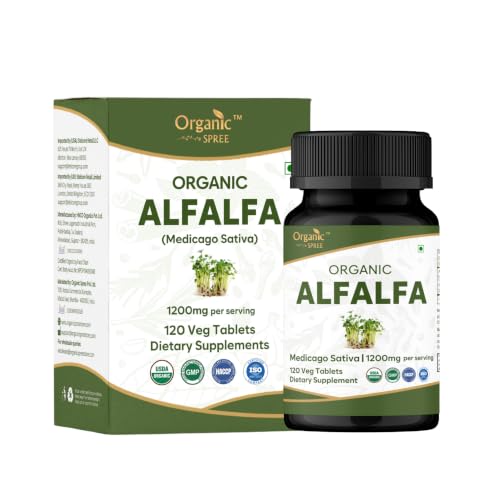
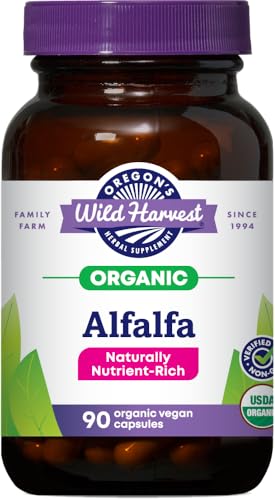
Among the top organic alfalfa supplements compared above, GeVica Biosciences USDA Organic Alfalfa 1500 mg Caplets stands out as the most specification-aligned specification-based choice thanks to triple organic certification, a clean two-ingredient formula, and a high 1500 mg per-serving whole-herb dose. For buyers who prefer capsules over caplets, CNP Organic Alfalfa Leaf Capsules and Oregon’s Wild Harvest Organic Alfalfa Capsules both offer clean, single-ingredient USDA-certified options. Tablets from Brieofood and ORGANIC SPREE deliver higher per-serving doses in a familiar format, while Best Naturals, BulkSupplements, and Erbology cover powder users at different package sizes. ZeeHERBS and Elanen Naturals round out the list for buyers who prefer organic alfalfa as a loose-leaf tea.
Frequently Asked Questions
What should I look for first when comparing the best organic alfalfa supplements?
Start with the organic certification body listed on the label, then confirm the alfalfa content in milligrams per serving. A clear USDA Organic or equivalent seal, plus a stated alfalfa milligram amount, makes it easier to compare products apples-to-apples.
Are single-ingredient alfalfa products better than green blends?
Single-ingredient products deliver more alfalfa per serving and make dosing easier to track, while green blends spread the dose across multiple plants. If alfalfa is the main reason for taking the supplement, a single-ingredient formula is usually the cleaner choice; if the goal is broad plant nutrition, a blend may be more appropriate.
No. Whole-herb products use the dried leaf, top, or grass in its natural form, while extracts concentrate specific compounds using solvents such as alcohol or glycerin. Whole-herb options preserve the plant’s natural matrix, while extracts may deliver higher concentrations of selected constituents but lose others.
Absorption depends on the herb’s preparation, the dose, and the individual more than the format itself. Powders and tinctures may feel faster because they don’t require disintegration, but capsules, tablets, caplets, and brewed loose-leaf can all deliver alfalfa when taken consistently at the labeled serving size.
How can I tell whether an organic alfalfa supplement is well manufactured?
Look for manufacturing under current Good Manufacturing Practices (cGMP), ideally paired with HACCP or another food-safety system, and check for third-party testing of each batch. Labels that include lot numbers, expiration dates, and clear allergen statements further signal quality control discipline.