Buying Guide
Choosing among the best oily hair treatment masks starts with separating scalp needs from length needs. Oily roots may benefit from a clarifying or balancing design, while the mid-lengths and ends can still be dry, rough, chemically processed, or prone to tangling. A mask that treats only one of those concerns may leave the routine incomplete.
Match the mask to the main problem
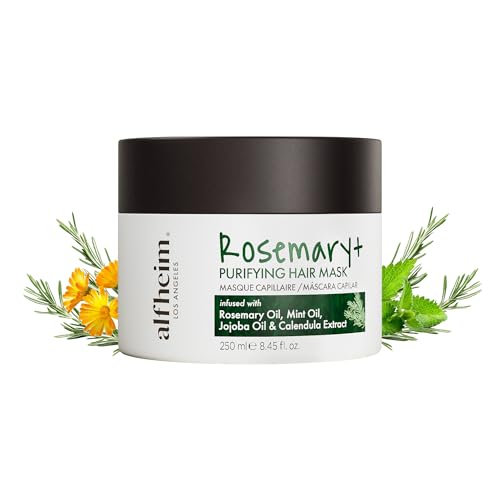
For direct oil-focused care, look first at products whose titles and features explicitly mention oily hair, oily scalp, oil control, or product-heavy hair. ALFHEIM, Luseta, and SALERM are the most direct matches in this comparison. ALFHEIM is aimed at oily and fine hair, Luseta describes clarifying care for oily and product-heavy hair, and SALERM combines oily-hair positioning with excess-oil absorption language.
A scalp-pack format can make sense when the main concern is the roots rather than the entire strand. RATED GREEN documents a rosemary and charcoal scalp pack that balances oil and moisture and is silicone-free. This design may suit someone who wants to apply a treatment closer to the scalp while keeping the rest of the routine separate.
Consider buildup and residue
Oiliness is not always the only source of a flat or coated feel. Styling products, dry shampoo, sebum, and accumulated conditioning ingredients can contribute to buildup. INNERSENSE is the clearest buildup-focused option here, listing charcoal, kaolin clay, and organic white vinegar. The supplied description says these ingredients draw microparticles to the surface without stripping natural oils.
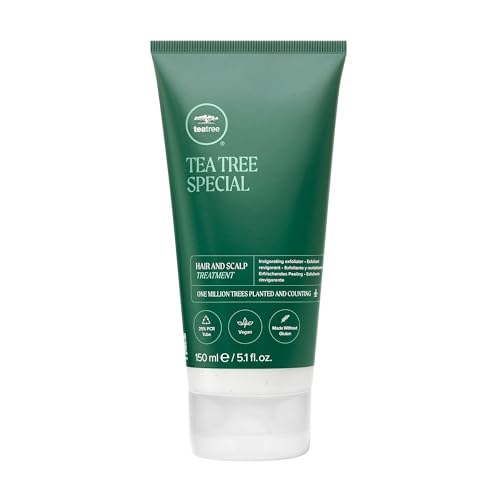
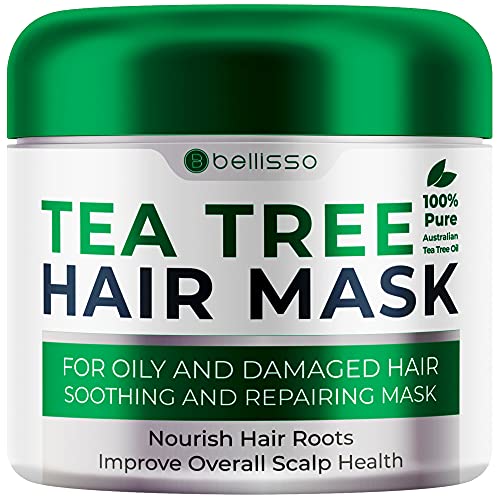
Tea tree-based formulas provide another route to a refreshed feel. Luseta combines tea tree with peppermint and botanical extracts, while the Tea Tree Hair and Scalp Treatment lists tea tree, peppermint, and lavender for a cooling sensation. BELLISSO also uses tea tree, but its evidence leans more heavily toward hydration and repair than dedicated clarification. That distinction matters if the primary goal is reducing a coated feel rather than softening damaged lengths.
Look for lightweight language
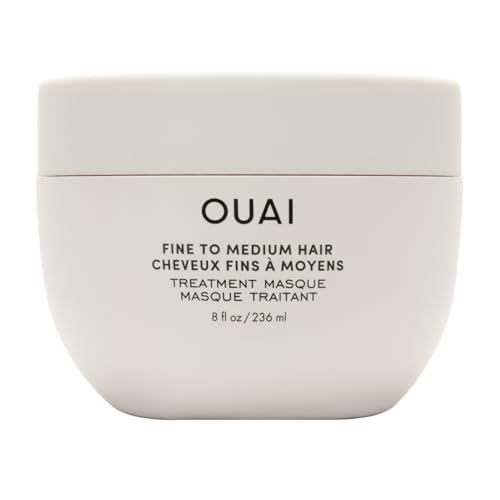
Words such as lightweight, weightless, non-greasy, breathable, and residue-free are especially useful when comparing masks for oily or fine hair. ALFHEIM explicitly describes a non-greasy formula, OUAI says its mask will not leave fine-to-medium strands greasy, and VERB emphasizes weightless conditioning without residue. COLOR WOW likewise describes instant absorption without waxy, heavy buildup.
Application directions can reinforce that design. OUAI and VERB direct users to apply their masks from the mid-lengths to the ends, which can reduce the chance of adding unnecessary conditioning at the roots. By contrast, SALERM’s supplied directions permit application to the scalp and hair, making it a different type of oily-hair treatment. Neither approach is universally better; choose based on whether the scalp or the lengths need the most attention.
Balance oil care with conditioning
A useful mask should not be judged only by how thoroughly it cleans or refreshes. Oily hair can still have dry ends, especially after coloring, heat styling, chemical services, or frequent washing. OUAI lists shea butter, panthenol, and hydrolyzed keratin for fine-to-medium strands. VERB lists moringa oil, green tea extract, and vegan proteins, while BELLISSO adds argan oil, jojoba, chamomile, and aloe vera to its tea tree formula.
These richer conditioning ingredients may be more appropriate for damaged lengths than for roots. If your hair becomes flat easily, apply a richer mask sparingly and keep it away from the scalp unless the label specifically supports scalp use. If your hair is coarse, curly, or chemically processed, a more nourishing treatment may provide a better balance than a purely clarifying formula.
Formula details help narrow the choices without relying on unverified performance claims. Shoppers avoiding particular ingredients can compare the supplied specifications and features: ALFHEIM is described as free of parabens, sulfates, phthalates, and mineral oil; RATED GREEN is silicone-free; OUAI is described as free of parabens, phthalates, SLS, and SLES; and VERB is described as paraben-free, sulfate-free, and gluten-free. BELLISSO is listed as sulfate-free and paraben-free.
Botanical ingredients can also influence the sensory profile. Rosemary and peppermint appear in several options, while tea tree formulas commonly provide a cooling or refreshing description. Those features are factual points of comparison, not guarantees about how any individual scalp will respond. People with sensitivity concerns should check the complete current ingredient list before use.
How to use a mask in an oily-hair routine
Follow the individual product directions because application time and placement vary. VERB specifies five to seven minutes once a week or as needed. OUAI directs use through the mid-lengths and ends followed by rinsing, while SALERM provides scalp-and-hair application instructions after shampooing. These differences show why the mask format alone does not determine the routine.
Start with a modest amount and observe how your hair responds across the next wash cycle. A scalp-focused product may be more appropriate for roots, whereas a repair-focused mask may belong only on the lengths. Avoid assuming that a stronger cleansing feel is automatically preferable; the goal is a workable balance between freshness, softness, and manageability.
Final Recommendation
ALFHEIM Rosemary+ Purifying Hair Mask ranks first overall in this specification-based comparison under the published weighted criteria.
The final choice among the best oily hair treatment masks depends on the documented features that match your intended use.
ALFHEIM Rosemary+ Purifying Hair Mask is the highest-scoring returned product and the first overall specification-based choice. Its evidence is unusually well aligned with this category: it is explicitly made for oily and fine hair, describes a lightweight non-greasy finish, and pairs rosemary and peppermint root refreshment with jojoba and panthenol for the ends.
Luseta Tea Tree Hair Mask is the better fit for shoppers prioritizing clarifying care for oily or product-heavy hair, while SALERM Biokera Natura Oily Hair Mask offers the most direct brewer’s-yeast and excess-oil positioning. For buildup, INNERSENSE provides the clearest charcoal, clay, and vinegar profile. Those are among the top oily hair treatment masks when the decision is based on the documented design rather than unverified outcomes.
Fine-haired shoppers who mainly fear heaviness should compare OUAI, VERB, and COLOR WOW. Their listings emphasize lightweight, weightless, or non-heavy finishes, although they do not provide the same direct oily-scalp focus as the first three selections. RATED GREEN is the most distinctive scalp-pack alternative, and BELLISSO is the most conditioning-oriented botanical option in the final group.
Frequently Asked Questions
What should I look for in the best oily hair treatment masks?
Look for documented oily-hair or oily-scalp relevance, lightweight or non-greasy language, and a clear approach to buildup or scalp care. Then check whether the conditioning ingredients match your lengths. ALFHEIM, Luseta, and SALERM are the most direct category matches in this comparison.
Can an oily-hair mask also condition dry ends?
Yes, several selected products describe both refreshment and conditioning. ALFHEIM lists jojoba and panthenol for the ends, Luseta describes lightweight conditioning, and BELLISSO combines tea tree with argan oil, jojoba, chamomile, and aloe vera. Apply richer formulas mainly where dryness occurs if your roots become flat easily.
Are charcoal and clay masks the same as tea tree masks?
No. Charcoal and clay are associated here with buildup-oriented care, as shown by INNERSENSE and the charcoal-containing RATED GREEN pack. Tea tree products emphasize botanical refreshment and, in some listings, cooling scalp care. The ingredient families represent different documented design approaches.
Should a mask go on the scalp or only the ends?
Use the supplied directions as the starting point. SALERM documents scalp-and-hair application, while OUAI and VERB direct application from the mid-lengths to ends. A scalp-focused mask and a length-focused repair mask serve different purposes, so placement should follow the product’s stated use.
How often should I use a treatment mask?
Frequency depends on the product directions and your hair’s response. VERB specifically lists once-weekly use or use as needed, while Luseta describes weekly care. Other selected masks may have different instructions, so follow the current label rather than applying every mask on the same schedule.