Buying Guide
This guide compares the best organic baking cocoa using documented processing method & flavor profile clarity, declared fat content & baking performance, sourcing transparency & organic certifications, package size, format & storage, dietary compatibility & allergen labeling, and ingredient purity & additive profile.
Start with the type of cocoa your recipes call for
The single biggest decision when comparing the best organic baking cocoa is whether you need a natural, non-alkalized powder or a Dutch-processed, alkalized one. In this guide, several products clearly describe their processing, including the Equal Exchange organic baking cocoa and Anthony’s organic Dutch-processed cocoa powder, both labeled as processed with alkali, as well as the non-alkalized Anthony’s organic unsweetened cocoa powder, the non-alkalized Navitas Organics cacao powder, the non-alkalized Raaka organic cacao powder, and the non-alkalized BetterBody Foods cacao powder. The Modern Mountain Dutch processed organic cocoa powder and the Anthony’s organic Dutch-processed cocoa powder are both explicitly Dutch processed, while the Modern Mountain organic cocoa powder focuses on bold, unsweetened flavor without specifying alkalization. Picking the right processing style keeps flavor and leavening reactions consistent with your existing recipes.
Read declared fat content for richer bakes
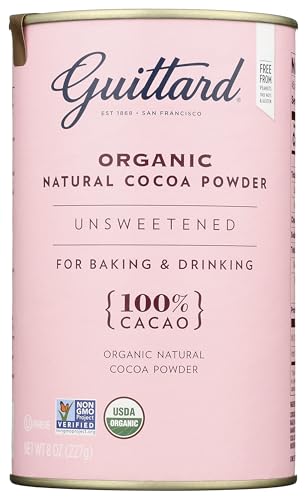
Fat content directly affects chocolate intensity, mouthfeel, and how cocoa behaves in ganache, frosting, and custards. The Modern Mountain Dutch processed organic cocoa powder states a 22-24% fat range, the Anthony’s organic Dutch-processed cocoa powder is listed at 20-22% fat, and the Anthony’s organic unsweetened cocoa powder is described as non-alkalized with a 10-12% fat content. When a listing does not provide a fat range, like the 365 by Whole Foods Market organic cocoa powder or the Guittard organic cocoa powder, you have less numerical data to compare, even though both products clearly state they are unsweetened and intended for baking. Bakers who want richer, denser chocolate flavor can prioritize the higher-fat options; bakers focused on lower-fat, lighter crumb can lean toward the lower-fat natural options.
Match the bag or canister to how often you bake
Package size and format matter for both shelf space and freshness. The BetterBody Foods organic cacao powder sits in the middle at 16 ounces in a flatter pouch, which can stack well in pantry bins but may benefit from a clip or container once opened. Container dimensions on the 365 by Whole Foods Market organic cocoa powder and Guittard organic cocoa powder are documented, which is helpful for tight kitchen shelves.
Look beyond organic to sourcing and trade certifications
Every product in this comparison carries organic certification, but several go further. Navitas Organics cacao powder is described as the first Regenerative Organic Certified cacao powder and is also Fairtrade certified, while the Modern Mountain Dutch processed organic cocoa powder and Modern Mountain organic cocoa powder carry Fair Trade USA certifications alongside USDA organic. Raaka’s organic cacao powder is positioned around single-origin Peruvian beans with transparent trade premiums, and Equal Exchange is built on a co-op-first sourcing model. The Modern Mountain organic cocoa powder additionally states it is verified gluten free. These layered certifications can matter if your kitchen prioritizes ethical sourcing or strict dietary frameworks.
Check dietary compatibility and allergen notes
Cocoa is naturally vegan and gluten free, but processing, packaging, and shared equipment can change that picture. The Equal Exchange organic baking cocoa is vegan and kosher certified, and its listing explicitly notes that it is manufactured on equipment that processes tree nuts, soy, wheat, and eggs, which gives very transparent allergen information. The Anthony’s organic unsweetened cocoa powder and Anthony’s organic Dutch-processed cocoa powder are both described as batch tested and verified gluten free. Always check the exact label wording for your household’s needs.
Mind the difference between cocoa and cacao
These are typically non-alkalized and made by cold-pressing or gentle processing, which is why their flavor is often described as deeper or more bitter. If your recipes were developed around a sweeter, Dutch-processed cocoa, you may need to adjust sugar or use a Dutch-processed option.
Use single-ingredient labels to gauge purity
For bakers who prize ingredient simplicity, single-ingredient declarations are a strong signal. Anthony’s organic cocoa products also emphasize clean, unsweetened, non-GMO profiles. These listings are useful if you try to avoid fillers, anti-caking agents, or sweeteners in cocoa, which some conventional powders add.
Final recommendation
Modern Mountain Dutch Processed Organic Cocoa Powder 8 oz ranks first overall in this specification-based comparison under the published weighted criteria.
For a specification-led comparison of the best organic baking cocoa, Modern Mountain Dutch processed organic cocoa powder lands first overall thanks to its stated 22-24% fat content, explicit Dutch processing, and Fair Trade USA certification; it is the most specification-aligned single pick when rich chocolate flavor is the top priority. Anthony’s Organic Dutch Processed Cocoa Powder is a close runner-up for bakers who want the same Dutch-processed style in a larger 1 pound bag with batch-tested gluten-free verification. Bakers building a well-stocked pantry with multiple top organic baking cocoa options can pair the Modern Mountain organic cocoa powder for single-ingredient natural flavor with Anthony’s Organic Unsweetened Natural Cocoa Powder 2 lb for high-volume, non-alkalized baking.
Frequently Asked Questions
What makes the best organic baking cocoa different from regular cocoa powder?
The best organic baking cocoa is produced from cacao beans grown under certified organic standards, which restrict synthetic pesticides and fertilizers. Beyond that baseline, organic cocoa can still vary in alkalization, fat content, and country of origin, so each product’s processing method and certifications still need to be reviewed individually.
Should I choose Dutch-processed or natural cocoa for baking?
Dutch-processed cocoa, like the Modern Mountain Dutch processed organic cocoa powder and the Equal Exchange organic baking cocoa, is treated with alkali to reduce bitterness and produce a smoother flavor. It also reacts differently with leaveners, which matters in recipes that rely on cocoa’s acidity. Natural, non-alkalized cocoa, like the Anthony’s organic unsweetened cocoa powder, is more acidic and pairs well with baking soda. Match the processing to the leavening in your recipe.
Does fat content really matter in baking cocoa?
Yes, fat content affects richness, mouthfeel, and how cocoa interacts with other fats in a recipe. Higher declared fat percentages, like the 22-24% range on the Modern Mountain Dutch processed organic cocoa powder or the 20-22% on the Anthony’s organic Dutch-processed cocoa powder, generally produce richer ganache, frosting, and hot chocolate. Lower fat percentages, like the 10-12% range on the Anthony’s organic unsweetened cocoa powder, lighten the texture of baked goods.
Are cacao powder and cocoa powder interchangeable in recipes?
However, cacao is typically non-alkalized and can taste more bitter or fruity, so recipes written for sweetened, Dutch-processed cocoa may need small sugar adjustments. Always taste a small batch before committing to a full bake.
How should I store organic cocoa to keep it fresh?
Organic cocoa stays fresh longer when stored in a cool, dry place away from light, ideally in an airtight container. Pouch formats like the BetterBody Foods organic cacao powder or the Anthony’s organic unsweetened cocoa powder 2 lb benefit from being decanted into sealed canisters or clipped tightly after each use, while canister formats like the 365 by Whole Foods Market organic cocoa powder and Guittard organic cocoa powder are designed to be closed directly. Heat, moisture, and strong spices can all shorten shelf life, so a dedicated pantry spot is best.
Which cocoa is best for hot chocolate and drinks?
For hot chocolate and drinks, a higher-fat, Dutch-processed cocoa tends to give the smoothest, richest cup, which is why the Modern Mountain Dutch processed organic cocoa powder and the Anthony’s organic Dutch-processed cocoa powder are strong candidates. Bakers who prefer a more intense, less sweet profile can choose a non-alkalized option like the Raaka organic cacao powder or the Anthony’s organic unsweetened cocoa powder, which let dairy or sweetener carry more of the flavor.
What certifications should I look for beyond organic?
Look for fair trade or Fairtrade certification for ethical sourcing, regenerative organic certification for soil and farmer-focused practices, and gluten-free testing for allergen-sensitive households. The Navitas Organics cacao powder carries Regenerative Organic Certification, the Modern Mountain Dutch processed organic cocoa powder and Modern Mountain organic cocoa powder are Fair Trade USA certified, and several Anthony’s products are batch tested and verified gluten free. Picking the right extra certifications depends on which values matter most in your kitchen.