Buying Guide
Choosing the best organic ginseng supplements starts with understanding what sets one bottle apart from another on the specification sheet. Ginseng products vary widely in species, extract ratio, capsule form, and certification, so a clear set of criteria helps narrow the field. The ten products selected below represent distinct formats such as capsules, softgels, powders, and liquid extracts, all built around organic or certified-organic ginseng roots.
Organic Certification Status
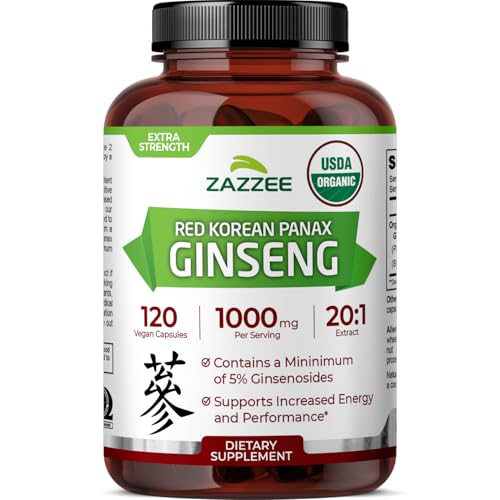
Organic certification is the single most important filter when selecting the best organic ginseng supplements. USDA-certified organic products such as Zazzee, NusaPure, and Micro Ingredients Organic Korean Red Ginseng Root Powder carry explicit government verification of their organic status. Other products on this list rely on certified-organic ginseng ingredients from third-party audited suppliers, which still meets the spirit of organic sourcing but is documented differently on the label. Matching certification strength to your own priorities keeps the comparison grounded.
Species and Root Maturity
Ginseng supplements are made from either Panax ginseng (Asian or Korean red ginseng) or Panax quinquefolius (American ginseng). The selected list focuses almost entirely on Panax ginseng varieties, which are traditionally associated with adaptogen and energy support formulas. Root maturity also matters: Micro Ingredients Organic Korean Red Ginseng Root Powder uses 6-year-grown root, while Micro Ingredients Red Panax Ginseng Softgels specifies 8-year-old handpicked ginseng. Older roots are generally associated with denser ginsenoside profiles in published ginseng research.
Potency and Extract Ratio
Potency is most clearly compared through the extract ratio, which indicates how much raw root is concentrated into each dose. Several products on this list, including Zazzee, NusaPure, and FITO MEDIC’S, use a 20:1 extract ratio, while HMS Nutrition leads in raw per-serving milligrams at 2000 mg per capsule. Whole-root powders such as Micro Ingredients Organic Korean Red Ginseng Root Powder and Herbal Roots use 1000 mg of root powder per serving without an extract concentration step. Selecting between a concentrated extract and a whole-root powder depends on whether you prefer measured ginsenoside potency or a traditional whole-botanical approach.
Ginsenoside Standardization
Ginsenosides are the active compounds most often highlighted in ginseng specifications. Zazzee and HMS Nutrition both declare a minimum 5% ginsenoside standardization on their labels, which allows direct potency comparison. Many other entries, especially the powder and liquid formats, do not state a specific ginsenoside percentage, so buyers should treat them as unstandardized whole-root sources. Standardized extracts are typically easier to compare across brands, while whole-root products offer a less processed alternative.
Serving format shapes daily routine more than any other specification. Capsule options dominate the list, with HMS Nutrition, NusaPure, and Zazzee providing long-lasting bottles of 120 or 180 capsules. Micro Ingredients Red Panax Ginseng Softgels stands out with 300 softgels per pouch, while powder formats from Micro Ingredients Organic Korean Red Ginseng Root Powder and Herbal Roots require scooping or capsule splitting. Liquid formats from Wild & Organic and Global Healing Center use droppers and small bottles that are easy to dose but may run out faster.
Purity and Clean Label
Clean-label design means different things to different buyers, so each product on this list documents its own exclusions. Zazzee avoids sweeteners, gluten, soy, and dairy, while HMS Nutrition avoids fillers, binders, and artificial ingredients. FITO MEDIC’S excludes artificial preservatives, and Micro Ingredients softgels are made without soy, dairy, gluten, flavors, or preservatives. Reviewing the specific exclusions helps match a product to dietary restrictions or sensitivity concerns.
Testing and Manufacturing
Third-party testing and cGMP manufacturing add another layer of specification-based comparison. HMS Nutrition documents NSF-certified, FDA-registered manufacturing under cGMP, while Global Healing Center emphasizes a USA cGMP-certified facility. Micro Ingredients and FITO MEDIC’S both state that ingredients pass third-party lab testing, and NusaPure highlights cGMP standards alongside its organic certification. Manufacturing certifications do not guarantee organic status on their own, but they do signal documented quality control processes.
Final recommendation
Zazzee USDA Organic Red Korean Panax Ginseng 20:1 Extract ranks first overall in this specification-based comparison under the published weighted criteria.
The first overall specification-based choice among the best organic ginseng supplements is Zazzee USDA Organic Red Korean Panax Ginseng 20:1 Extract, which combines USDA organic certification, a 20:1 extract, and a stated minimum 5% ginsenoside standardization in a 120-capsule vegan bottle. For shoppers prioritizing a very high stated dose per serving, HMS Nutrition Korean Red Panax Ginseng 2000 mg Capsules offer 2000 mg standardized to 5% ginsenosides per capsule, while NusaPure Red Korean Panax Ginseng 20:1 Extract Capsules deliver a 20:1 extract in a 180-capsule bottle for extended daily use. Buyers seeking a powder format can rely on Micro Ingredients Organic Korean Red Ginseng Root Powder or Herbal Roots Panax Ginseng Organic Korean Root Powder Capsules, both built around organic Korean root. Liquid users have two distinct options in Wild & Organic Korean Panax Ginseng Liquid Drops, which is alcohol-free, and Global Healing Center Organic Panax Ginseng Liquid Extract, which adds complementary adaptogens. Together, these products form a focused set of top organic ginseng supplements suited to different format and potency preferences.
Frequently Asked Questions
What makes an organic ginseng supplement qualify as one of the best organic ginseng supplements?
An organic ginseng supplement qualifies when it is either USDA-certified organic or built around certified-organic ginseng root, with documented specifications such as extract ratio, ginsenoside standardization, and capsule or powder format. The best organic ginseng supplements typically combine organic certification with transparent potency and clean-label specifications.
A 20:1 extract ratio means that twenty parts of raw ginseng root are concentrated into one part of finished extract, which raises the ginsenoside density per capsule. Products such as Zazzee, NusaPure, and FITO MEDIC’S use this ratio to deliver more concentrated ginseng in a smaller capsule.
Are standardized ginseng extracts different from whole-root ginseng powders?
Yes, standardized extracts declare a specific ginsenoside percentage on the label, such as the 5% ginsenosides stated by Zazzee and HMS Nutrition. Whole-root powders such as Micro Ingredients Organic Korean Red Ginseng Root Powder and Herbal Roots preserve the traditional full-root profile without a stated ginsenoside percentage.
Capsule and softgel formats such as HMS Nutrition, NusaPure, and Micro Ingredients Red Panax Ginseng Softgels are usually easiest for daily routines because each capsule is pre-measured. Powder and liquid formats offer more dosing flexibility but require measuring or dropper use.
Liquid ginseng extracts such as Wild & Organic and Global Healing Center use alcohol-free glycerin bases or water-based extraction, which can be easier on digestion than large capsules. The ginseng dose per serving is typically lower in liquid form, so specifications should still be compared before choosing.