Buying Guide
The best oily deep conditioners are not all built the same way. Some are direct oily-scalp conditioners that focus on oil balance, residue, or lightweight moisture. Others are intensive masks intended for dry, brittle, curly, or damaged lengths. A useful choice depends on whether the main problem is excess oil at the roots, buildup, scalp discomfort, or dryness farther down the hair shaft.
Start with the scalp-to-length balance
If the scalp becomes oily quickly but the ends feel dry, look for a product that separates those needs in its design. CeraVe Oil Control Conditioner is listed for normal-to-oily scalps and combines lightweight hydration with ceramides, zinc PCA, and hyaluronic acid. OGX Clarifying Strength + Rosemary Mint Conditioner and Neutrogena Healthy Scalp Clarify & Shine Conditioner take a more clarifying route, with features centered on oil, residue, or buildup.
A moisture-heavy mask may still be useful, but it is better matched to the lengths than the roots when the formula is rich. Palmer’s Moisture Boost, Aunt Jackie’s Coco Repair, ORS Olive Oil Max Moisture, and tgin Miracle RepaiRx all document intensive hydration or repair features. Their evidence is most specification-aligned for dry, brittle, textured, or damaged hair rather than direct oil control.
Choose clarification for residue and excess oil
Clarifying designs are the most relevant when styling products, environmental residue, or sebum leave the hair feeling coated. Neutrogena uses pink grapefruit and describes gentle exfoliation of scalp and hair. OGX uses rosemary and peppermint and lists help with oil and residue. These products are conditioners, not shampoos, so the supplied descriptions position them as part of a broader clarifying routine rather than standalone cleansing replacements.
Rida Hair Research Institute takes a scalp-treatment approach and specifically lists oily hair, dandruff, dry itchy scalp, seborrheic dermatitis, and psoriasis-related concerns. Because the listing describes several scalp conditions, shoppers with persistent symptoms should treat the product description as category information rather than a substitute for professional advice.
Match mask intensity to hair texture
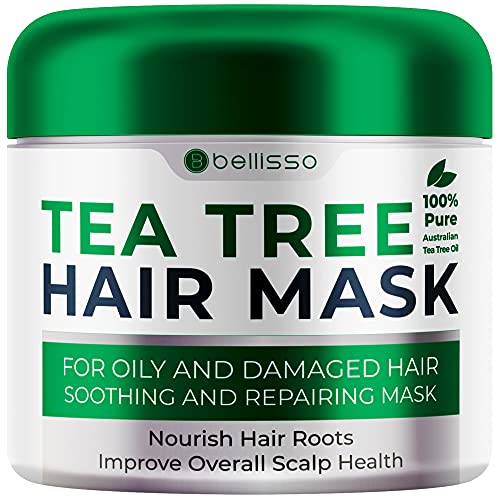
Deep-conditioning support is clearest in products explicitly called masks or deep treatments. Bellisso Tea Tree Oil Hair Mask combines tea tree oil with argan oil, jojoba, chamomile, and aloe vera and is described as an intense hydration and protein moisture repair treatment. ORS is also explicitly a deep treatment and lists rice water, electrolytes, and olive oil for dry brittle strands.
For curls, coils, and waves, Aunt Jackie’s Coco Repair documents a blend of coconut oil, avocado, mango, and flaxseed. Palmer’s Moisture Boost is listed for all curl patterns and textures, while tgin’s mask is positioned for all hair textures dealing with damage, heat, color treatment, breakage, or dryness. These products can provide the conditioning depth that a lightweight oily-scalp formula may not.
Formula exclusions can help narrow the list, but they do not automatically determine how a product will feel. CeraVe is listed as fragrance free and sulfate free, while Neutrogena uses a pH-balanced formula with sulfate-free surfactants and is described as suitable for color-treated hair. OGX is formulated without sulfated surfactants and dyes. Rida lists sulfates, parabens, and artificial dyes among its exclusions.
Bellisso is listed as sulfate free, paraben free, and cruelty free. Palmer’s Moisture Boost excludes parabens, phthalates, mineral oil, gluten, and dyes. tgin excludes parabens, sulfates, petrolatum, lanolin, and artificial colors. These details are useful screening points, but the supplied data does not include complete ingredient lists or independent testing.
The listed sizes range from Palmer’s 2.1-ounce treatment to ORS at 20 ounces. A compact product may suit occasional intensive use, while larger containers may fit regular wash-day routines. The evidence does not establish how many applications a container provides, so size should be treated as a packaging specification rather than a performance measure.
The listing language also suggests different application roles. CeraVe is designed for use through the ends after washing, whereas the masks and deep treatments emphasize intensive hydration, repair, or moisture restoration. For oily roots and dry ends, applying a richer mask mainly to lengths is a reasonable way to align with the documented design, but the supplied evidence does not specify a universal application schedule.
Compare the top oily deep conditioners by primary need
For direct oil-control positioning, CeraVe, OGX, and Neutrogena are the clearest choices in this group. For a scalp-focused treatment, Rida has the most explicit concern-based description. Bellisso bridges tea tree and intensive mask care. ORS, Aunt Jackie’s, Palmer’s, and tgin are more strongly supported for dry, brittle, curly, damaged, or textured hair that needs deeper conditioning alongside oily-root management.
Final Recommendation
Bellisso Tea Tree Oil Hair Mask ranks first overall in this specification-based comparison under the published weighted criteria.
CeraVe Oil Control Conditioner is the first overall specification-based choice among the best oily deep conditioners because its listing directly addresses oily hair and scalp while documenting lightweight hydration, barrier-focused ingredients, and broad texture coverage. OGX Clarifying Strength + Rosemary Mint Conditioner is the better fit when oil and residue are the central concerns, and Neutrogena Healthy Scalp Clarify & Shine Conditioner suits shoppers seeking a non-drying clarifying profile.
For damaged or textured lengths, Bellisso Tea Tree Oil Hair Mask, ORS Olive Oil Max Moisture Deep Treatment, Aunt Jackie’s Coco Repair, Palmer’s Moisture Boost, Palmer’s Olive Oil Formula, and tgin Miracle RepaiRx provide stronger deep-treatment evidence. Rida is the targeted scalp-treatment alternative. In practical terms, the top oily deep conditioners divide into two groups: lighter oil-control or clarifying conditioners, and richer masks for dry lengths. Select between them according to where the hair needs care.
Frequently Asked Questions
What should I look for in the best oily deep conditioners?
Look for direct oily-scalp language, residue or buildup care, lightweight hydration, and a conditioning profile that matches your lengths. CeraVe, OGX, and Neutrogena provide the clearest evidence for oily-hair alignment, while the mask options add deeper moisture or repair support.
Can a deep conditioner work for oily roots and dry ends?
Yes, the product types in this comparison support that split approach. A lighter oily-scalp conditioner can address the root area, while a richer treatment such as ORS, Aunt Jackie’s, Palmer’s Moisture Boost, or tgin can be reserved for dry or damaged lengths. The supplied listings do not establish one universal routine.
Which selected conditioner is designed for scalp concerns?
Rida Hair Research Institute’s Folliculitis Deep Conditioner is the most explicitly scalp-focused listing. It mentions oily hair, dandruff, dry itchy scalp, seborrheic dermatitis, and psoriasis-related care, along with a sulfate-, paraben-, and dye-free formula.
Are clarifying conditioners the same as shampoo?
No. OGX and Neutrogena are listed as conditioners with clarifying, oil, or residue-related features. Their descriptions recommend pairing them with a corresponding shampoo or broader routine, so they should not automatically be treated as substitutes for cleansing products.
Which options cover curls, coils, or textured hair?
Aunt Jackie’s is listed for natural curls, coils, and waves. Palmer’s Moisture Boost is listed for all curl patterns and textures, while ORS covers natural and relaxed hair and tgin covers all hair textures. These options emphasize moisture, softness, manageability, or repair more than direct oil control.