Buying Guide
Choosing the best organic green tea supplements starts with understanding the spec sheet, not the label claims. Green tea supplements come in three main formats: capsules, liquid drops, and powders, and each one carries different implications for ingredient concentration, serving flexibility, and daily routine fit. The ten products in this roundup cover all three formats, so the comparison below focuses on the specifications that matter most.
Organic Certification and Sourcing
Organic certification is the first spec to check. USDA Organic certification and other named organic seals mean the green tea leaf or extract was grown without synthetic pesticides and processed under regulated standards. Products like Zazzee USDA Organic Green Tea Extract, Pure Synergy Mt. Fuji matcha, True Veda USDA Organic Green Tea Extract, and VitaMonk Organic Japanese Matcha all publish organic positioning directly on the bottle, while others rely on organic ingredient language without a named seal. Look for explicit certification wording and named growing regions such as Mt. Fuji or Uji when the listing provides them.
Standardized EGCG, Catechins, and Polyphenols
The most important numeric spec on a green tea supplement label is the standardization profile. EGCG (epigallocatechin gallate) is the headline catechin, catechins are the broader antioxidant family, and polyphenols are the total antioxidant group. The most specification-aligned labels in this category publish all three numbers, for example 50% EGCG, 80% catechins, and 98% polyphenols as seen on Zazzee USDA Organic Green Tea Extract. Single-number labels like Codeage Liposomal Green Tea+ Ultra at 90% EGCG still signal high potency, while matcha-based products often rely on a milligram-per-serving figure rather than a percentage. Match the numbers to the goal: percentage-based extracts for concentrated antioxidant intake, matcha for a gentler whole-leaf experience with naturally occurring L-theanine.
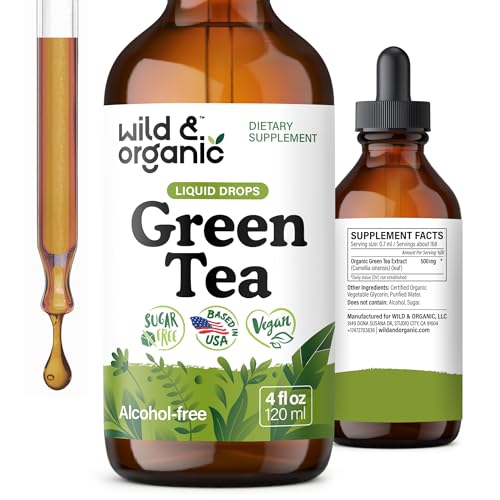
Format shapes how the green tea compounds are absorbed. Standard capsules are reliable and portable, liposomal capsules like Codeage Liposomal Green Tea+ Ultra and HOLLEGEND Liposomal Green Tea Extract use phospholipid layers intended to protect the polyphenols through digestion, and liquid drops like Wild & Organic or Sacred Eats offer faster absorption with flexible dosing. Powder formats suit readers who want to mix their dose into smoothies or drinks. Within the category, liposomal delivery and concentrated liquid drops tend to score highest on this criterion because they explicitly address absorption.
Clean Label and Dietary Compatibility
A clean label means the supplement contains only the active ingredients and the capsule material, with no unnecessary binders, fillers, or artificial additives. Within this roundup, VitaMonk and Sacred Eats emphasize freedom from magnesium stearate, titanium dioxide, and similar excipients. Many products also carry vegan, gluten-free, non-GMO, and kosher labels, which is helpful for readers with multiple dietary restrictions. If a product is organic but still lists a long inactive ingredient panel, weigh that against the standardization profile before deciding.
Supply and Serving Efficiency
The bottle itself tells a story. Large capsule counts stretch a single bottle across many months, while liquid drops like Wild & Organic deliver an 84-day supply from 4 fl oz. Powders are typically the most concentrated per gram, but require a scale or measuring spoon. Match the format to your routine: capsules for travel, drops for fast daily use, and powders for kitchen-based flexibility.
Caffeine and Low-Stimulation Design
Caffeine tolerance varies widely, and green tea supplements sit on a spectrum. Sacred Eats Green Tea Liquid Extract Drops and True Veda USDA Organic Green Tea Extract frame themselves as low-caffeine options. Matcha capsules such as VitaMonk and Pure Synergy pair caffeine with naturally occurring L-theanine, which is associated in the product descriptions with a calmer focus profile. If sensitivity is a concern, prioritize listed caffeine numbers and look for low-caffeine or caffeine-free language in the spec list.
Final Recommendation
Zazzee USDA Organic Green Tea 20:1 Extract Capsules ranks first overall in this specification-based comparison under the published weighted criteria.
If you want a single specification-based choice, Zazzee USDA Organic Green Tea Extract Capsules stand out as the first overall pick because they publish a triple-standardization profile of 50% EGCG, 80% catechins, and 98% polyphenols alongside explicit USDA Organic certification and a 20:1 extract ratio. These are the best organic green tea supplements for readers who prioritize published potency numbers in a vegan capsule. For a matcha-led routine, VitaMonk Organic Japanese Matcha Capsules and Pure Synergy Organic Matcha Green Tea Capsules deliver ceremonial-grade matcha with L-theanine, making the top organic green tea supplements for calm energy. For readers who prefer liquid drops, Wild & Organic Green Tea Extract Liquid Drops and Sacred Eats Green Tea Liquid Extract Drops each offer long-lasting supplies with clean-label ingredient lists, rounding out the top organic green tea supplements for a dropper-style routine. Hobbyists exploring a USDA Organic certified extract with a water-based method can also consider True Veda USDA Organic Green Tea Extract Capsules as a USDA Organic alternative.
Frequently Asked Questions
What makes the best organic green tea supplements stand out on the label?
The best organic green tea supplements publish explicit organic certification, a clear standardization profile, and a clean inactive ingredient list. USDA Organic wording, named countries of origin, and standardized EGCG or polyphenol percentages are the specs that matter most in this category.
Should I choose capsules, liquid drops, or powder for green tea supplements?
Capsules are convenient and portable, liquid drops offer flexible dosing and often faster absorption, and powders give the most control over serving size. The choice depends on whether you prefer a fixed daily routine, adjustable dosing, or recipe-friendly mixing.
How important is EGCG percentage on a green tea supplement label?
EGCG percentage is the headline spec for concentrated green tea extracts, and higher numbers like the 90% EGCG on Codeage Liposomal Green Tea+ Ultra signal a more potent antioxidant profile. Matcha-based supplements typically do not list EGCG percentages and instead emphasize whole-leaf matcha content, so the comparison depends on format.
Are low-caffeine organic green tea supplements available?
Yes. Several products in this roundup, including Sacred Eats Green Tea Liquid Extract Drops and True Veda USDA Organic Green Tea Extract Capsules, are designed around lower caffeine content. Matcha capsules pair caffeine with L-theanine for a calmer focus profile, which is another option for caffeine-sensitive readers.
Do organic green tea supplements need to be vegan or allergen-free?
Vegan and allergen-free labeling is not required, but it is common in this category. VitaMonk, Wild & Organic, and HOLLEGEND all explicitly state freedom from common allergens, which helps readers with multiple dietary needs. Always check the inactive ingredient list to confirm the product works for your specific routine.