Buying Guide
Choosing the best paper shelf liners starts with the surface you are lining, the kind of protection you need, and whether you want adhesive or removable installation. In this comparison, “paper shelf liner” includes the flexible cabinet and drawer rolls documented in the supplied listings, including EVA, PVC, and adhesive vinyl formats. These materials differ substantially in grip, cleanup, cushioning, and coverage.
Choose the installation style first
Non-adhesive liners are the most flexible choice when you expect to lift, clean, reposition, or replace sections. Coavas, FEXIA, Anoak, Glomen, and MIAONET all document non-adhesive construction. That format avoids sticky backing and generally allows the liner to be cut and placed inside a cabinet or drawer. Quttisay and Adwann also use non-adhesive designs, while Kimhan combines a non-adhesive format with supplied cutting tools.
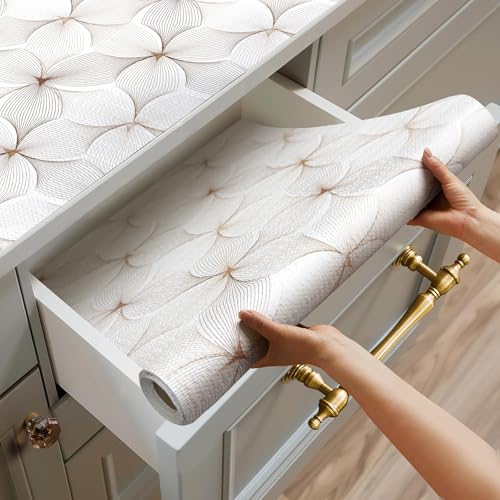
A non-adhesive liner still needs accurate measuring. Cut the material to fit the usable floor of the drawer or shelf rather than assuming the roll width will match. Some listings describe textured or raised surfaces on both sides, which can help the liner and stored items stay in place. Coavas and Quttisay also document non-slip surfaces, while MIAONET specifies textured top and bottom surfaces.
Adhesive liner is a different proposition. Duck EasyLiner uses a peel-and-stick vinyl format intended for clean, dry, smooth surfaces. It can create a more fixed decorative finish, but the listing gives important limitations: it is not recommended for bare wood, varnished wood, or polyurethane-stained wood, and it should not be applied to textured surfaces. That makes it better suited to appropriate flat surfaces than to every shelf or drawer.
Match the material to the mess
For spills, grease, and damp storage areas, look for explicit waterproof, water-resistant, oil-resistant, or washable language. Coavas documents a waterproof PVC surface and wipe-clean maintenance. FEXIA and Anoak use EVA and describe waterproof or washable use, with both listings also discussing refrigerator applications. Glomen similarly documents protection from water and oil and says the liner can be wiped or washed.
PVC options such as Quttisay, Adwann, MIAONET, and Kimhan also document moisture-related protection or easy cleaning. Kimhan specifically mentions water and stain resistance, while Adwann is described as waterproof, unscented, and easy to wipe. These claims indicate intended utility, not a guarantee that every spill will be contained indefinitely or that liquid cannot reach an exposed edge.
An open-weave design changes the trade-off. GORILLA GRIP powerGRIP uses an open grid intended to let surfaces breathe and adds cushioning beneath stored items. This may be useful in enclosed spaces or under glassware, but an open construction is not the same as a solid spill barrier. If your priority is containing liquid on top of the liner, a solid PVC or EVA surface may be the more directly supported choice.
Consider grip and cushioning
Grip matters when plates, glasses, bottles, or pantry containers shift during normal use. GORILLA GRIP powerGRIP emphasizes dual-sided gripping technology. Anoak uses a raised stripe surface and a grip-oriented bottom. Glomen describes double-sided ribbed texture, while Coavas, FEXIA, and Quttisay document non-slip designs. These features can help reduce movement, but the supplied evidence does not establish a measured friction level or guarantee that objects will never slide.
Cushioning is a separate consideration. GORILLA GRIP powerGRIP describes a thick, soft construction for glassware and heavier items. Coavas describes a cushioned shock-absorbing layer, and Kimhan describes a double-laminated PVC build. If you are protecting a shelf from scratches or reducing contact noise, those documented construction details may matter more than color or pattern. Products without a stated cushioning layer should not be treated as equivalent simply because they are also labeled thick.
Measure coverage before ordering
Roll length affects how many shelves or drawers you can line. The selected products range from the 12-by-10-foot GORILLA GRIP roll and the 11.8-by-118.1-inch Quttisay roll to approximately 20-foot formats from FEXIA, Anoak, Glomen, and MIAONET. Duck EasyLiner is 20 inches wide by 216 inches long, which can be useful for broader surfaces but may require more careful planning around cabinet depth.
Record the interior width and length of each space, then account for trimming and orientation. A wider roll can reduce seams on broad surfaces, while a 12-inch roll may fit standard drawers with less waste. Coavas documents multiple sizes beyond the selected format, and the Coavas listing also identifies other household applications. However, availability and exact variant details can change, so verify the displayed size before purchase.
For refrigerator shelves or areas where produce may sit directly on the liner, use only products whose supplied evidence addresses that use. FEXIA and Anoak explicitly describe food-related suitability, including direct contact with fruits and vegetables or food-grade EVA. Glomen also specifies food-graded EVA. Those statements are more relevant than assuming every clear liner is suitable for direct food contact.
For ordinary cabinet bottoms, bathroom shelves, desks, and drawers, the listings document broader household uses across many selected products. MIAONET, Adwann, Quttisay, and Coavas all describe applications beyond one cabinet type. Keep the intended location in mind: a bathroom vanity, refrigerator, pantry, and office drawer may have different priorities for moisture handling, grip, appearance, and cleaning.
Plan the cut and cleanup
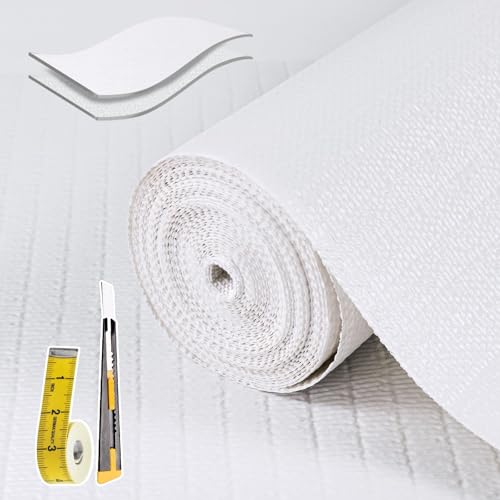
Most selected non-adhesive products are described as easy to trim with scissors. Kimhan and Adwann add a knife and tape measure, while Duck EasyLiner provides a printed grid and tape measure on its backing. Measure twice, mark the cutting line, and test-fit before committing to the final cut. Leave enough clearance for drawer movement and corners without forcing the liner to buckle.
Cleaning instructions vary in wording but commonly involve wiping with a damp cloth, sponge, water, or mild soap. Remove the liner before washing when the product instructions call for it, and allow a washable liner to dry as directed. Avoid treating “waterproof” as permission to trap moisture underneath a liner indefinitely; lifting the material periodically can help you inspect the shelf, although the supplied listings do not promise a particular maintenance schedule.
Final recommendation
Coavas Shelf and Cabinet Liner ranks first overall in this specification-based comparison under the published weighted criteria.
Coavas is the first overall specification-based choice among these best paper shelf liners because it documents a strong mix of waterproof PVC, grip, cushioning, trimming, repositioning, and broad household use. For the top paper shelf liners with longer coverage, FEXIA, Anoak, Glomen, and MIAONET each offer approximately 20-foot rolls, with differences in food-contact language, texture, and finish.
Choose GORILLA GRIP powerGRIP when cushioning and an open-weave design are priorities. Choose Kimhan or Adwann when included cutting tools are useful. Quttisay is a sensible option when anti-curling language matters, while Duck EasyLiner is the selected choice for a decorative adhesive application on an appropriate smooth surface. Always confirm the roll dimensions and the surface restrictions for the specific installation.
Frequently Asked Questions
Are these best paper shelf liners adhesive or removable?
Most selected products are non-adhesive and are described as removable, reusable, or repositionable. Coavas, Quttisay, FEXIA, Anoak, Glomen, MIAONET, Adwann, Kimhan, and GORILLA GRIP powerGRIP use that general format. Duck EasyLiner is the adhesive exception, using peel-and-stick vinyl. Adhesive and non-adhesive designs should not be installed the same way, so check the listing’s surface guidance before cutting.
Which liner is documented for refrigerator use?
FEXIA and Anoak explicitly describe refrigerator applications, and both provide food-related material information. Glomen also specifies food-graded EVA and lists refrigerator use. Several other selected products mention refrigerator or fridge-liner applications, but a general use statement is not the same as direct food-contact documentation. For produce or other food placed directly on the liner, prioritize the products whose supplied evidence specifically addresses that use.
What size shelf liner should I buy?
Measure the inside width and depth of the shelf or drawer, then compare those measurements with the roll width and length. The selected options include standard-width rolls near 12 inches, longer 240-inch rolls, and Duck EasyLiner’s 20-inch width. A roll that is slightly wider can be trimmed, but a roll that is too narrow may leave an uncovered strip. Plan the cuts before installation to reduce waste.
Do shelf liners protect against spills?
Several selected listings describe waterproof, water-resistant, oil-resistant, stain-resistant, or washable surfaces. Solid PVC and EVA products such as Coavas, FEXIA, Glomen, and MIAONET are positioned for easier wipe-down maintenance. GORILLA GRIP powerGRIP uses an open-weave design, so its breathable construction should not be treated as identical to a solid spill-containment surface. No supplied evidence supports an absolute guarantee against leakage or damage.
Can I cut these liners to fit irregular spaces?
The selected non-adhesive products are generally described as trimmable with scissors. Kimhan and Adwann include cutting-related tools, and Duck EasyLiner provides a grid and tape measure on its backing. Mark the shape carefully, make a test cut when possible, and check that the finished piece lies flat without interfering with drawer movement. Adhesive material also requires a suitable clean, dry, smooth surface before application.