Buying Guide
Selecting among the best parasitology books means weighing format, depth, and target audience against your study stage. A book that excels for a medical school course may feel overwhelming for a veterinary technician program, while a bench-side atlas may feel light for graduate research. The guidance below breaks down the categories that matter when comparing the best parasitology books in this list.
Define Your Primary Audience First
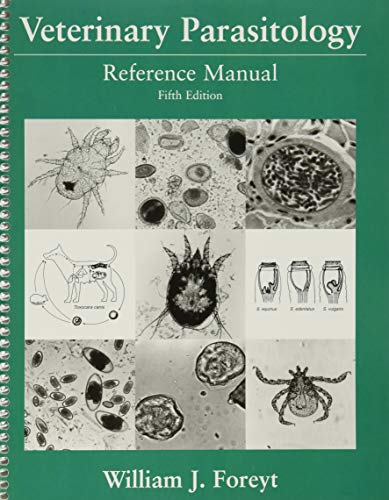
Before comparing titles, decide whether you need a human-medicine, veterinary, or tropical-medicine focus. Books such as Medical Parasitology: A Self-Instructional Text and Human Parasitology are oriented to medical learners, while Veterinary Parasitology Reference Manual and Diagnostic Parasitology for Veterinary Technicians serve veterinary audiences. Peters’ Atlas of Tropical Medicine and Parasitology fits practitioners who handle region-specific parasites. Audience alignment determines how useful the diagnostic imagery and lifecycle descriptions will be during your coursework or clinical rotations.
The format shapes day-to-day usability. Spiral-bound titles such as Veterinary Parasitology Reference Manual and A Color Atlas of Parasitology lay flat on a bench, which matters when you flip between identification plates and a microscope. Hardcover references like Foundations of Parasitology and Human Parasitology handle repeated coursework reading but weigh more in a backpack. Paperback options, including Medical Parasitology: A Self-Instructional Text and Peters’ Atlas of Tropical Medicine and Parasitology, travel easily between study locations.
Evaluate Diagnostic Imagery Quality
Diagnostic imagery is where parasitology books either succeed or frustrate learners. Atlas-style titles such as Peters’ Atlas of Tropical Medicine and Parasitology and A Color Atlas of Parasitology lead on visual identification, while laboratory guides like Practical Guide to Diagnostic Parasitology include procedural photography. When comparing the best parasitology books, look for coverage of life-cycle stages, ova, cysts, and adult morphology, because each stage shows up differently in lab work.
Consider Clinical Lifecycle and Pathophysiology Depth
A strong parasitology reference does more than identify organisms; it explains how the parasite causes disease, where it travels in the host, and how it is transmitted. Markell and Voge’s Medical Parasitology and Foundations of Parasitology lean heavily into this lifecycle-and-pathophysiology approach. For exam preparation, lifecycle clarity often matters more than breadth of organisms.
Weigh Edition Currency
Parasitology evolves as molecular diagnostics and nomenclature updates reshape the field. Recent releases such as Diagnostic Parasitology for Veterinary Technicians and Medical Parasitology: A Self-Instructional Text reflect newer diagnostic categories, while older editions of Markell and Voge’s Medical Parasitology or Foundations of Parasitology remain foundational but may need supplementation for current taxonomy. Pairing an older classic with a recent atlas is a common strategy when one book alone feels dated.
Balance Scope with Essentials
Some learners want broad taxonomy coverage across helminths, protozoa, and arthropods, while others need a focused essentials-level text. Foundations of Parasitology offers the widest taxonomy breadth, and Essentials of Medical Parasitology keeps the scope compact for rapid review. Knowing whether you are building a long-term reference shelf or a short-term exam aid helps narrow the list quickly.
Final recommendation
Veterinary Parasitology Reference Manual (Wiley) ranks first overall in this specification-based comparison under the published weighted criteria.
The final choice among the best parasitology books depends on the documented features that match your intended use.
For a specification-based first overall choice, Medical Parasitology: A Self-Instructional Text stands out among the top parasitology books because the self-instructional illustrated paperback format and broad medical scope support both stepwise learning and quick reference. For veterinary learners, pair Veterinary Parasitology Reference Manual with Diagnostic Parasitology for Veterinary Technicians to combine a bench reference with a recent procedural guide. Tropical medicine practitioners will find Peters’ Atlas of Tropical Medicine and Parasitology and A Color Atlas of Parasitology most useful for identification-heavy work. Across these pairings, the top parasitology books remain those whose format, audience fit, and imagery align with your study goals.
Frequently Asked Questions
What should I look for when comparing the best parasitology books?
Focus on parasite scope, diagnostic imagery, clinical lifecycle detail, and how the format fits your study style. The best parasitology books balance identification plates with pathophysiology explanations so you can recognize and explain each organism.
Are veterinary parasitology books useful for medical students?
They can be for zoonotic parasites, but the lifecycle emphasis and species coverage differ. A medical-focused title such as Medical Parasitology: A Self-Instructional Text or Markell and Voge’s Medical Parasitology usually fits a medical curriculum more directly.
Spiral-bound atlases like Veterinary Parasitology Reference Manual and A Color Atlas of Parasitology lay flat during bench work. Hardcover textbooks serve better for desk-based reading and long-term reference.
How important is edition recency in parasitology references?
Recency matters because taxonomy and diagnostic methods change. Pairing a classic text such as Foundations of Parasitology with a recent guide like Diagnostic Parasitology for Veterinary Technicians helps balance depth and currency.
Do the best parasitology books include tropical medicine content?
Some do. Peters’ Atlas of Tropical Medicine and Parasitology is built around tropical and geographic medicine, while general titles often include tropical parasites within a broader scope. Choose a tropical atlas when your work centers on region-specific pathogens.