Buying Guide
Selecting among the best nuclear medicine books in 2026 starts with how you plan to use each volume, whether that means daily rotation lookups, deep physics study, radiopharmacy reference work, or board exam review. The titles in this comparison split naturally across clinical references, technology and technique manuals, physics foundations, radiopharmacy resources, and exam review formats, so matching scope to your stage of training is the first practical step.
Matching Scope to Your Role
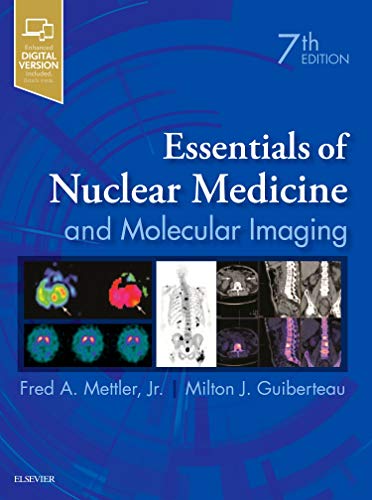
Residents and general practitioners often begin with broader clinical references such as Essentials of Nuclear Medicine and Molecular Imaging and Nuclear Medicine and Molecular Imaging: The Requisites, both of which present nuclear medicine and molecular imaging topics in a structured study format. The Requisites hardcover from Elsevier follows the familiar Requisites in Radiology study pattern, while the Essentials hardcover from Elsevier leans toward an illustrated clinical overview released in 2018. For readers who prefer a heavy diagnostic atlas, Diagnostic Imaging: Nuclear Medicine from Elsevier offers a 5.29 pound hardcover format that supports case-based pattern recognition, while Nuclear Medicine and PET/CT: Technology and Techniques and Nuclear Medicine and Molecular Imaging: Technology and Techniques from Mosby focus specifically on imaging technique and instrumentation rather than full atlas content.
Physics, Instrumentation, and Radiation Biology
Readers who need to ground their practice in physics should compare Physics in Nuclear Medicine from Saunders against Essentials of Nuclear Medicine Physics, Instrumentation, and Radiation Biology from Wiley-Blackwell. The Saunders hardcover offers the deepest physics and instrumentation foundation, while the Wiley-Blackwell paperback brings a 2021 release date and a lighter, more portable trim size for cross-campus study. Choosing between them often comes down to whether you want a long-term physics reference anchor or a more recent primer to carry between classes.
Procedures and Quick Reference Use
For technologists and clinicians who need a fast lookup at the scanner, Nuclear Medicine Technology: Procedures and Quick Reference from LWW is structured around procedures and protocols in a 10.7 by 8.4 inch illustrated paperback. Its procedure-based layout complements the broader clinical references, letting you move from a textbook chapter to a quick protocol check during rotation without carrying a heavier hardcover.
Radiopharmacy and Pharmacology
If your work centers on radiopharmacy, Radiopharmaceuticals in Nuclear Pharmacy and Nuclear Medicine from the American Pharmacists Association functions as a heavyweight hardcover reference at 7.78 pounds, signaling its role as a deep specialty resource rather than a portable daily text. Pairing it with a clinical reference such as Essentials of Nuclear Medicine and Molecular Imaging helps connect radiopharmacy details to clinical application.
Board Exam Preparation
Candidates preparing for nuclear medicine technology board examinations often add Nuclear Medicine Technology: Review Questions for the Board Examinations from Springer to their study plan. Its Springer paperback question-based format supports active recall, and pairing it with a clinical text such as Nuclear Medicine and Molecular Imaging: The Requisites helps link review questions to underlying clinical concepts.
Hardcover titles such as Essentials of Nuclear Medicine and Molecular Imaging, Nuclear Medicine and PET/CT: Technology and Techniques, Nuclear Medicine and Molecular Imaging: The Requisites, Diagnostic Imaging: Nuclear Medicine, Physics in Nuclear Medicine, and Radiopharmaceuticals in Nuclear Pharmacy and Nuclear Medicine work well as shelf references. Paperback titles such as Nuclear Medicine and Molecular Imaging: Technology and Techniques, Nuclear Medicine Technology: Procedures and Quick Reference, Essentials of Nuclear Medicine Physics, Instrumentation, and Radiation Biology, and Nuclear Medicine Technology: Review Questions for the Board Examinations are easier to carry between sites. Within these options, larger atlases such as Diagnostic Imaging: Nuclear Medicine favor desk-based image review, while smaller physics primers such as Essentials of Nuclear Medicine Physics, Instrumentation, and Radiation Biology fit into a daily bag.
Building a Balanced Library
A practical approach is to anchor your shelf with one broad clinical reference, one imaging technique or PET/CT manual, one physics foundation, one radiopharmacy resource when relevant, and one board review book for exam seasons. This combination of the best nuclear medicine books lets you move from classroom concepts to scanner-side protocols without duplicating content across volumes, and it keeps each title focused on a clear purpose within your study workflow.
Final recommendation
Nuclear Medicine and Molecular Imaging: The Requisites ranks first overall in this specification-based comparison under the published weighted criteria.
Essentials of Nuclear Medicine and Molecular Imaging stands as the first overall specification-based choice among the best nuclear medicine books in this comparison, because it pairs a broad clinical scope with an illustrated Elsevier hardcover format that supports both study and reference use. It works well as a central anchor, with Nuclear Medicine and Molecular Imaging: The Requisites and Nuclear Medicine and PET/CT: Technology and Techniques rounding out clinical and PET/CT technique depth, while Physics in Nuclear Medicine, Essentials of Nuclear Medicine Physics, Instrumentation, and Radiation Biology, Radiopharmaceuticals in Nuclear Pharmacy and Nuclear Medicine, and Nuclear Medicine Technology: Review Questions for the Board Examinations extend coverage into physics, radiopharmacy, and exam preparation. Nuclear Medicine Technology: Procedures and Quick Reference and Nuclear Medicine and Molecular Imaging: Technology and Techniques round out the lineup as procedure-led and technique-led companions, and Diagnostic Imaging: Nuclear Medicine adds an atlas-style option for image-heavy review. Together these top nuclear medicine books form a balanced reference library for trainees and practitioners in US practice in 2026.
Frequently Asked Questions
Which title is the best starting point among the best nuclear medicine books for a new resident?
Essentials of Nuclear Medicine and Molecular Imaging is a strong first volume because its illustrated Elsevier hardcover covers both clinical topics and molecular imaging concepts in a single reference, giving new residents a wide clinical lens before adding more specialized texts.
How do I decide between a physics textbook and a procedures quick reference?
If your goal is to understand instrumentation, dosimetry, and radiation biology in depth, Physics in Nuclear Medicine or Essentials of Nuclear Medicine Physics, Instrumentation, and Radiation Biology will serve you better. If you need fast protocol checks during rotations, Nuclear Medicine Technology: Procedures and Quick Reference is the more practical daily tool.
Should a PET/CT focused book be added alongside a general nuclear medicine text?
Yes, because Nuclear Medicine and PET/CT: Technology and Techniques and Nuclear Medicine and Molecular Imaging: Technology and Techniques both focus on imaging technique and instrumentation, while general references such as Nuclear Medicine and Molecular Imaging: The Requisites cover broader clinical interpretation. Using a general title together with a technique-focused title helps balance hybrid imaging depth with overall clinical context.
What book supports nuclear pharmacy focused study?
Radiopharmaceuticals in Nuclear Pharmacy and Nuclear Medicine from the American Pharmacists Association is the dedicated radiopharmacy resource in this list, offering heavyweight hardcover coverage of radiopharmaceuticals alongside nuclear medicine practice.
Which of the best nuclear medicine books is most useful for board exam preparation?
Nuclear Medicine Technology: Review Questions for the Board Examinations from Springer is structured as a question-based review tool, and pairing it with a clinical reference such as Nuclear Medicine and Molecular Imaging: The Requisites helps connect review questions to broader clinical concepts during exam study.