Buying Guide
This guide compares the best pasta colanders using documented drainage & hole design, capacity & size fit, material & durability, base stability & handling, versatility for pasta tasks, and cleaning & storage.
What makes the best pasta colanders stand out
The best pasta colanders all do the same basic job: let water out fast while keeping pasta, vegetables, and fruit in. The differences show up in the hole pattern, the shape of the base, how the handles are attached, and how each colander fits into the sink or on the counter. Looking at these details helps narrow down a list of top pasta colanders for everyday cooking.
Drainage and hole design
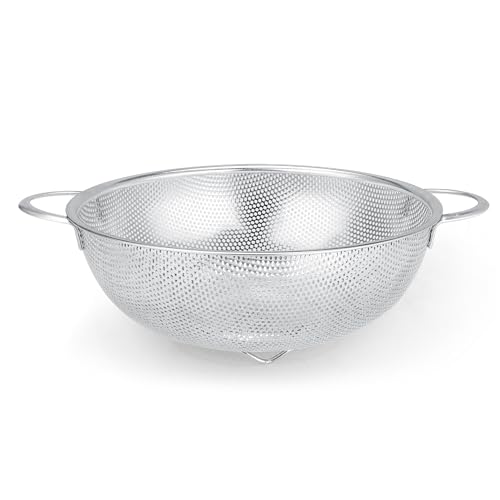
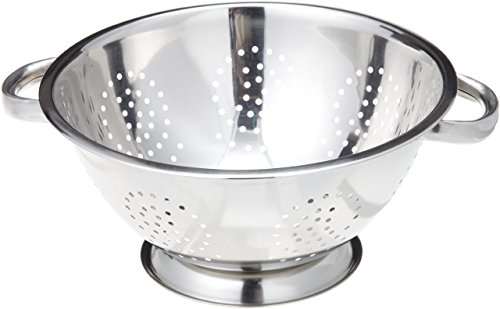
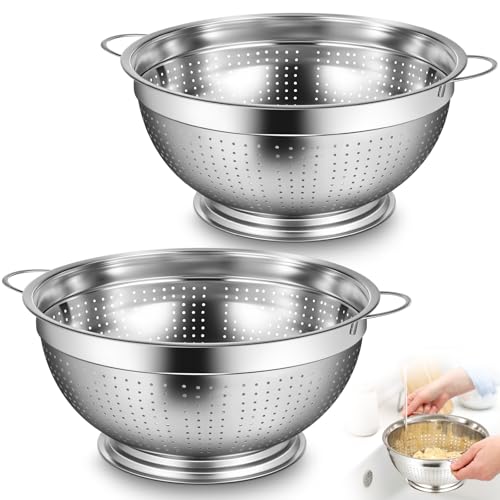
Hole size and spacing matter more than people expect. Closely spaced micro-perforations drain quickly while keeping small pasta shapes like orzo or angel hair contained. Larger punched holes release water faster but may let thin noodles slip through. The best pasta colanders for spaghetti tend to have tightly spaced holes in a fine mesh pattern, often paired with a footed or elevated base so the pasta sits above the drained water.
Capacity and size fit
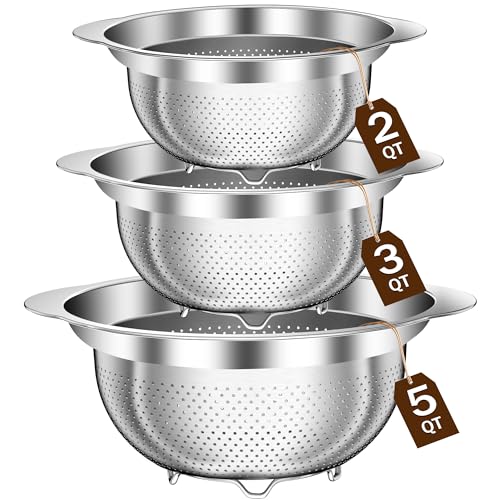
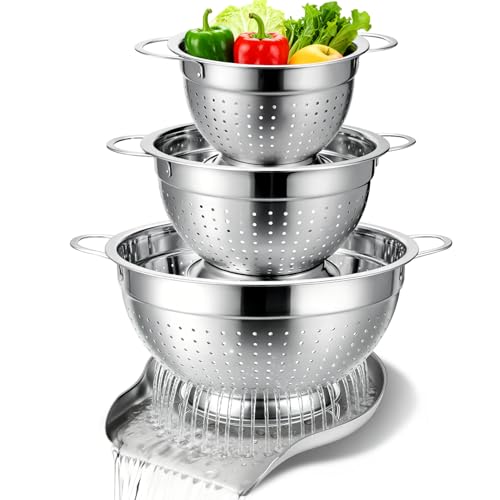
Capacity is usually listed in quarts or liters and should match your typical batch. A 3-quart bowl works well for a single portion or a side dish, while a 5-quart bowl fits a full pound of pasta for a family meal. For cooks who want flexibility, a 3-piece set with 2, 3, and 5-quart sizes covers everything from rinsing berries to draining a large pot of spaghetti.
Material and durability
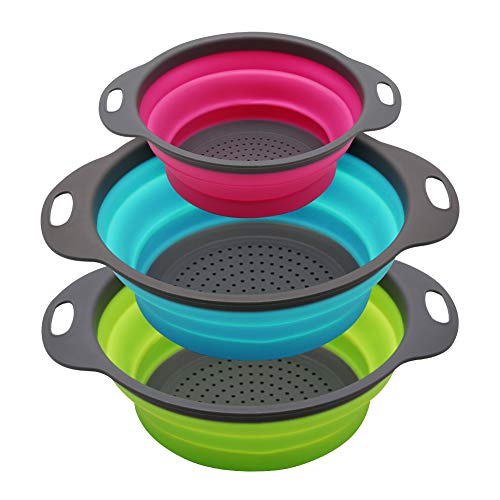
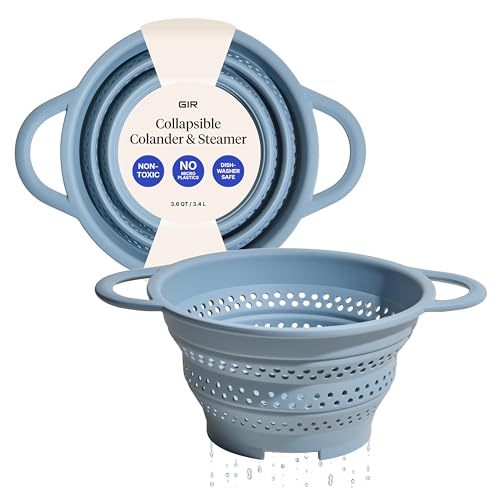
Stainless steel is the most common material in this category because it resists rust, handles hot water, and is dishwasher safe. Look for 18/8 or 18/10 stainless steel for thicker, more durable builds. Collapsible silicone or plastic sets are lighter and easier to store, but they may feel less rigid when full of heavy pasta.
Base stability and handling
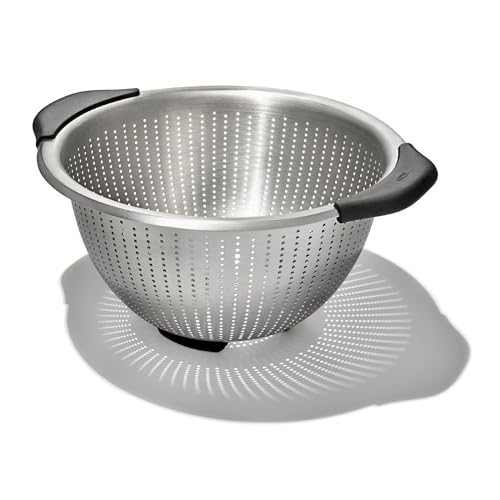
Stable bases prevent tipping when a bowl is full of hot pasta. Footed designs, raised rings, or non-slip silicone bases all serve this purpose. Handles are just as important: riveted handles tend to stay secure over time, while seamless one-piece handles reduce weak points. Over-the-sink colanders with expandable rubber handles rest across the sink for hands-free draining.
Versatility for pasta tasks
A good colander should do more than drain spaghetti. Look for bowls that can also rinse berries, drain canned beans, or steam vegetables inside a pot. Over-the-sink models add another use case by directing water straight into the drain, which helps when the counter is full of dishes.
Cleaning and storage
Dishwasher-safe materials cut cleanup time. Collapsible designs fold down to about 1.3 inches for storage, which is helpful in apartments and small kitchens. Nesting sets stack inside each other, while bowl-shaped colanders can sit inside a mixing bowl when not in use.
Final recommendation
Tiawudi 3-Piece Stainless Steel Colander Set ranks first overall in this specification-based comparison under the published weighted criteria.
For cooks who want one stainless steel bowl that drains pasta fast and stays steady on the counter, the EWFEN 5-Quart Stainless Steel Colander with Handles is the first overall specification-based choice among the best pasta colanders. Its elevated base, oversized handles, and tightly spaced mesh cover the key needs for draining long pasta and large batches. For buyers who want variety, the Tiawudi 3-Piece Stainless Steel Colander Set delivers three sizes in one purchase and nests for storage, making it one of the top pasta colanders for versatile home kitchens. For small kitchens, the Gevoli 3-Pack Collapsible Colanders offer an over-sink draining system and compact folding storage. Together, these three options cover the main ways people actually use pasta colanders at home.
Frequently Asked Questions
What size pasta colander do most home cooks need?
A 5-quart colander handles a typical family batch of pasta, while a 3-quart bowl works for smaller portions or single servings. Sets with 2, 3, and 5-quart sizes give you both options without taking up much extra space.
Are the best pasta colanders always stainless steel?
Stainless steel is the most common material, but collapsible silicone and plastic sets work well for small kitchens where storage space is limited. Steel is more rigid under heavy loads, while silicone folds flat for cabinets.
Are micro-perforations better than standard holes for draining pasta?
Closely spaced micro-perforations drain water quickly and contain thin noodles like angel hair and capellini. Standard punched holes release water faster but may let very small pasta shapes escape, so the best pasta colanders for fine pasta usually have tighter mesh.
Can a pasta colander double as a vegetable or fruit strainer?
Yes. Most pasta colanders are designed to rinse berries, drain canned vegetables, and wash leafy greens. Over-the-sink models are particularly useful for rinsing produce because the water flows straight into the drain.
What is the advantage of an over-the-sink pasta colander?
Over-the-sink colanders rest across the sink with expandable handles, which keeps counters dry and frees up space for plating. This design is helpful in small kitchens or when the counter is full of prep bowls.