Buying Guide
Choosing the best polyester fabric dyes starts with the fiber at hand. Polyester, nylon, spandex, and acetate are synthetic fibers that resist the all-purpose dyes designed for cotton, silk, or wool. Instead, they require disperse-style or synthetic-fiber dyes, paired with sustained heat to drive the pigment into the fiber. Before selecting a dye, identify the fiber content of your project, decide whether you need a powder packet, a liquid concentrate, or a kit, and plan for the heat method your workspace can support.
Match the Dye to the Fiber
Synthetic fibers absorb color very differently than natural ones. Polyester and acetate need a dye formulated specifically for synthetics, and many products document a minimum percentage of synthetic content required for reliable results. The Rit DyeMore line, for example, is documented for fabrics with 35% or more polyester, acrylic, acetate, or nylon. Below that threshold, the color may not take evenly, and an all-purpose dye may be a better choice. Jacquard iDye Poly is engineered around polyester and other synthetics, while the Jacquard iDye Poly in Crimson extends that capability to plastics, nylons, buttons, 3D-printed objects, wigs, and urethane coatings, making it a strong option for cosplay and prop work.
Dye format affects both preparation time and storage. Powder packets such as the Jacquard iDye Poly line dissolve directly in the dyebath, which removes the need to measure loose powder. Each 0.49 oz packet handles 2–3 lbs of dry fabric, a useful benchmark for sizing projects. Liquid concentrates such as the Rit DyeMore 7 oz line or the Qualia Synthetic Fabric Dye bottle or pouch simplify mixing and integrate easily with measured water ratios. The Qualia bottle targets up to 1200 g of fabric per pack, while the Rit DyeMore 7 oz format pairs with the brand’s published recipe library for repeatable color results.
Plan for the Required Heat Process
Synthetic-fiber dyes require sustained high temperatures to set properly. Most options in this category document a stovetop simmer or boiling-water process, typically in a stainless-steel pot, because the heat drives the disperse dye into the hydrophobic synthetic fiber. The Rit DyeMore liquid variants explicitly state that a stainless-steel pot on the stove is required and that washing-machine application is not supported. Powder packet dyes such as Jacquard iDye Poly rely on a similar simmering approach. Before choosing a dye, confirm that your workspace supports the documented heat method, and factor in ventilation, since some synthetics can release odors at high temperatures.
Think About Capacity and Project Size
Capacity drives how many garments or how much yardage a single pack or bottle can handle. Packet-based dyes document capacity in pounds of dry fabric, while liquid concentrates often list a gram or fluid-ounce figure along with a fabric weight or garment estimate. For small projects like a single t-shirt or accessory, a single 7 oz bottle or 14 g packet is typically sufficient. For larger pieces or batch dyeing, the higher-capacity Qualia formula or multiple DyeMore bottles may be required.
Consider Color Range and Recipe Support
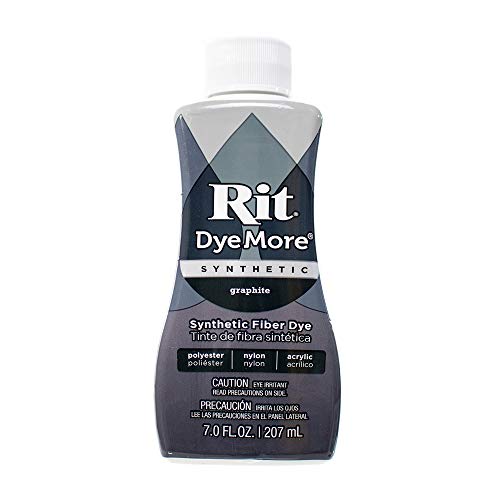
Color availability matters, particularly for color-matching projects. The Rit DyeMore line documents more than 250 color recipes on its website, which makes it easier to dial in a specific shade or recreate a look. Single-shade listings such as Rit DyeMore Super Pink, Plum Berry, Graphite, and Chocolate Brown give buyers specific endpoints, while Jacquard iDye Poly packets are sold by individual color, including Black, Crimson, and Violet. The Qualia Synthetic Fabric Dye line also documents color mixing, allowing users to blend shades for custom results.
Evaluate Substrate Versatility
Some users want to dye more than just fabric. The Jacquard iDye Poly in Crimson is documented for plastics, nylons, buttons, 3D-printed objects, wigs, and urethane coatings, which broadens its usefulness for costume and prop makers. Most other entries in this comparison focus on fabric, with documented use on clothing, décor, and craft pieces. If the project involves hard-surface synthetics, substrate versatility should weigh heavily in the decision.
Look for Craft Technique Compatibility
Several options document support for specific craft techniques. Rit DyeMore variants such as Plum Berry, Graphite, Super Pink with Gloves, and Chocolate Brown reference ombré, dip dye, shibori, and tie-dye. The Qualia Synthetic Fabric Dye description includes tie-dye tutorials. Jacquard iDye Poly is also a popular base for tie-dye on synthetics, though its documentation focuses more on the dye process itself. Choosing a dye that explicitly supports your intended technique reduces trial and error.
Final Recommendation
Jacquard iDye Poly 0.49 oz – Crimson ranks first overall in this specification-based comparison under the published weighted criteria.
Among the best polyester fabric dyes compared here, the Jacquard iDye Poly 0.49 oz in Crimson stands out as the first overall specification-based choice. It documents the widest substrate range in the comparison, covering polyester, nylon, plastics, 3D-printed parts, and more, while retaining the clean dissolvable-packet format and the 2–3 lb per-packet capacity that define the iDye Poly line. For buyers who need a versatile synthetic dye for both fabric and hard-surface projects, it delivers the broadest documented coverage.
For buyers focused on liquid dyes with a strong recipe library and clear blend guidance, the Rit DyeMore line remains a strong option. Its 7 oz format, 35% synthetic threshold, and documentation of multiple craft techniques make it a reliable choice for clothing, décor, and craft projects on polyester-rich fabrics. The Rit DyeMore Tropical Teal and Chocolate Brown variants offer vivid and earthy shades, while the Super Pink with Gloves kit adds convenience for cleaner craft sessions.
For projects that demand higher fabric capacity per pack, the Qualia Synthetic Fabric Dye in Green documents up to 1200 g of fabric coverage and a 30-minute process, which can shorten dye cycles for small garments. Buyers should still plan for the boiling-water requirement noted in the product documentation.
The top polyester fabric dyes overall span three clear use cases: dedicated disperse packets for tight polyester focus, liquid synthetic lines with extensive recipe libraries, and concentrated formulas with higher fabric capacity. Matching the dye format to the fiber blend, heat method, and project scale will produce the most consistent results across apparel, décor, and craft applications.
Frequently Asked Questions
What makes polyester harder to dye than cotton?
Polyester is a hydrophobic synthetic fiber, which means it does not absorb water-based dyes the way cotton or other natural fibers do. It requires a disperse-style dye and sustained high heat, often a stovetop simmer, to drive the pigment into the fiber. Products like Jacquard iDye Poly and Rit DyeMore are formulated specifically for this requirement, while all-purpose dyes designed for cotton will produce little to no color change on polyester.
Can I use these polyester fabric dyes in a washing machine?
The Rit DyeMore documentation explicitly states that the dye cannot be used in a washing machine because the high-heat stovetop process is required to maintain temperature throughout dyeing. Powder packet dyes such as the Jacquard iDye Poly line are similarly designed for a stovetop simmer. Always check the product documentation for the supported method before starting.
How much fabric will one pack or bottle dye?
The Jacquard iDye Poly 0.49 oz packets document 2–3 lbs of dry fabric per packet. The Qualia Synthetic Fabric Dye bottle documents up to 1200 g of fabric per pack. The Rit DyeMore 7 oz bottles do not list a specific pound figure in the listing, but the recipe library on Rit’s website provides guidance for various fabric weights. Sizing projects to the documented capacity helps ensure even color results.
Do I need to handle polyester blends differently?
Yes. Blends with less than 35% synthetic fiber may not absorb the synthetic dye reliably. The Rit DyeMore documentation recommends Rit All-Purpose Dye for blends below 35% polyester, acrylic, or acetate. For blends above that threshold, a synthetic dye will color the synthetic portion of the fabric, while natural fibers in the blend will take the dye to a lesser degree, which can produce a heathered or tonal effect.
Are the best polyester fabric dyes safe for hard surfaces and props?
Some are documented for non-fabric substrates. The Jacquard iDye Poly in Crimson lists plastics, nylons, buttons, 3D-printed objects, wigs, and urethane coatings, making it a strong choice for cosplay and prop work. Other products in this comparison focus primarily on fabric, so check the documentation for any non-fabric applications before use.