Buying Guide
This guide compares the best liquid fabric dyes using documented fiber compatibility, color & recipe range, application method, formula strength & coverage, kit contents & accessories, and sustainability & reuse support.
What Makes a Liquid Fabric Dye Worth Buying
The best liquid fabric dyes share a few core specification traits: clear fiber compatibility, a usable application method for home equipment, and enough color depth to penetrate fabric without repeated baths. Liquid dyes arrive pre-dissolved, so they mix more evenly into hot water than powder alternatives and reduce the risk of undissolved granules clinging to fabric. For crafters comparing bottles, the practical questions are which fibers the formula supports, which surface or vessel the method requires, and how the shade range or recipe library supports custom colors.
Match the Dye to the Fiber
Fiber compatibility is the first filter for any liquid dye. The Rit All-Purpose Liquid Dye bottles in this guide document performance on cotton, linen, silk, wool, rayon, and ramie, with some listings also listing nylon, wood, wicker, paper, and cork. When a fabric contains 35 percent or more polyester, acrylic, or acetate, the Rit DyeMore Synthetic Liquid Dye line is documented as the proper choice and requires a stainless-steel pot on the stove to maintain high water temperature. Picking the wrong family is the most common specification mismatch in dyeing projects, so checking the fiber content label before choosing a bottle saves time and dye.
Application Method and Equipment
All-purpose liquid dyes in this guide are documented for use in a washing machine, a plastic container, or a stainless-steel sink, which fits most household setups. The synthetic Rit DyeMore line is documented for stove-top use in a stainless-steel pot and cannot be used in a washing machine, which is a meaningful constraint for renters without stovetop access. Matching the bottle to the equipment already on hand avoids mid-project improvisation.
Color Range and Recipe Libraries
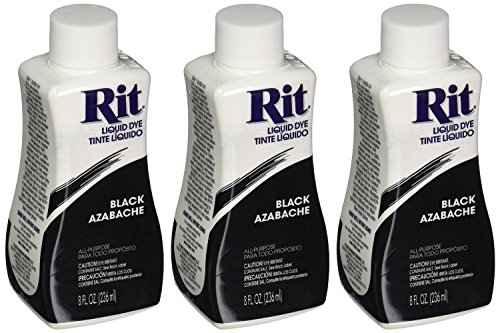
A wider color range and recipe library expands what a single bottle can produce. Rit documents more than 30 colors across its liquid lines and publishes color recipes online, with some listings pointing to 250+ synthetic-fiber recipes and 1,000+ all-purpose recipes on the brand website. Crafters working on matching sets or themed projects benefit from documented recipe support because it allows shade adjustment without buying additional bottles. Single-color packs such as the Navy 2-Pack or Black 3-Pack trade recipe flexibility for shade consistency across multiple items.
Kit Contents and Accessories
Some bottles in this guide ship with disposable gloves, which keep hands clean during tie-dye and dip-dye work. The Rit Liquid Fabric Dye Black 8 oz with Gloves, the Rit DyeMore Royal Purple 7 oz, and the Rit DyeMore Graphite 7 oz with Plastic Gloves each document a pair of disposable gloves in the package. Bottles without included gloves still work, but crafters will need to source their own protective gear, which is worth noting when planning a project.
Sustainability and Reuse
Liquid dyes are often used to extend the life of faded clothing, refresh dated home textiles, or recolor thrifted finds. The Rit listings in this guide describe using dye to rejuvenate faded apparel, coordinate home décor, and hide laundry accidents. Reusing existing textiles through dyeing reduces waste from discarded garments and supports longer lifecycles for household fabrics, which is a recurring theme across the product descriptions.
Final recommendation
Rit DyeMore Synthetic Liquid Dye, Tropical Teal 7 oz ranks first overall in this specification-based comparison under the published weighted criteria.
The final choice among the best liquid fabric dyes depends on the documented features that match your intended use.
For an all-purpose specification-based choice across the natural-fiber family, the Rit Liquid Fabric Dye Black 8 oz with Gloves stands out for its documented natural-fiber scope, included gloves, and straightforward washing-machine or sink method, which makes it a strong everyday option. For synthetic blends, the Rit DyeMore Synthetic Liquid Dye Tropical Teal 7 oz is the proper specification-based match thanks to its documented polyester, acrylic, acetate, and nylon scope and its stove-top stainless-steel pot method. Together, these two bottles cover the two fiber families that define the top liquid fabric dyes on this list and pair well as a starter set for varied projects.
Frequently Asked Questions
What fibers do the best liquid fabric dyes support?
All-purpose liquid dyes in this guide document performance on cotton, linen, silk, wool, rayon, and ramie, with several listings also listing nylon, wood, wicker, paper, and cork. For fabrics with 35 percent or more polyester, acrylic, or acetate, the synthetic Rit DyeMore line is documented as the correct specification match.
Can I use these top liquid fabric dyes in a washing machine?
The Rit DyeMore Synthetic Liquid Dye is documented for stove-top use in a stainless-steel pot and is not specified for washing-machine use.
Do any of the best liquid fabric dyes ship with gloves?
Yes. The Rit Liquid Fabric Dye Black 8 oz with Gloves, the Rit DyeMore Royal Purple 7 oz, and the Rit DyeMore Graphite 7 oz with Plastic Gloves each document a pair of disposable gloves in the package. Other bottles ship without gloves and require the crafter to source their own protective gear.
How do I pick the right shade among the liquid fabric dyes?
Single-color bottles such as the Rit All-Purpose Liquid Dye Sage Green 8 oz, Cherry Red 8 oz, Navy 2-Pack, Fuchsia 8 oz, and Black 3-Pack help with shade consistency across matching pieces. Bottles backed by larger recipe libraries, such as the Rit All-Purpose Liquid Dye Canyon 8 oz, support custom shade work using the brand’s documented online recipes.
Are liquid dyes better than powder dyes for home projects?
Liquid dyes arrive pre-dissolved, which simplifies mixing in hot water and reduces the chance of undissolved granules clinging to fabric. Powder dyes require thorough dissolution before use, which adds steps to the process. For most household washing-machine, sink, or stovetop methods, a liquid format is easier to integrate into the workflow.