Buying Guide
The best polypropylene weed barrier fabric is usually a woven ground cover rather than an impermeable plastic sheet. The selected products describe woven polypropylene construction, which is intended to block or suppress weeds while allowing water and air to move toward the soil. That combination matters under mulch, gravel, paths, beds, and other landscape coverings. Still, the fabric is only one part of an installation: the surface should be prepared, seams should be planned, and the material should be secured before covering it.
Match roll width and length to the site
Start by measuring the area and considering how many seams will be needed. A 6-foot roll can cover broad beds efficiently, but it may be harder to position in narrow spaces. The DeWitt Sunbelt and Kdgarden products both use 6-foot-wide, 300-foot-long formats suited to long runs and large projects. UPGRADE and Sunocity also provide 6 x 300-foot options, while their listings add included staples.
A 4-foot width may be easier to manage around rows and borders. LAVEVE documents two 4 x 50-foot pieces for a 100-foot total, which may be useful when separate sections are easier to handle. Rintea uses a 4 x 300-foot format, and HOOPLE offers 4 x 180 feet. For narrower rows, Happybuy’s 3 x 300-foot format can reduce excess trimming, although a broad site may require more overlaps.
Consider fabric weight and construction
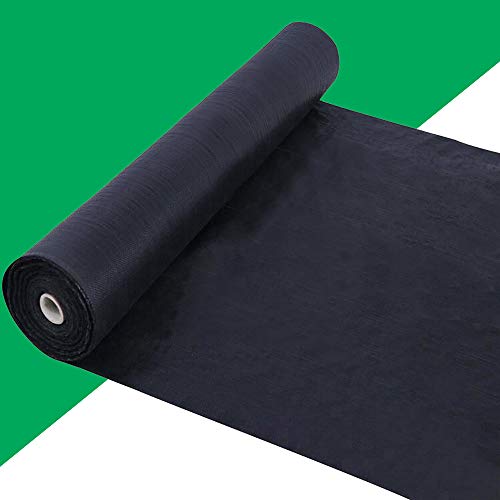
Ounce ratings can help distinguish the documented material options, but they do not replace installation planning. Kdgarden states a 5-ounce, 142-gsm professional-grade woven polypropylene construction, the highest stated weight in this comparison. Sunocity and UPGRADE list 3.5-ounce fabric. Several others identify 3.2-ounce construction, including DeWitt, VEVOR, Rintea, Happybuy, and Groweco. HOOPLE describes heavy-duty woven polypropylene but does not provide an ounce rating in the supplied specifications.
Heavier fabric may be a reasonable consideration for demanding projects, but it may also be less convenient to move and cut. For a small bed, a manageable roll and straightforward layout can be more useful than choosing the highest stated weight. For large commercial-style areas, the broader rolls and more detailed outdoor-resistance claims from DeWitt and Kdgarden deserve attention.
Prioritize documented permeability
Most selected products describe water and air permeability, and some also mention nutrients passing through. This is a central buying consideration because the intended use is ground coverage over soil. DeWitt specifically describes air, water, and nutrients moving through the fabric. VEVOR, UPGRADE, LAVEVE, and Rintea also document permeable or breathable designs. Happybuy describes water passage and soil breathing, while Groweco identifies high permeability.
Permeability does not mean the fabric should be installed over standing water or poorly prepared ground. Remove existing weeds and debris, smooth the surface, lay the material flat, and overlap adjoining sections as appropriate for the project. The supplied listings do not establish a universal overlap measurement, so the installer should determine the seam arrangement from the site and covering material.
Check UV and durability language
Outdoor exposure is another important distinction. DeWitt documents UV stabilization and resistance to tears and punctures. Kdgarden describes weatherproof, UV-treated material. UPGRADE identifies a UV-treated surface and reinforced edges, while LAVEVE and Sunocity describe UV resistance. VEVOR describes high-density, tear- and corrosion-resistant polypropylene. HOOPLE describes high tensile strength and tear resistance.
These are listing-based specifications, not independent durability tests. Use them to compare documented features rather than assume identical service life. Covering the fabric with mulch, gravel, or another suitable landscape material may be part of the intended installation, and exposed edges should be secured carefully.
Look for installation aids
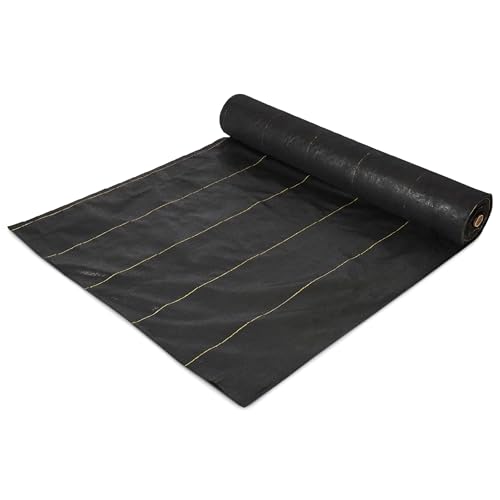
Guide lines can simplify straight cuts and plant spacing. VEVOR, LAVEVE, Rintea, Happybuy, and Groweco document green guide lines, while DeWitt uses golden alignment stripes every 12 inches. UPGRADE also lists printed guide lines. Smooth or reinforced edges may help with handling, but cutting will still be part of most installations.
Included securing hardware can change the preparation checklist. UPGRADE and Sunocity list 90 staples, Rintea lists 20 U-shaped securing pegs, and the other products generally describe securing the fabric with stakes or pegs without documenting that hardware as included. Confirm the package contents before beginning a large project.
Choose by project scale
For long commercial-style rows, DeWitt, Kdgarden, UPGRADE, Sunocity, and Rintea provide 300-foot formats. For medium areas, HOOPLE’s 180-foot roll or VEVOR’s 100-foot roll may be easier to stage. Compact projects are not represented among the selected products as strongly as large landscape work, so measure carefully before choosing a long roll. The best polypropylene weed barrier fabric for a small bed may be the product that creates the least waste and is easiest to position, not the one with the largest coverage.
Final Recommendation
DeWitt Sunbelt 4 x 300 Feet ranks first overall in this specification-based comparison under the published weighted criteria.
The final choice among the best polypropylene weed barrier fabric depends on the documented features that match your intended use.
DeWitt Sunbelt 4 x 300 Feet is the highest-scoring returned product and the first overall specification-based choice. Its documented 3.2-ounce woven polypropylene construction, 1,200 square feet of stated coverage, permeability, UV stabilization, tear and puncture resistance, and 12-inch alignment stripes create the most complete specification profile in this comparison.
Kdgarden is the most specification-aligned alternative when the highest stated fabric weight is the priority. UPGRADE and Sunocity stand out when included staples are useful, while VEVOR is attractive for guide lines and precisely cut edges. For a top polypropylene weed barrier fabric choice with a narrower long-run format, Rintea and Happybuy offer useful 4-foot and 3-foot options respectively. Always confirm the roll dimensions, included hardware, and site requirements before ordering.
Frequently Asked Questions
What is the best polypropylene weed barrier fabric for a large landscape area?
DeWitt, Kdgarden, UPGRADE, Sunocity, and Rintea all document 300-foot lengths. DeWitt and Kdgarden provide 6-foot widths, while UPGRADE and Sunocity also use 6-foot-wide formats. The appropriate choice depends on the site’s width, handling needs, and preference for included staples or the highest stated fabric weight.
Does woven polypropylene fabric allow water and air through?
The selected listings generally describe woven polypropylene as permeable or breathable. DeWitt, VEVOR, UPGRADE, LAVEVE, Rintea, Happybuy, and Groweco specifically provide water and air passage details, with some also mentioning nutrients. These are supplied listing claims, not independent flow-rate measurements.
Are staples included with every product?
No. UPGRADE and Sunocity list 90 staples, and Rintea lists 20 U-shaped securing pegs. Other selected products describe installation with stakes or pegs but do not document included hardware. Check the package contents and plan enough securing points for wind, seams, edges, and the chosen surface covering.
Which top polypropylene weed barrier fabric has guide lines?
Several selected products document alignment aids. VEVOR, LAVEVE, Rintea, Happybuy, and Groweco list green guide lines; UPGRADE lists printed guide lines; and DeWitt specifies golden stripes every 12 inches. These markings can help with straight cuts and planting alignment, but they do not remove the need to measure and plan seams.
Use the width that fits the site with the fewest awkward cuts and seams. Happybuy’s 3-foot width can suit narrow rows, while LAVEVE, Rintea, and HOOPLE offer 4-foot formats. Six-foot products cover broader areas more quickly but may require more careful handling around small beds and irregular borders.