Buying Guide
Choosing among the best polypropylene ropes starts with the task, not the package wording. Polypropylene is commonly selected when low weight, moisture resistance, and floating behavior are useful. The products here vary considerably, however: some are thin cords for marking or light utility work, while others are 1/2-inch or 1-inch ropes intended for more substantial handling. Treat every stated load number as product-specific, and do not assume that a breaking strength equals a safe working load.
Match diameter to the job
Diameter affects handling, bulk, and the type of work a rope can reasonably support. The 1/8-inch products in the source pool are cord-like options for clotheslines, crafts, trail marking, and similar light tasks, but they were not selected for this comparison because the stronger candidates offered more useful specification coverage. A 1/4-inch rope is the most common size in this list. It keeps weight and storage demands modest while supporting marine lines, tie-downs, outdoor projects, and general household use.
The 3/8-inch MaxxHaul and LUOPUTUO options add more body without reaching the bulk of the larger ropes. The 1/2-inch Koch rope is a better fit when a thicker line and stated 420-pound working load are useful for bundling, gardening, or cargo-related jobs. The 1-inch YSMN rope is a specialized thick-format choice for users who want a substantial artificial-manila appearance and feel. It should not be treated as a human-support or safety rope merely because it is large.
Check length before buying
Length is one of the clearest differences in this comparison. A 40- or 50-foot coil is easier to store and sensible for small jobs. Attwood provides 40 feet for dock, anchoring, and cargo tasks, while MaxxHaul and Koch provide 50-foot formats. The 100-foot products cover common outdoor and household needs without requiring a large coil.
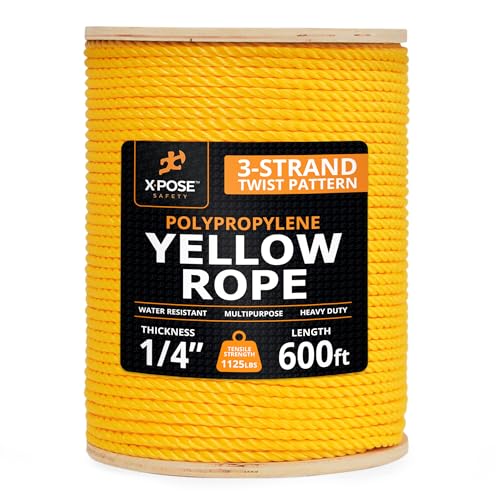
For repeated work, long coils can be more convenient. T.W. Evans provides 500 feet, Xpose Safety provides 600 feet, and LUOPUTUO provides 400 feet. These formats suit long runs, marking, repeated tie-downs, or users who prefer cutting rope to length. They also require better storage planning. Keep a long coil organized to reduce tangling and inspect the cut end after cutting so the braid or twist does not unravel.
Understand construction styles
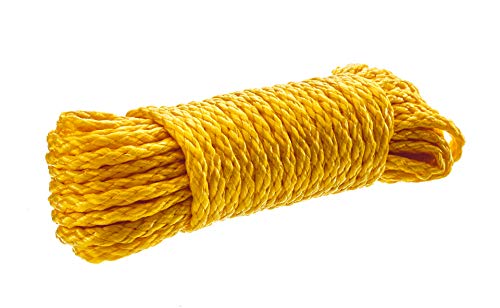
Construction changes how a rope feels and what tasks it supports. Twisted rope, such as the Koch, LUOPUTUO, YSMN, Brobantle, Xpose Safety, and NEWSEED options, is familiar and practical for general tying. A three-strand design can be easy to handle and inspect, though the supplied evidence does not establish identical performance among all twisted products.
Braided designs offer different handling characteristics. Attwood and T.W. Evans use hollow-braid formats, and both are associated with floating behavior; the T.W. Evans listing specifically says it is easy to splice. MaxxHaul uses a diamond braid with a non-woven core and five inner strands, while its textured surface is described as helping grip and knot holding. These features can matter more than a generic heavy-duty label when the rope will be tied repeatedly.
Load figures are not presented consistently. MaxxHaul states a 500-pound working load limit, Koch states a 420-pound working load limit, and T.W. Evans states a 144-pound working load. Other listings provide breaking or tensile-strength figures instead. Those figures should not be compared directly with working load limits.
For any safety-critical, lifting, climbing, towing, or load-bearing application, use a rope specifically rated and approved for that purpose rather than relying on a general-purpose polypropylene listing.
Consider water and weather exposure
Polypropylene’s floating behavior is a major reason to choose it for marine or pool-related tasks. Attwood, T.W. Evans, LUOPUTUO, Xpose Safety, NEWSEED, and Brobantle explicitly document floating or buoyant behavior. That can make a dropped line easier to retrieve, but floating alone does not establish suitability for anchoring, towing, or rescue work.
Resistance claims also vary. Attwood lists resistance to rot, marine growth, abrasion, oils, and gasoline. MaxxHaul lists resistance to moisture, sunlight, rot, oil, acid, and chemicals. Koch emphasizes moisture and rot resistance, while NEWSEED and Brobantle include broader chemical, oil, or UV-related claims. Select the product whose evidence matches the exposure you expect, and still inspect the rope periodically for abrasion, fading, cuts, and strand damage.
Choose visibility and handling features
Color can be functional. Xpose Safety and Zakous use bright yellow finishes, while Brobantle uses bright blue. These colors may help identify a line in cluttered areas or on the water, but visibility should not be confused with a certified safety function. Brown and black ropes can be less visually prominent while blending into certain settings.
Handling details are equally practical. Secure knot holding is stated for MaxxHaul, Koch, and Zakous. NEWSEED is described as smooth and easy to handle, while LUOPUTUO is described as flexible and easy to knot. The right choice depends on whether you need repeated tying, easy splicing, a textured grip, or a long coil that can be cut into several sections.
Final recommendation
NEWSEED 1/4-Inch x 150-Foot Polypropylene Rope ranks first overall in this specification-based comparison under the published weighted criteria.
NEWSEED 1/4-Inch x 150-Foot Polypropylene Rope is the first overall specification-based choice among the best polypropylene ropes in this comparison. Its stated breaking strength, floating behavior, environmental-resistance claims, and useful 150-foot length give it a well-rounded balance of documented features. Brobantle is a close alternative when bright color and a three-strand marine-oriented design matter. MaxxHaul is preferable when you want a stated working load limit and diamond-braid handling.
For specialized needs, choose by format rather than by rank. Attwood is the focused dock and water option; Koch suits thicker low-stretch utility work; LUOPUTUO, T.W. Evans, and Xpose Safety are long-coil choices. YSMN provides the thickest artificial-manila style, while Zakous keeps the specification set simple for visible household and outdoor tasks. These are the top polypropylene ropes here because each has a distinct, documented reason to be considered.
Frequently Asked Questions
Are polypropylene ropes suitable for marine use?
Several selected products document marine or water-related use. Attwood is specifically described for docking, anchoring, and cargo securing, while NEWSEED, Brobantle, LUOPUTUO, and T.W. Evans document floating behavior. Suitability still depends on the task, diameter, load information, and exposure. A general-purpose rope should not automatically be used for rescue, towing, or other safety-critical work.
Which of the best polypropylene ropes is easiest to choose for a long run?
Start with the required distance. Xpose Safety provides 600 feet, T.W. Evans provides 500 feet, and LUOPUTUO provides 400 feet. These lengths can reduce the need for joining sections, but they also create more storage and handling demands. Confirm the diameter and any available load information before selecting a long coil.
Is breaking strength the same as working load limit?
No. Breaking strength or tensile strength describes a failure-related figure, while a working load limit is a stated use limit. NEWSEED and Brobantle provide breaking or tensile-strength figures, whereas MaxxHaul, Koch, and T.W. Evans provide working load information. Do not substitute one type of number for the other.
Does every polypropylene rope float?
No. Floating is documented for several products, including Attwood, T.W. Evans, LUOPUTUO, Xpose Safety, NEWSEED, and Brobantle, but it is not stated for every selected rope. Check the individual listing when buoyancy is important, and remember that floating does not indicate a rope’s safe load capacity.
How should polypropylene rope be stored?
Keep it organized, dry when practical, and away from avoidable abrasion or damaging chemicals. Long coils such as the 400-, 500-, and 600-foot options should be wound or contained to limit tangling. Before use, inspect for cuts, fraying, flattened sections, or other visible damage, especially after outdoor or marine exposure.