Buying Guide
The best porcelain dessert plates are not defined by diameter alone. A useful comparison should consider the material wording, the portion size, the care instructions, the way the plates store, and whether the design fits the occasions where they will be used. The listings in this guide cover compact six-inch plates, medium 6.5- to 7.5-inch options, and larger eight-inch designs.
Choose the serving diameter first
Six-inch plates are the most compact choices here. They can be helpful when you want a clearly defined dessert portion, but the smaller surface may feel limiting for layered desserts, fruit, or several accompaniments.
The 6.5-inch iboodi plates provide a modest increase in usable surface without becoming a full luncheon plate. This middle size can work well when the same plate needs to serve dessert, salad, candy, or a small meal. Fitz & Floyd’s six-inch plates are also compact, but their listing specifically emphasizes small bites such as bruschetta, sushi, mini sliders, and desserts.
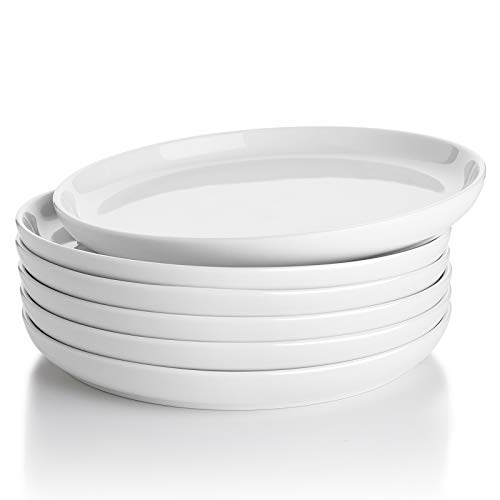
At the larger end, Sweese, EasyDancing, Lenox, and Brew To A Tea offer approximately 7.4- to 8-inch formats. These sizes are more flexible for generous cake portions, pastries, fruit, or small meals. Lenox’s 8-inch plates are particularly presentation-focused, while Sweese and EasyDancing use simpler white styling that can transition between casual and formal settings.
Check the material language
Porcelain is documented directly for Sweese, Fitz & Floyd, EasyDancing, Lenox, iboodi, BABALIU, KERQSULIC, and Brew To A Tea. Other listings use mixed terminology. RAIHOMKIT’s title says porcelain, while its feature text describes high-fired ceramic. PIEMEET uses ceramic in the title but identifies its model as porcelain dessert plates. Those products can still be useful candidates, but the inconsistent wording is a reason to confirm the product page’s current material description before ordering.
Material language should also be read alongside the finish. Smooth glazed surfaces are described for several sets, including iboodi and EasyDancing. Sweese describes its porcelain as lead-free and chip-resistant, while BABALIU emphasizes high-temperature firing. These are listing claims, not independent test results, so they should be treated as specifications rather than guarantees of long-term performance.
Match care instructions to your routine
Many of the selected sets document dishwasher and microwave compatibility. Sweese, BABALIU, Fitz & Floyd, iboodi, RAIHOMKIT, KERQSULIC, and EasyDancing also list oven or freezer use. If reheating is part of your routine, these combinations offer more flexibility than a decorative plate with limited care guidance.
Temperature details can matter. Sweese lists a 356°F safe temperature limit, Fitz & Floyd lists oven use up to 450°F, EasyDancing lists a range from 5°F to 572°F, and Lenox documents dishwasher and microwave use without an oven specification in the supplied evidence. Brew To A Tea is explicitly not microwave safe, despite being dishwasher safe. Gold-trimmed designs should be treated according to their care instructions rather than assumed to have the same appliance compatibility as plain white plates.
Consider rims, shapes, and storage
Raised or flared rims can be useful for foods with sauce. These features may help contain food during serving, although the supplied listings do not establish performance under every food or handling condition.
Storage is another practical distinction. Sweese, BABALIU, RAIHOMKIT, KERQSULIC, and PIEMEET specifically describe stackable designs. A square profile can bring sharper visual structure to a modern table, while round plates generally coordinate more easily with existing dinnerware.
Select a style for the occasion
Plain white porcelain is the most adaptable choice in this comparison. Sweese, EasyDancing, KERQSULIC, and RAIHOMKIT can blend with different linens and dinnerware. Fitz & Floyd adds interest through an organically shaped outline rather than printed decoration.
For a more decorative table, Lenox Butterfly Meadow supplies a multicolor pattern, while Brew To A Tea uses a gold trim. Decorative choices can make dessert service feel more formal, but they may impose care restrictions. Lenox has microwave and dishwasher documentation; Brew To A Tea is not microwave safe. Choose the appearance only after checking whether the care requirements fit how the plates will be used.
Think about quantity and place settings
A set of four, such as Lenox, may be appropriate for a smaller household or occasional dessert service. Six-piece sets are common and offer a balanced number for family use or entertaining. BABALIU, RAIHOMKIT, and PIEMEET move toward larger gathering quantities with 18, 16, and 16 pieces respectively. More pieces can be useful for parties and catering, but they also require more cabinet space and a larger storage plan.
Final Recommendation
Sweese 7.4-Inch White Porcelain Dessert Plates, Set of 6 ranks first overall in this specification-based comparison under the published weighted criteria.
The final choice among the best porcelain dessert plates depends on the documented features that match your intended use.
Sweese 7.4-Inch White Porcelain Dessert Plates, Set of 6 is the first overall specification-based choice. It combines clearly documented porcelain, a flexible 7.4-inch size, a raised edge, stackable storage, and dishwasher, microwave, oven, and freezer compatibility. Its listed oven limit should be observed.
For a more artistic silhouette, Fitz & Floyd is the most specification-aligned alternative because its organic shape is explicitly part of the design rather than an unsupported styling assumption. EasyDancing is a practical pick when temperature range matters, while BABALIU and RAIHOMKIT are better suited to larger gatherings because of their higher stated quantities. Lenox and Brew To A Tea serve shoppers who prioritize decorative presentation. Among the top porcelain dessert plates, the right choice depends on whether your priority is flexible care, portion size, cabinet storage, or table style.
Frequently Asked Questions
Among the best porcelain dessert plates, what size should I choose for dessert?
Choose six inches for small, defined portions such as cookies, cake slices, or appetizers. A 6.5-inch plate provides a little more room, while 7.4- to 8-inch plates are better when desserts include fruit, sauces, or multiple components. The best porcelain dessert plates for larger servings are the documented 7.4- and 8-inch options, including Sweese, Lenox, and Brew To A Tea.
Are all porcelain dessert plates microwave safe?
No. Care instructions vary by product. Sweese, Fitz & Floyd, EasyDancing, Lenox, iboodi, RAIHOMKIT, KERQSULIC, and several other selected products list microwave use. Brew To A Tea specifically states that it is not microwave safe. Always follow the product’s supplied care instructions, particularly for gold-trimmed or otherwise decorative designs.
Is a raised rim useful on a dessert plate?
A raised or flared rim may help contain sauces, crumbs, or foods that move during serving. A rim can also change the usable flat area, so compare the stated diameter with the type of dessert you normally serve.
Are square plates harder to store?
Not necessarily. KERQSULIC specifically describes its square plates as stackable, and the set is designed for space-saving cabinet storage. Square plates may occupy the cabinet differently from round plates, especially near corners, so check your shelf dimensions and stacking arrangement before choosing a shape.
What should I verify before ordering?
Confirm the current material description, diameter, piece count, and appliance safety instructions. This is particularly important for listings that alternate between ceramic and porcelain wording, such as RAIHOMKIT and PIEMEET. Also check whether a decorative finish, including gold trim, changes microwave or other care limitations.