Buying Guide
The best glass dessert plates should be judged by more than transparency. A useful comparison looks at the intended portion size, the type of glass, care instructions, quantity, edge shape, and whether the design suits the table. The products above are ranked from listing specifications and feature descriptions, not from hands-on testing or customer sentiment.
Choose the right dessert-plate size
Diameter is one of the clearest differences in this group. Plates around 5.5 to 5.7 inches, such as the ZEAYEA Sunflower Glass Dessert Plates and PUREZON Floral Glass Dessert Plates, are designed for small portions, tea-time treats, fruit, appetizers, and snacks. They can work well when the dessert is compact or when the plate is being used beside a teacup, but they may feel crowded with a large cake slice or several toppings.
The 6.75-inch Corelle Vitrelle plates and 7-inch VIPHIEC and FOYO plates sit closer to a classic small dessert or appetizer format. They offer more surface area without becoming as broad as a dinner plate. This size is a sensible middle ground for cake, pie, small salads, cheese, or a plated snack.
The 7.5-inch Jinei, COKUMA, WUWEOT, and PYVYLO options are more flexible. Their dimensions can accommodate desserts plus garnish, fruit, or sauce, and their listing descriptions also mention salads, snacks, and appetizers. Hiceeden’s approximately 7.9-inch plates provide even more room and may be preferable when one plate needs to cover both dessert and side-dish duties.
Compare tempered and layered glass construction
Material language helps distinguish the more specifically documented designs. Jinei, COKUMA, VIPHIEC, FOYO, and WUWEOT describe tempered glass. Tempering is presented in their listings alongside impact, chip, or temperature-resistance claims, but those claims should not be treated as a guarantee against breakage. Glassware still needs ordinary care, especially around drops and strong impacts.
The Corelle set uses triple-layer glass and is described as lightweight, chip-resistant, and easy to stack. That makes it different from the clear decorative plates, even though it remains a glass-based option. Hiceeden describes thick, lead-free glass, while ZEAYEA and PUREZON describe food-grade or lead-free glass. For the remaining products, use the supplied material and care language as a guide rather than assuming all glass plates have identical construction.
Check microwave, oven, and freezer instructions
Appliance compatibility varies considerably. Jinei and COKUMA state microwave and dishwasher use, while VIPHIEC and FOYO go further by listing baking or oven use. FOYO also supplies a specific high-temperature claim in its listing. These features are useful if a plate may move from preparation or reheating to the table, but follow the product’s own instructions instead of generalizing from one tempered-glass plate to another.
WUWEOT’s 7.5-inch set is listed as freezer- and dishwasher-safe but specifically says not to microwave. PYVYLO also lists freezer and dishwasher use without a microwave claim. Hiceeden, ZEAYEA, and PUREZON provide less appliance-specific information in the supplied evidence. When the listing does not mention an appliance, treat that as undocumented rather than assumed safe.
Look for edges that support messy desserts
A raised or lipped edge can be useful for foods with sauce, crumbs, fruit, or loose toppings. COKUMA and Jinei explicitly describe raised edges that help contain food, while Hiceeden mentions a lip for sauce. Flat or minimally edged plates may create a cleaner visual presentation for a cake slice or pastry. Decorative bases and textured surfaces can also add interest without placing a pattern directly beneath the food. ZEAYEA’s sunflower pattern is raised on the bottom, and PUREZON describes floral detail on the bottom while keeping the surface smooth.
Match quantity to the occasion
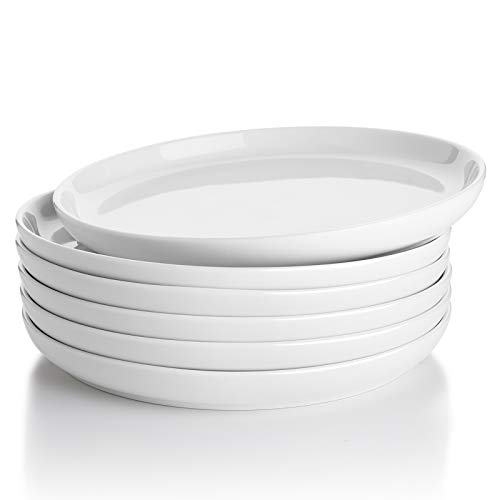
Set size affects how useful a purchase will be. Hiceeden supplies twelve plates, while ZEAYEA provides ten. WUWEOT and PYVYLO each provide eight, which can cover a family meal or a larger dessert gathering. Jinei, COKUMA, Corelle, and the six-piece options provide a coordinated group without the storage commitment of a twelve-piece set.
Three-piece sets from VIPHIEC and FOYO are more appropriate for a small household, a limited serving need, or supplementing existing tableware. Before choosing, count the people normally served and consider whether the plates will also be used for salads, appetizers, or snacks. A smaller set can be adequate when the purchase is intended for occasional use, while a larger set is more convenient for hosting.
Consider clear, patterned, or colored styling
Clear glass is easy to coordinate and keeps attention on the dessert. COKUMA, Jinei, WUWEOT, PYVYLO, Hiceeden, ZEAYEA, and PUREZON all offer clear designs, although their textures and bases differ. Corelle uses a classic Winter Frost White appearance rather than transparent presentation.
For a more decorative table, ZEAYEA adds sunflower relief and PUREZON uses floral and lace-like details. Decorative glass can be especially suitable for tea parties, weddings, seasonal tables, and special occasions, while plain clear plates tend to blend into more settings.
Final Recommendation
Jinei 7.5-Inch Tempered Glass Dessert Plates ranks first overall in this specification-based comparison under the published weighted criteria.
Jinei 7.5-Inch Tempered Glass Dessert Plates ranks first in this specification-based comparison under the published weighted criteria.
Jinei 7.5-Inch Tempered Glass Dessert Plates are the top-ranked product and the first overall specification-based choice. They combine a useful 7.5-inch size, tempered construction, a lipped edge, microwave and dishwasher compatibility, and a six-piece quantity. For the best glass dessert plates when high-heat flexibility matters most, VIPHIEC and FOYO offer documented oven or baking use in smaller three-piece sets. COKUMA is a strong practical alternative with a raised rim and six plates, while WUWEOT and PYVYLO suit shoppers who want eight stackable plates but do not need microwave use.
For decorative small servings, ZEAYEA and PUREZON add floral or sunflower detail in compact formats. Corelle is the better fit for shoppers prioritizing lightweight, layered-glass construction and classic styling over transparent presentation. Hiceeden is the most quantity-focused selection, with twelve plates and a useful lip. These top glass dessert plates are not interchangeable on care instructions, so confirm the relevant microwave, oven, freezer, and dishwasher guidance before buying.
Frequently Asked Questions
Among the best glass dessert plates, what size is best for dessert plates?
A 6.75- to 7.5-inch plate is a flexible middle range for cake, pie, fruit, appetizers, and small salads. The 5.5- to 5.7-inch ZEAYEA and PUREZON plates are better for small portions and tea-time foods, while the approximately 7.9-inch Hiceeden plates allow more room for larger portions or side dishes.
Are glass dessert plates microwave-safe?
Not all of them. Jinei, COKUMA, VIPHIEC, FOYO, and Corelle list microwave compatibility. WUWEOT’s 7.5-inch plates specifically say not to microwave, and PYVYLO, Hiceeden, ZEAYEA, and PUREZON do not provide a microwave claim in the supplied evidence. Check the individual listing before reheating.
Which glass dessert plates are suitable for oven use?
VIPHIEC and FOYO explicitly list baking or oven use. FOYO also provides a high-temperature resistance claim, while VIPHIEC describes high-temperature resistance and baking, microwave, and oven safety. Do not extend those instructions to other products without separate documentation.
Are clear glass dessert plates easy to store?
Several selected products are described as stackable, including WUWEOT, PYVYLO, ZEAYEA, PUREZON, and Corelle. Smaller plates also generally occupy less surface area, but the supplied listings do not provide identical stacked-height measurements. Check cabinet space and set quantity together before choosing.
What should I use for sauced desserts or loose toppings?
A raised edge or lip can help contain sauce, crumbs, and toppings. Jinei and COKUMA explicitly document raised edges, and Hiceeden describes a surrounding lip suitable for food with sauce. Flat decorative plates may still work, but they provide less documented containment support.