Buying Guide
The best pour-spout measuring cups should make two jobs simple: identifying the amount and transferring it without a messy stream. The products above differ substantially in shape and intended use. Some are traditional liquid cups with curved or tapered spouts. Others use long funnel nozzles for jars and molds, while several sets focus on small or standard cup increments. Start by matching the vessel to the way you cook instead of choosing by appearance alone.
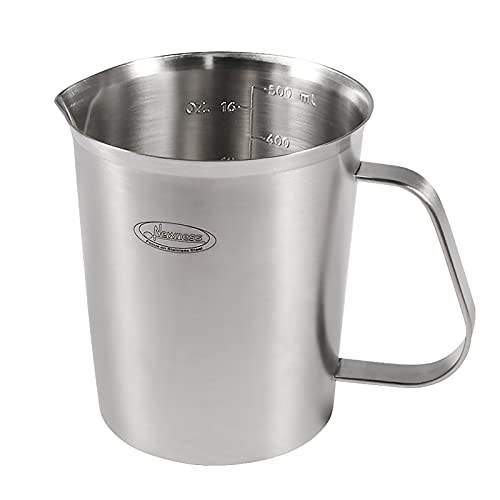
A single liquid cup is practical when your recipes usually call for one medium or large quantity. The Fox Run and Pyrex 4-cup models are designed for larger portions, while the Newness cup provides a more compact 2-cup format. A single cup also takes less space and avoids sorting through several pieces.
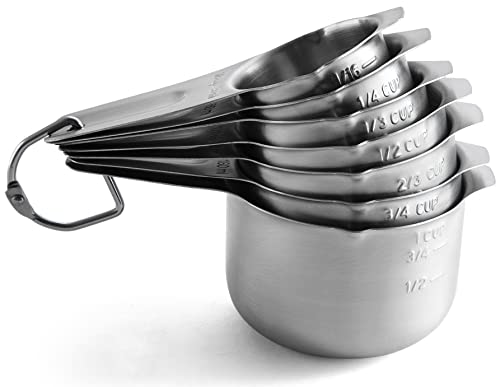
A multi-piece set makes more sense when you bake frequently or measure several ingredients in succession. Mrs. Anderson’s set includes four standard cup sizes, and Spring Chef extends that approach to seven sizes, including smaller increments. The OXO three-piece set instead covers 1, 2, and 4 cups, which is a useful progression for liquid recipes. The Ackers glass set is aimed at smaller quantities, with 60-, 120-, and 250-milliliter vessels.
Prioritize the spout for your pouring task
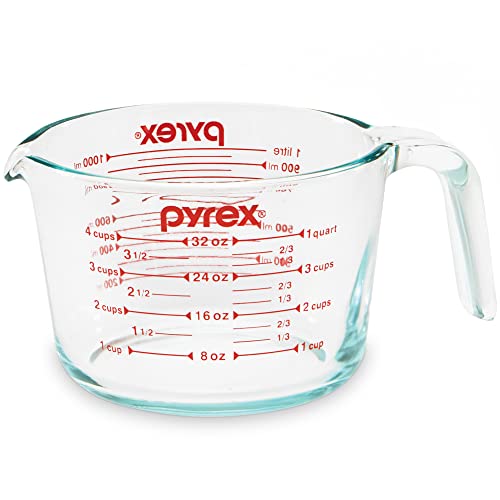
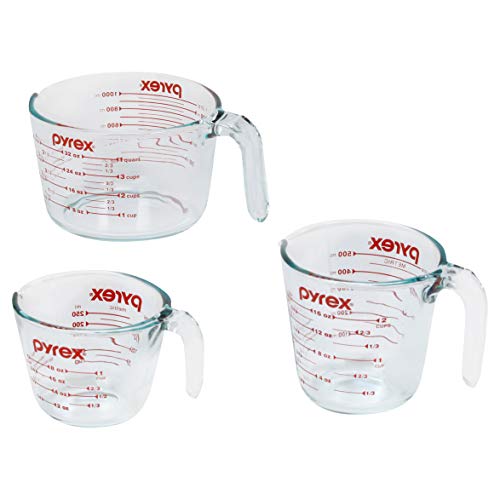
Spout shape is not just cosmetic. A conventional curved or tapered spout, as documented on the Pyrex cup, is suited to transferring liquids into bowls, pots, and pans. A V-shaped spout, used by the Ackers models, is intended to provide a more directed stream. The long funnel spouts on the Fox Run and Norpro pitchers are more specialized for narrow openings, jars, molds, and containers.
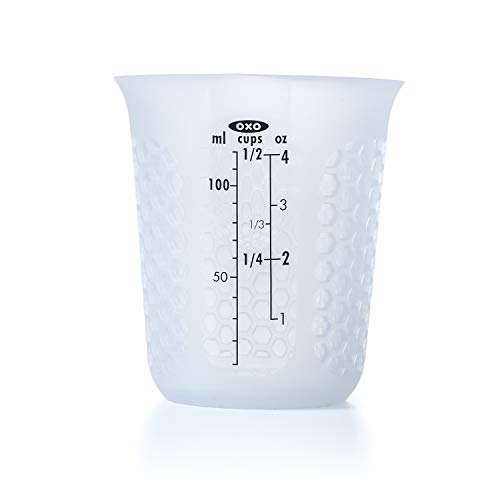
The OXO mini silicone cup takes another approach: its body and spout flex, allowing small amounts to be directed into tight places such as a stand mixer bowl. That makes it different from a large rigid pitcher. When choosing among the best pour-spout measuring cups, consider whether you need a broad stream, a narrow target, or a flexible tip.
Check how markings are presented
Readable graduations matter as much as the spout. OXO’s angled surface is designed to let users read measurements from above, avoiding the need to bend over the cup. This feature may be particularly useful when the cup sits on a counter or when checking a measurement repeatedly.
Marking systems also vary. The Fox Run listing emphasizes visible contents and a 3.5-cup capacity. Mrs. Anderson’s and Spring Chef’s markings include US and metric units, while the Newness cup lists cups, ounces, and milliliters. The Ackers glass set adds teaspoons and tablespoons, which can help with small-volume work. Etched markings on the Ackers single cup and Mrs. Anderson’s handle are documented differently from ordinary printed scales, so they may appeal to shoppers who prioritize marking permanence.
Match the material to heat and visibility needs
Clear glass and plastic let you see the contents while filling. Pyrex uses tempered glass and documents microwave, freezer, dishwasher, and preheated-oven compatibility. Ackers uses borosilicate glass and documents several heat-use settings, including microwave and oven use for the single cup and a broader set of settings for its three-piece set.
Stainless steel provides an opaque but durable alternative. Mrs. Anderson’s set is described as heat safe for stovetop tasks such as warming ingredients, and the Newness cup is described as durable and unbreakable. Spring Chef uses 304 stainless steel and documents rust- and stain-resistant construction. These options may suit cooks who prefer metal, but their contents cannot be viewed through the vessel.
Plastic models can be lighter and easier to handle. Fox Run’s clear plastic body supports visibility, while Norpro’s funnel pitcher uses translucent, heat-tolerant polypropylene. The supplied evidence does not establish the same heat-use range for every plastic cup, so do not assume microwave, oven, or stovetop suitability unless it is documented for the exact model.
Consider grip, storage, and cleaning
A full set should not become a storage nuisance. Mrs. Anderson’s and Spring Chef’s cups nest and use connecting rings, while the Ackers glass set also nests. These details help keep matching pieces together. The OXO set is a three-cup system, but its multiple sizes naturally require more room than a single measuring cup.
Handles affect control, particularly when a cup contains a heavier liquid. Fox Run lists a handle, OXO lists a non-slip handle, and Newness describes an angled handle with a solid grip. Norpro’s larger pitchers use handles and flat bases, which can help when setting a filled vessel on a work surface. The OXO mini adds a flat base for stability.
Cleaning information is product-specific. Mrs. Anderson’s, Spring Chef’s, and the OXO mini are documented as dishwasher safe. Fox Run specifies top-rack dishwasher care, while Pyrex is documented as dishwasher safe. Norpro’s pitcher also specifies top-rack dishwasher care. If cleanup convenience is important, use the stated care instructions rather than general assumptions about a material.
Large capacities reduce repeated filling but can be bulky. The 4-cup Pyrex model is appropriate for larger batches, while the Fox Run and Norpro 3.5-cup pitchers balance substantial capacity with long nozzles. The 1-cup Ackers cup and OXO mini are easier to reserve for smaller tasks. Nested sets can offset the storage demands of multiple sizes.
Also check whether the measurement scale matches your recipes. US cups and ounces are useful for many American recipes, while milliliters support metric instructions. Extra teaspoon and tablespoon scales are most useful on small measures. A cup with many scales is not automatically better if its capacity or spout does not fit your routine.
Final Recommendation
Mrs. Anderson’s Baking Stainless Steel 4-Piece Set ranks first overall in this specification-based comparison under the published weighted criteria.
Mrs. Anderson’s Baking Stainless Steel 4-Piece Set is the first overall specification-based choice among these best pour-spout measuring cups because it combines four standard sizes, dual spouts, etched markings, nesting, dishwasher-safe care, and documented stovetop heat use. It is the most specification-aligned all-around fit for shoppers who want one coordinated set rather than a single pitcher.
Choose the OXO Good Grips three-piece set if reading from above is your priority, or Spring Chef if you want the broadest assortment of standard cup increments. For large visible batches, Pyrex’s 4-cup glass cup and Fox Run’s 3.5-cup plastic funnel cup are sensible alternatives. Norpro’s 3.5-cup funnel pitcher is better for targeted transfers into narrow openings, while the Ackers set and OXO mini address smaller tasks.
The top pour-spout measuring cups are not identical in design, and that is useful: the right choice depends on capacity, material, marking style, and the type of pour you need. Verify the documented care and heat instructions for the selected model before use.
Frequently Asked Questions
What makes the best pour-spout measuring cups different from ordinary measuring cups?
The defining feature is a documented spout or pouring design that helps transfer measured ingredients. The exact design varies: Pyrex uses a curved spout, Fox Run and Norpro use long funnel spouts, and OXO’s mini cup uses a flexible spout. Marking visibility, handle shape, capacity, and material also influence how useful a cup is.
Are stainless steel or glass measuring cups better for hot ingredients?
Neither material is universally better; the decision should follow the evidence for the model. Mrs. Anderson’s stainless steel set is documented as heat safe for stovetop tasks, while Ackers glass models document heat-related uses and temperature information. Pyrex documents microwave, freezer, dishwasher, and preheated-oven compatibility. Always follow the specific product instructions rather than assuming every cup made from the same material has identical limits.
Which option is best for large batches?
The 4-cup Pyrex model is the clearest large-capacity choice in this selection. Fox Run and Norpro’s 3.5-cup funnel pitchers are also suitable for sizable portions, especially when the destination has a narrow opening. A larger cup reduces repeated filling, but it may take more storage space and be less convenient for small quantities.
What is the best option for small measurements?
The Ackers three-piece borosilicate set offers 60-, 120-, and 250-milliliter sizes and several measurement scales. The OXO mini silicone cup is another focused option for small transfers, particularly when flexibility helps reach a tight spot. Neither is intended to replace a large-batch pitcher.
How should I choose between a single cup and a set?
Choose a single cup if you mainly need one capacity and want a simpler storage solution. Choose a set if recipes regularly call for different amounts or if you want several cups ready during baking. Mrs. Anderson’s and Spring Chef’s sets nest, while the OXO set covers three larger liquid capacities. Compare the included sizes with your recipes before buying.