Buying Guide
Neem powder supplements are not interchangeable simply because they share the word neem. The selected listings differ in leaf identity, package size, preparation guidance, sourcing detail, and whether they describe dietary or external use. The best neem powder supplements for one routine may not be the right fit for another, so begin with how you intend to use the powder.
Confirm that it is actually neem leaf powder
Look for a direct reference to neem leaves, neem leaf powder, or Azadirachta indica. Every selected product identifies the material as neem leaf or neem leaves powder. This distinction matters because some neem supplements use capsules, extracts, bark, or blends instead of a loose powder. Those formats may be legitimate neem products, but they do not meet this comparison’s loose-powder focus.
A simple ingredient description is useful. Vitamatic says its powder is 100% pure neem leaf powder, while Jiva Organics identifies a pure organic neem leaf powder and describes it as food grade. Banyan Botanicals likewise identifies an organic neem leaf supplement and explains its traditional powder format. If a listing does not clearly identify the plant part, treat that as a documentation gap rather than assuming the composition.
Match the preparation to your routine
Loose neem powder can be used in more than one way, but the listing should support the intended application. Best Naturals specifically describes mixing its fine powder with smoothies, shakes, or water and gives a one-gram scoop serving size. Jiva Organics calls its powder food grade and also lists skin-care and hair-treatment uses. These descriptions provide more preparation context than a listing that only says “natural supplement.”
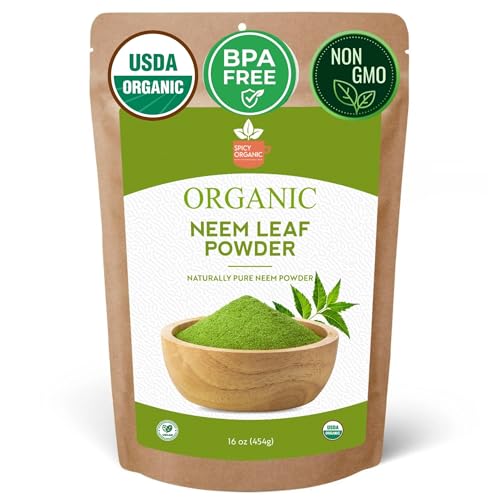
For external routines, Yogi’s Gift gives unusually practical directions: one to two teaspoons can be mixed with water, rose water, or oil for a face or hair pack. Just Jaivik lists hair and skin masks as well as dietary supplement use. SPICY ORGANIC describes hair masks, homemade capsules, skin and nail applications, and oral care. Choose a product whose documented use aligns with your planned preparation, and follow the label rather than treating general traditional-use language as a dosage instruction.
Purity claims vary in specificity. Several selected listings state that the powder contains no fillers, preservatives, artificial colors, or chemicals. Vitamatic lists exclusions including starch, soy, yeast, wheat, egg, artificial color, flavor, and preservatives. Organic Veda adds soy-free and additive-free claims, while Yogi’s Gift says its powder contains no added fillers, colors, or chemicals.
A long exclusion list is not automatically better for every person, but it can make label comparison easier. If you need to avoid a particular ingredient, look for that ingredient in the actual product label and not only in a general marketing description. Vegan, vegetarian, gluten-free, and non-GMO statements also appear across the selected group, but they should be checked against the current package information.
Review certification and sourcing details
USDA organic certification is stated for Vitamatic, Banyan Botanicals, Jiva Organics, Best Naturals, Just Jaivik, and SPICY ORGANIC. Certification can help shoppers distinguish a documented production claim from a general “organic” adjective. Some listings add further quality information: Banyan Botanicals and Jiva Organics state that their products are third-party tested, while Vitamatic identifies a GMP-compliant, FDA-registered facility.
Not every powder in the comparison provides the same level of documentation. MB Herbals describes wild-crafted leaves from the Saurashtra forest region and identifies India as the product origin. HERBAL HILLS clearly says the powder is made from dried neem leaves but supplies less certification detail. These are useful differences to note without assuming that missing information proves a product lacks a particular quality attribute.
Choose a package size you can store properly
The selected package sizes range from 4 ounces to 24 ounces. A smaller package such as Organic Veda’s 4-ounce option can make sense for occasional use or a first trial. Eight-ounce products from Best Naturals, Just Jaivik, MB Herbals, and Yogi’s Gift sit between compact and bulk formats. Full-pound options from Vitamatic, Banyan Botanicals, HERBAL HILLS, and SPICY ORGANIC suit users who expect repeated use. Jiva Organics documents a 24-ounce bag.
Packaging details can affect handling. Jiva Organics specifies a resealable kraft paper bag, and its larger size makes secure closure particularly relevant. Store loose botanical powders according to the label, keep the package closed, and use a clean, dry utensil. Avoid transferring the powder into an unmarked container because the original label contains the product identity and directions.
Consider evidence before making health claims
The listings use traditional and support-oriented language for skin, digestion, immune wellness, oral care, or cleansing. Such statements describe the seller’s positioning, not verified results from this comparison. No product here was hands-on tested, and this guide does not establish that neem treats, cures, or prevents a condition. Anyone considering internal use should review the label and ask a qualified healthcare professional about suitability, especially when taking medicines or managing a health condition.
Final Recommendation
Jiva Organics Organic Neem Leaf Powder ranks first overall in this specification-based comparison under the published weighted criteria.
Jiva Organics Organic Neem Leaf Powder is the first overall specification-based choice among the selected best neem powder supplements. Its 24-ounce resealable package, certified organic and food-grade positioning, clearly identified neem leaf ingredient, and stated third-party testing give it the most complete documentation for a versatile powder routine. It also explicitly covers eating, skin, hair, and DIY uses.
Choose SPICY ORGANIC if organic documentation and broad preparation options matter most. Banyan Botanicals is a strong fit for shoppers who want detailed Ayurvedic context and sourcing information. For a compact starting format, Organic Veda’s 4-ounce package is easier to approach than a bulk bag. Yogi’s Gift is the most useful option when simple face-pack and hair-pack directions are the main priority. These top neem powder supplements differ in emphasis, so use the label and intended routine as the final filter.
Frequently Asked Questions
How should I choose among the best neem powder supplements?
Start by confirming that the product is loose neem leaf powder rather than capsules, an extract, or a bark blend. Then compare purity statements, organic or testing documentation, intended uses, preparation guidance, and package size. The best match is the one whose supplied specifications address your actual routine.
Are these best neem powder supplements intended for eating?
Some listings specifically support dietary use. Jiva Organics describes its powder as food grade, Best Naturals lists mixing with smoothies, shakes, or water, and several other products use the term supplement. Other listings focus more heavily on topical applications. Follow the individual label and seek professional guidance when internal use may interact with a health condition or medication.
Which selected powder gives the clearest DIY instructions?
Yogi’s Gift provides the clearest specific directions, stating that one to two teaspoons can be mixed with water, rose water, or oil for a face or hair pack. SPICY ORGANIC and Just Jaivik also document topical preparation types, but they provide less precise mixing guidance in the supplied listing data.
Does a larger package make a neem powder a better choice?
Not necessarily. A larger package may suit frequent use, while a smaller package may be easier to store or better suited to an occasional routine. Compare the package with your intended frequency, storage space, and the product’s stated handling features. Jiva Organics documents a resealable 24-ounce bag, while Organic Veda offers a 4-ounce format.
What quality details should I look for on the label?
Check the plant part, ingredient purity, additive exclusions, certification statements, testing information, manufacturer details, and directions. USDA organic claims appear on several selected products, and third-party testing is stated for Jiva Organics, Banyan Botanicals, and SPICY ORGANIC. Treat each claim as product-specific and verify it on the current package.