Buying Guide
The best precision levels are not all designed for the same reference surface. A machinist’s level is intended for highly controlled machine-tool and equipment checks, while a digital angle gauge is better when the task involves slopes, relative angles, or a quick numerical readout. Compact bench levels and general-purpose magnetic models sit between those categories. Start by identifying whether you need a documented machinists’ accuracy specification, a digital angle range, or a convenient everyday format.
Match the level to the work
For machine setup, equipment installation, and checking flatness, prioritize the Accusize 12-Inch Master Precision Level, Accusize 8-Inch Master Precision Level, Starrett 98-6, UpAmcarker 8-Inch, or findmall 8-Inch model. These listings document 0.0002 inch/10 inch accuracy, although their bodies and base details differ. The 12-inch Accusize gives the longest stated reference length. The 8-inch models are easier to position around machinery. The Starrett 98-6 is shorter but adds adjustable vials and a cross test vial.
For a compact reference tool, the Starrett 130 is a distinct choice. Its 3-3/8-inch format and machined base are suited to small benches and confined work areas. Its single vial keeps the design simple, but it does not provide the two-direction reading arrangement documented for the Starrett 98-6 or the Accusize models with cross test vials.
Understand the accuracy specifications
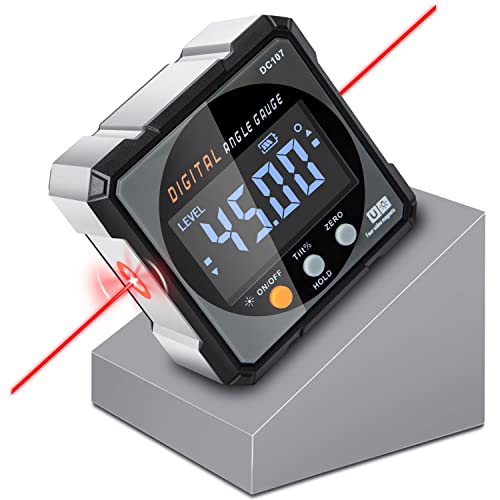
The machinists’ levels in this comparison are presented for fine reference-surface checks. Digital products such as the PREXISO PTD180 and COROLLATA inclinometer instead document angular accuracy and resolution. The PREXISO lists ±0.1 degree at 0 and 90 degrees and ±0.2 degree at other angles. COROLLATA lists 0.05-degree resolution and ±0.2-degree accuracy.
Do not treat a smaller-looking number in one unit system as an automatic indication that one tool is universally more accurate. Compare the specification to the task. A machine installer may need a sensitive reference surface, while a fabricator may need an angle in degrees, percent slope, or millimeters per meter.
Choose the right base design
Base contact is as important as the bubble or display. V-grooves and involute grooves help a level seat on cylindrical work such as shafts, pipes, or round stock. The Accusize 12-Inch and 8-Inch models document V-grooved bases. The Starrett 98-6 lists an involute groove designed for round work, and the UpAmcarker model also documents an involute-groove base.
Digital and general-purpose magnetic levels serve a different purpose. The PREXISO has a magnetic V-groove base for ferrous surfaces, while the Klein 935DAG uses a magnetic base and V-groove edges for conduit and pipes. The DURATECH set combines V-grooves with rare-earth magnets. Magnets can hold a level in place on compatible ferrous surfaces, but they do not replace a clean, properly seated reference surface when making fine machine adjustments.
Consider display and vial visibility
A cross test vial can help reveal level in two directions at once. This is documented on the Starrett 98-6 and both Accusize master levels. Large or high-visibility bubbles are emphasized by the findmall and DURATECH listings. For electronic tools, backlighting, automatic inversion, and audio indicators can be more useful than a traditional vial in awkward positions. PREXISO lists a backlit display and audio indication, while COROLLATA lists a bright red backlight and automatic inversion.
Think about viewing angle before choosing. A compact digital tool may be easiest to read when the work changes orientation. A passive machinists’ level has no batteries, but it requires the user to wait for the vial to settle and interpret the reading directly.
Weigh durability and protection
Cast iron is prominent in the Accusize and Starrett machinists’ levels, supporting a substantial industrial format. The Starrett 130 specifically documents seasoned cast iron, while the Starrett 98-6 lists a cast iron base and a protected vial housing. Carbon steel is used by the UpAmcarker and findmall models. These materials may suit fixed-shop work, but the heavier construction can be less convenient to carry.
Electronic levels add different maintenance considerations. COROLLATA lists an aluminum-alloy body, rechargeable battery, and IP67 dust- and water-protection rating. Klein lists IP42 resistance. Keep any precision instrument clean, protected, and stored according to its design.
Decide whether a set is useful
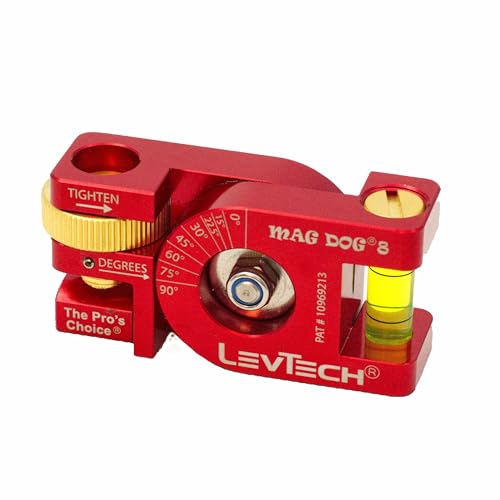
The DURATECH 3-Piece Magnetic Level Tool Set is the size-flexible option in the comparison. Its 2.5-, 6.25-, and 8-inch levels can cover small fittings, intermediate tasks, and longer references. It also documents 0-, 30-, 45-, and 90-degree bubbles, V-grooves, magnets, and SAE and metric scales.
A set is useful when your projects vary. If the work is centered on machine calibration, a dedicated master level is more appropriate than several general-purpose levels. If you handle repairs, installations, and fabrication, multiple lengths can reduce the need to reposition one tool repeatedly.
Final recommendation
Accusize 12-Inch Master Precision Level ranks first overall in this specification-based comparison under the published weighted criteria.
Accusize 12-Inch Master Precision Level ranks first in this specification-based comparison under the published weighted criteria.
The final choice among the best precision levels depends on the documented features that match your intended use.
Accusize Industrial Tools 12 inch Professional Master Precision Level is the first overall specification-based choice. Its documented 0.0002 inch/10 inch accuracy, adjustable main vial, cross test vial, cast iron body, and V-grooved base give it a strong documented combination for machine and equipment alignment in this comparison.
The Starrett 98-6 and Accusize 8-Inch are useful when a shorter industrial level is easier to place. Choose the UpAmcarker or findmall models when their 8-inch format and stated accuracy fit the work. For digital angle measurement, PREXISO offers broad documented measurement flexibility, while COROLLATA adds dual lasers and IP67 protection. Klein is particularly practical for conduit and pipe tasks. The Starrett 130 serves compact bench work, and DURATECH is adaptable when three general-purpose sizes are more useful than one specialized instrument.
These top precision levels should be selected by reference length, stated accuracy, base geometry, reading method, and work environment—not by a single headline feature.
Frequently Asked Questions
The Accusize 12-Inch, Accusize 8-Inch, Starrett 98-6, UpAmcarker 8-Inch, and findmall 8-Inch models all document 0.0002 inch/10 inch accuracy. The 12-inch Accusize provides the longest reference length, while the Starrett adds adjustable and cross-vial features.
Are digital levels suitable for precision angle work?
Yes, when the required measurement is expressed in degrees or slope rather than a machinists’ level specification. PREXISO documents 0-90- and 0-180-degree ranges, while COROLLATA documents 4-by-90-degree measurement, 0.05-degree resolution, and ±0.2-degree accuracy.
Should I choose a V-groove base?
Choose a V-groove or involute groove when you regularly measure pipes, shafts, round stock, or other cylindrical surfaces. The Accusize, UpAmcarker, Starrett 98-6, PREXISO, and DURATECH products document groove features for this type of positioning.
Is a cross test vial important?
It can be useful when you need to check level in two directions. The Starrett 98-6 and the Accusize master levels document cross test vials. A single-vial bench level can still be appropriate for compact, straightforward bench checks.
Which option is best for varied household or workshop tasks?
The DURATECH three-piece set provides 2.5-, 6.25-, and 8-inch levels, magnetic bases, V-grooves, multiple vial angles, and SAE and metric scales. That range is more adaptable than a single specialized machinists’ level for mixed tasks.