Buying Guide
The best privacy business mailing envelopes are defined by more than a dark interior. The useful choice depends on the document format, whether an address must show through a window, how many pieces you mail, and whether the paper and closure suit your workflow. This comparison uses supplied listing specifications and feature descriptions. It does not represent hands-on testing or customer-opinion analysis.
Start with the envelope size
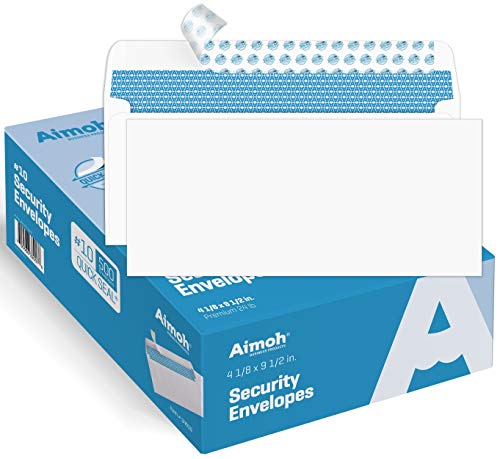
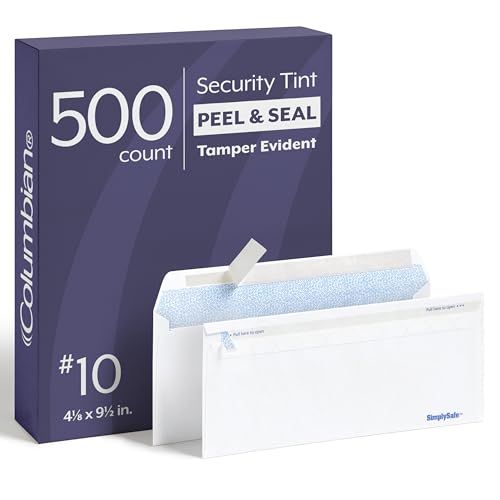
For ordinary office correspondence, #10 is the main format to consider. The selected #10 products measure about 4-1/8 x 9-1/2 inches and are described as suitable for folded letter-size sheets, checks, invoices, statements, or business letters. Columbian, Aimoh, Amazon Basics, Mead, Alitte, and PANDRI all fit this general use case.
A smaller format can be useful when the contents are compact or when a business already uses a particular check or return-mail workflow. Quality Park and the smaller Mead product are #6 3/4 envelopes measuring 3-5/8 x 6-1/2 inches. The listings say these can hold folded letter-size documents, but their shorter dimensions make them a different choice from a standard #10. Quality Park comes in a 100-count box, while the smaller Mead option is supplied in a 500-count pack.
Choose windowless or windowed construction
Windowless envelopes provide a blank front for labels, handwriting, or direct printing. They also avoid showing an address through a cutout. Columbian, Aimoh, Amazon Basics, Mead, Alitte, and PANDRI document windowless designs. PANDRI is especially relevant when the addressing process involves mass printing or handwritten labels, while Amazon Basics identifies a smooth surface for direct printing.
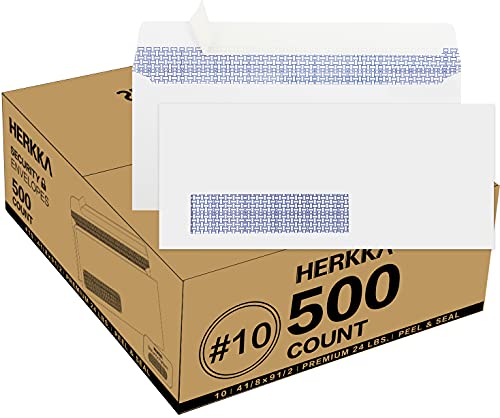
Windowed envelopes make sense when the document already has a correctly positioned address block. EnDoc uses a double-window layout and is specifically described for invoices and statements. HERKKA uses a single left window and is described for business and legal mail, including computer-printed checks. A window can reduce labeling work, but it exposes the intended address area by design, so it is not interchangeable with a fully blank front.
Compare the privacy treatment
Security privacy is described in several ways across the selected products. A security tint, printed lining, navy stripe, or security pattern is intended to reduce visibility of the contents. Columbian specifies a blue security tint; Aimoh describes an Enveguard security tint pattern; Amazon Basics and Alitte identify security-tinted interiors; Mead uses security lining; and PANDRI describes a navy blue inner stripe.
The exact wording varies, so buyers should match the claim to their use. A tint or pattern is not a guarantee against every form of damage or unauthorized opening. It is a design feature intended to make contents harder to see through. If your policy requires a particular privacy or compliance standard, verify that requirement separately rather than treating general security language as certification.
Pick the closure for your mailing routine
Self-seal and peel-and-seal closures are common among the top privacy business mailing envelopes in this list. They use an adhesive strip rather than moisture, which can make repetitive mailing more convenient. Columbian, Aimoh, Amazon Basics, Alitte, PANDRI, EnDoc, and HERKKA all document self-sealing or peel-and-seal designs.
Quality Park adds a Redi-Strip closure with a peelable strip that protects the adhesive before use. That can be useful when envelopes will be stored for a period before mailing. Mead’s selected products use Press-It Seal-It self-adhesive closures. Check the product description and packaging at purchase because closure names can vary even when the basic workflow is similar.
Consider paper and printing needs
Paper weight can help distinguish otherwise similar products. Several #10 choices specify 24 lb stock, including Columbian, Aimoh, Alitte, HERKKA, and Quality Park. Mead’s selected options specify 20 lb paper. Amazon Basics identifies 24-pound white woven paper and a smooth surface for direct printing, while HERKKA specifically states compatibility with most inkjet and laser printers.
These details are useful for selecting a documented paper specification, but they are not a substitute for testing a particular printer or mailing machine. If direct printing is important, prioritize a product that expressly mentions a smooth or printable surface and confirm your printer’s envelope-feed requirements.
Match pack size to usage
Most selected #10 envelopes come in 500-count packs, which suits departments mailing invoices, statements, checks, or letters on a recurring basis. A large pack can reduce replenishment interruptions, but it also takes more storage space and may be unnecessary for occasional correspondence.
The 100-count Quality Park option is more appropriate for smaller compact-mailing needs or lower-volume use. HERKKA’s selected #10 product and the smaller Mead option illustrate why pack size should be considered alongside format: a 500-count supply is useful only if the dimensions match the documents you actually send.
Final recommendation
Aimoh #10 Business Envelopes, 500 Count ranks first overall in this specification-based comparison under the published weighted criteria.
The final choice among the best privacy business mailing envelopes depends on the documented features that match your intended use.
Columbian #10 Security Envelopes are the first overall specification-based choice among these selections. They combine a windowless #10 format, blue security tint, self-seal closure, 24 lb white wove paper, and a 500-count supply. Aimoh is a close alternative for organizations focused on its stated compliance-oriented positioning, while Amazon Basics is a good fit when direct printing is important.
For invoice and statement workflows, EnDoc’s double-window layout is the more specialized option, and HERKKA is the selected single-window alternative. Alitte, Mead, and PANDRI cover straightforward windowless #10 mailing. For compact documents, Quality Park offers the smaller 100-count format, while Mead’s #6 3/4 envelope provides a larger compact supply. Together, these are practical top privacy business mailing envelopes choices because each is tied to a documented size, privacy treatment, closure, or workflow distinction rather than volatile marketplace signals.
Frequently Asked Questions
Among the best privacy business mailing envelopes, are windowless envelopes better for privacy?
Windowless construction avoids displaying an address through a window and provides a blank front for labels or printing. It does not by itself establish complete confidentiality. Products such as Columbian, Alitte, and PANDRI also document a security tint or interior stripe, which is the feature intended to reduce visibility of contents.
What size is most common for business mailing?
The #10 size is the most broadly represented format in this comparison. It measures about 4-1/8 x 9-1/2 inches and is described for folded letter-size documents, checks, invoices, statements, and letters. A smaller #6 3/4 envelope may be preferable for compact contents, but it should not be assumed to provide the same working space.
Should I choose self-seal or a gummed closure?
Self-seal closures are documented on the selected products and use a peel-and-press or adhesive-strip process without moisture. That can suit repeated office mailing. The selected products in this comparison primarily use self-seal designs; buyers who specifically want a gummed closure should verify the listing before ordering.
Are double-window envelopes private enough for invoices?
EnDoc documents a double-window design with a security tint for invoices and financial documents. The windows show address fields while the tint is intended to reduce visibility of other contents. Because window placement and document layout matter, compare your invoice format with the product description before choosing this design.
How many envelopes should an office buy?
A 500-count pack is documented for most of the selected #10 products and suits recurring business mail. A 100-count pack, such as Quality Park’s #6 3/4 option, may be more practical for occasional use or a smaller mailing program. Choose based on both expected volume and storage space, not pack size alone.