Buying Guide
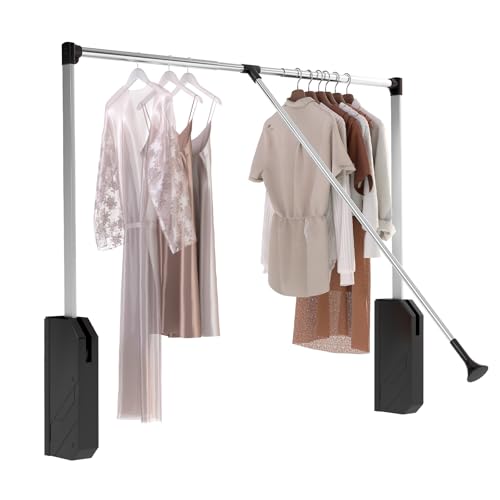
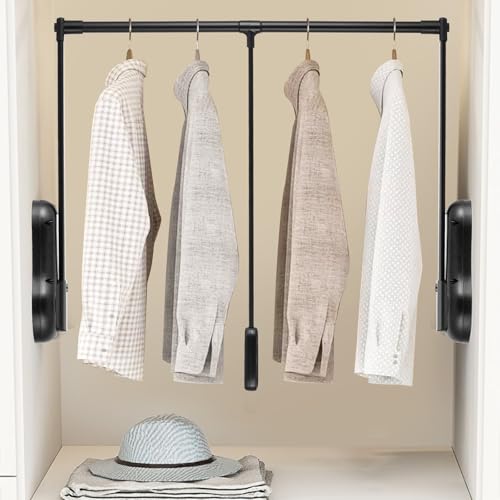
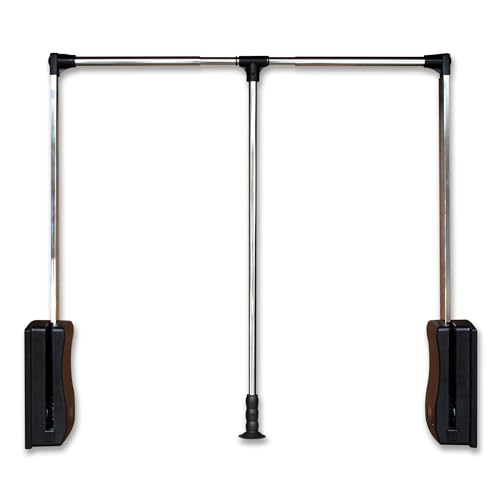
The best pull-down rod closet systems are selected by matching the mechanism to the cabinet rather than by appearance alone. Measure the clear interior width, usable depth, vertical clearance, and space in front of the wardrobe before comparing models. A rod that fits the width but cannot swing down freely may not be suitable.
Measure the opening first
Width is the most important starting point. The selected products cover compact openings around 25.6 to 35 inches, medium ranges around 26 to 45 inches, and wide openings approaching 48 inches. Measure between the actual mounting surfaces, not the outside of the cabinet. Allow for brackets, housings, doors, and any internal trim. The YJINGRUI, Rev-A-Shelf, and XIIW models are aimed at narrower or medium spaces, while DDYOOK, tonchean, STORKING, and WYJREES address wider wardrobes.
Depth and height also matter. Rev-A-Shelf documents a 14-inch minimum depth. YJINGRUI lists minimum height and depth requirements, along with recommended space in front of the cabinet for the 120-degree movement. The bimiti 35–46.5-inch model lists minimum depth and height as well. These details are more useful than a general claim that a rod fits most wardrobes.
Match capacity to the clothing load
A published load figure is helpful, but it should not be treated as a guarantee for every installation. The cabinet sides, screws, wall structure, and mounting surface must also support the load. The DDYOOK lists up to the current price; XIIW, tonchean, WYJREES, and the bimiti model list the current price; YJINGRUI lists the current price. Wood Technology and Rev-A-Shelf list 26 and the current price respectively.
Remember that some listings qualify capacity by width. XIIW notes that narrower settings correspond to stronger weight-bearing capacity, and similar qualification appears in other capacity-led listings. Heavy coats and suits create more demand than lightweight shirts, so leave a margin rather than designing right at the published limit.
Compare hydraulic and electric movement
Most of these systems use pneumatic or hydraulic assistance. Dual-buffer or damping systems are intended to control the descent and return, helping the rod move in a more measured way. WYJREES, STORKING, YJINGRUI, and Rev-A-Shelf provide especially clear descriptions of controlled movement. A damping system does not remove the need for proper mounting or correct loading.
AngelParticle is the only selected electric design. It supports touch, remote, and voice control and adds sensor lighting when lowered. That can be useful when the rod is installed high or when a user benefits from hands-free operation. However, the supplied listing does not specify a load capacity, so it should be chosen for its controls and customization rather than assumed to be a heavy-duty solution.
Choose the mounting approach
Mounting style determines where a product can be used. The Wood Technology SuperLift is explicitly wall-mounted and should be attached to wall studs or a board secured to studs. XIIW and tonchean document back- or side-mounting, while WYJREES also supports side or back installation. These choices can be valuable when a cabinet lacks suitable side panels or when a walk-in closet requires a wall-based layout.
Do not assume that every rod supports every orientation. If the listing does not explicitly state side, back, or wall mounting, treat the installation method as unresolved and inspect the instructions before buying. For cabinet installations, confirm that the panels are thick and strong enough for the supplied hardware.
Consider materials and handling details
Stainless steel appears in XIIW and bimiti models, while aluminum alloy is used in DDYOOK, STORKING, and YJINGRUI. Wood Technology combines coated steel bars with chrome-plated steel and polyamide mounting brackets. These material descriptions help distinguish construction, but they do not replace structural installation requirements.
A pull handle affects everyday usability. YJINGRUI lists an oval non-slip handle, DDYOOK describes a curved ergonomic handle, and bimiti documents an arc-shaped anti-slip design. Such features may make the rod easier to grasp, especially when it is installed above shoulder level. The actual reach still depends on the cabinet height and the rod’s travel path.
Final recommendation
WYJREES 33–45-Inch Carbon Steel Closet Rod ranks first overall in this specification-based comparison under the published weighted criteria.
AngelParticle Electric Lifting Pull Down Closet Rod is the first overall specification-based choice among these best pull-down rod closet systems because it combines multiple controls, automatic lighting, customization, and corrosion-resistant materials. For a manual system with the most specification-aligned documented capacity, DDYOOK is the clearest alternative. XIIW is better suited to a narrower opening with side- or back-mount flexibility, while tonchean and WYJREES are compelling for wide cabinets.
The top pull-down rod closet systems are not interchangeable. Choose YJINGRUI when a defined pull-down angle and detailed clearance guidance matter, Wood Technology for a stud-mounted walk-in closet, Rev-A-Shelf for a 14-inch-deep frameless system, or STORKING for a wide rod with dual buffering. Before ordering, verify the opening, depth, height, mounting surface, hardware, and intended garment load.
Frequently Asked Questions
What should I measure before buying one of the best pull-down rod closet systems?
Measure the clear interior width between mounting points, cabinet depth, vertical height, and unobstructed space in front of the wardrobe. Also check whether doors, shelves, trim, or adjacent clothing could block the rod as it lowers. Use the product’s interior-width range rather than relying on the nominal size in its title.
Are hydraulic pull-down rods suitable for heavy coats?
Some are documented for heavy loads, but suitability depends on both the rod and the installation. DDYOOK lists the current price, while several selected models list 55 or the current price. Rev-A-Shelf and Wood Technology list lower capacities. Stay within the stated limit, account for hangers and garment weight, and attach the system to an appropriately strong cabinet or wall structure.
Is side mounting better than back mounting?
Neither is universally better. Side mounting can work well inside a cabinet with strong side panels, while back mounting may suit a wardrobe with a suitable rear panel or wall support. Products such as XIIW, tonchean, and WYJREES explicitly document side or back options. Confirm the supported orientation and supplied hardware for the chosen model.
Which top pull-down rod closet systems offer the most accessibility-focused features?
AngelParticle provides touch, remote, voice, and sensor-light functions. YJINGRUI documents a 120-degree pull-down angle and an oval non-slip handle. Rev-A-Shelf describes a dampening system and an extending pull rod. These features may improve reach, but the final result still depends on installation height, clearance, and the user’s comfortable pulling position.
Can these rods be installed in a walk-in closet?
Yes, where the product documents a suitable mounting method. Wood Technology specifically describes wall mounting for walk-in closets and requires wall studs or a board attached to studs. Other models may be intended for cabinet side or back panels. Verify the mounting surface, clearances, and structural support before treating a wardrobe lift as a wall-mounted system.