Buying Guide
Shopping for the best rabbit small animal cages is less about brand noise and more about how an enclosure fits the rabbit, the room, and your daily care routine. The cages and hutches below span fixed-frame wire habitats, two-story wooden hutches, and modular panel playpens, so the right pick depends on which design language matches your space.
Measure Floor Space Before Anything Else
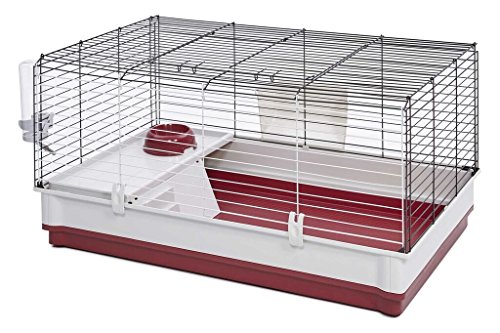
The single biggest factor for any rabbit cage is the interior floor footprint. A 39.5 by 23.75 inch wire cage like the MidWest Wabbitat Deluxe gives a rabbit meaningful room to hop and turn around, while a 25 by 19 inch compact cage like the MidWest Small Wabbitat works better as a night enclosure paired with a playpen. Look for at least 12 square feet of floor space for a single average-sized rabbit, and more if you can give it.
Decide Between a Fixed Cage, a Hutch, and a Playpen
Fixed-frame cages such as the MidWest Wabbitat Deluxe and MidWest Small Wabbitat are easy to clean and ship flat, but they do not grow with your rabbit. Wooden two-story hutches like the Aivituvin 2-Story Indoor Rabbit Hutch and the Mcage Deluxe 2-Level Indoor/Outdoor Rabbit Hutch add vertical space and a ramp, which suits active bunnies in smaller rooms. Modular panel playpens from BUCATSTATE, SONGMICS, SNAAT, and VISCOO can be reconfigured or stacked into a larger run as your rabbit grows.
Check Bar Spacing and Paw Safety
Bar spacing is a safety feature, not just a build detail. Spacing around 0.5 to 0.8 inch keeps paws, noses, and heads from getting stuck. The HOMESTEAD Pull-Out Tray Rabbit Cage documents a 0.8 inch bar spacing, while the SNAAT 20-Panel cage uses 0.6 inch dense wire mesh for the same reason. The Mcage Deluxe and VNE Rabbit Cage both highlight paw-safe platforms or dense meshes that reduce entrapment around ramps and floors.
Look at Access Doors and Cleaning Pathways
Daily feeding and weekly deep cleans are easier when a cage has both top and side access. The MidWest Small Wabbitat uses top and front doors with slide latches for one-handed operation, while the HOMESTEAD cage adds a deep pull-out tray.
Decide If You Need Wheels or a Modular Frame
If your rabbit cage lives in one spot, weight is less important than rigidity. If you plan to move it between rooms or onto a patio, rolling cages such as the VNE with universal wheels or the Mcage hutch with lockable casters are easier to reposition. Modular playpens fold flat for storage and travel, which is helpful in rentals or smaller homes.
Match the Enclosure to Your Floor Surface
Waterproof trays, urine guards, and floor mats protect hardwood and carpet. The HOMESTEAD, Mcage Deluxe, and MidWest Wabbitat Deluxe all document deep trays or bases designed to contain litter, while the BUCATSTATE, SONGMICS, VISCOO, and SNAAT playpens ship with waterproof floor mats as part of the build.
Plan for Expansion Over Time
If you expect to add a second rabbit or want a bigger run later, modular options are the most forgiving. Both Aivituvin and Mcage offer multi-level layouts, while BUCATSTATE, SONGMICS, SNAAT, and VISCOO let you connect or reconfigure panels. The MidWest Wabbitat Deluxe is documented as compatible with optional 158WEX and 158HEX extensions if you want to stay with a fixed-frame approach but still grow.
Final Recommendation
BUCATSTATE 20-Panel Guinea Pig Cage with Floor Mat ranks first overall in this specification-based comparison under the published weighted criteria.
Among the best rabbit small animal cages in this comparison, the MidWest Wabbitat Deluxe Rabbit Home stands out as the first overall specification-based choice thanks to its 39.5 by 23.75 by 19.75 inch interior, 5.5 inch deep litter base, and documented extension compatibility that lets it grow into one of the top rabbit small animal cages for owners who want room to expand. Pair it with a waterproof mat or hutch run if you need extra exercise space, and lean on the HOMESTEAD or Mcage for multi-rabbit homes that benefit from stacked or rolling designs.
Frequently Asked Questions
What size cage does a single rabbit actually need?
Aim for at least 12 square feet of interior floor space for a single average-sized rabbit, with more room for exercise outside the cage. The MidWest Wabbitat Deluxe, BUCATSTATE 20-Panel playpen, and SONGMICS 20-Panel playpen all clear that bar, while compact cages such as the MidWest Small Wabbitat work better as night enclosures paired with a run.
Are wooden rabbit hutches better than wire cages?
Each has trade-offs. Wooden hutches such as the Aivituvin 2-Story Indoor Rabbit Hutch and Mcage Deluxe 2-Level Indoor/Outdoor Rabbit Hutch add vertical space, chew-resistant framing, and a more furniture-like look, but they weigh more and may need extra weatherproofing outdoors. Wire cages are lighter, easier to clean, and frequently include deeper trays for litter control.
Which cage is easiest to clean?
The HOMESTEAD Pull-Out Tray Rabbit Cage and MidWest Small Wabbitat both use a deep pull-out or slide-out base that simplifies daily waste removal. Modular playpens from BUCATSTATE, SONGMICS, and SNAAT also ship with waterproof mats that wipe clean, while the VNE design adds a slide-out tray on top of rolling wheels.
Are the best rabbit small animal cages safe for bunny paws?
Yes, when you choose bar spacing and platform materials carefully. The SNAAT 20-Panel cage uses 0.6 inch dense wire mesh, the HOMESTEAD cage documents 0.8 inch spacing, and the Mcage Deluxe adds a paw-safe plastic platform with an anti-slip ramp. Solid or grated platforms and a layer of bedding reduce pressure on feet.
Can I move a rabbit cage between rooms easily?
Rolling cages such as the VNE Rabbit Cage with universal wheels or the Mcage Deluxe with lockable casters reposition without lifting. Modular playpens disassemble flat, which helps in rentals or travel, while heavier wooden hutches are better left in one spot.