Buying Guide
Choosing the best rear tail light assemblies is primarily a fitment and configuration exercise. A housing can look similar to the original and still be wrong for a different year, trim, bed style, lamp technology, or side of the vehicle. The listings in this comparison show why the vehicle details should be checked before appearance or installation.
Start with exact vehicle fitment
Record the vehicle make, model, model year, trim, body style, and lamp position. Then compare those details with the listing’s fitment range and replacement part numbers. The SHINEHOME assembly, for example, separates 2014–2018 Silverado 1500 coverage from 2019 1500 LD coverage and also lists particular Silverado HD and GMC Sierra applications. That type of detail is more useful than a general statement that a lamp fits a Silverado.
Configuration exclusions deserve equal attention. The Misakomo lamp is for 2017–2019 Ford F-250 and F-350 models without blind spot monitoring and factory incandescent lamps; it is not for factory LED units. The Suiwtaa assembly is limited to fleetside or styleside beds and excludes flareside or stepside beds. For any candidate, inspect the original lamp, connector, lens shape, and part number before ordering.
Decide between a single lamp and a pair
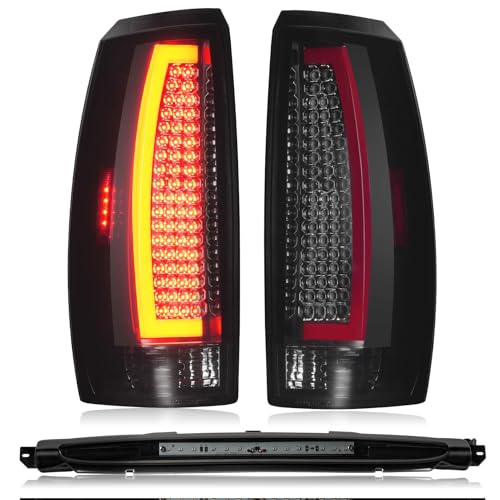
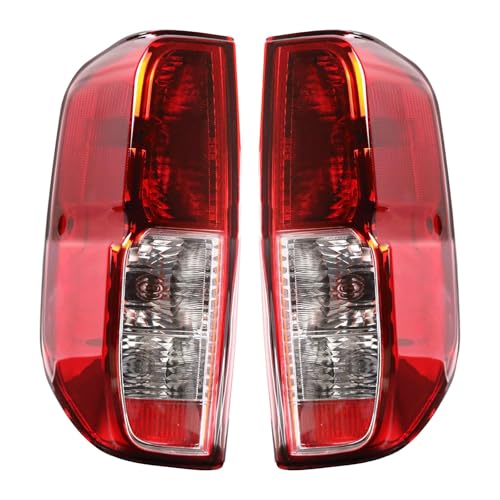
A single-side assembly is appropriate when only one housing is damaged and the opposite lamp still matches. The KAMDKI, Misakomo, and Nakuuly products are single-position replacements, with the side clearly identified in their evidence. A pair is more appropriate when both sides are faded, damaged, or visibly different. AmeriLite, SOCKIR, OKLPF, and the Lathsy Frontier listing provide both sides, while the Cenfeild set expands beyond the normal pair by adding a third brake cargo lamp.
A pair can also simplify visual matching, but it does not automatically solve fitment differences. Confirm whether the vehicle uses outer and inner lamps, a separate reverse section, or a high-mount stop lamp. For the Honda Pilot entry, the product is specifically a left outer lamp rather than a complete vehicle set. Position terminology should therefore be treated as a required specification, not a minor description detail.
Compare the lighting system
Halogen and LED assemblies should not be treated as interchangeable without checking the original equipment configuration. AmeriLite documents a halogen OE-style design for older full-size Chevrolet and GMC pickups. Misakomo also identifies a halogen Super Duty application. By contrast, SHINEHOME documents four functions, and Suiwtaa identifies an all-in-one LED arrangement for running, brake, turn, and reverse lighting.
Some products combine technologies by function. The Nakuuly Grand Caravan lamp lists LED brake and turn lights with a halogen reverse light. The SOCKIR Yukon listing identifies LED lighting for the tail, brake, and turn functions, with a 921 reverse bulb included. These details matter because a vehicle’s connector and control system may be designed around a particular factory lamp type. Look for explicit LED-only, halogen-only, incandescent, or mixed-system language rather than assuming that a new housing will accept every configuration.
Check included bulbs and harnesses
Included hardware can change the installation process. SHINEHOME, SOCKIR, OKLPF, Misakomo, and Nakuuly list bulbs and harnesses or both. The Suiwtaa assembly is plug-and-play but requires reuse of the original reverse bulbs. The Lathsy Frontier listing includes bulbs, while the Cenfeild package combines LED lamps with a third brake lamp.
A harness is especially relevant when the old wiring is damaged or when the listing identifies a connector-specific installation step. SHINEHOME notes that connector handling differs between 2014–2015 and 2016–2019 Silverado applications. That does not mean the same procedure applies to every truck in the range. Read the installation notes alongside the model year, and verify whether existing bulbs, connectors, seals, or wiring must be transferred.
Examine housing and weather protection
Rear lamps are exposed to rain, road spray, dust, temperature changes, and impacts. Several selected listings describe ABS or polycarbonate construction, sealed housings, gaskets, or resistance to water and corrosion. Cenfeild specifies ABS and polycarbonate materials, a foam-mounted back, a waterproof gasket, and IP67 protection. SHINEHOME lists IP68 protection, while SOCKIR describes a heavy-duty sealed housing intended to resist moisture and dust.
These are published construction claims rather than independent test results, so they should be read as specification differences, not observations of service life. Also inspect the condition of the sealing surface during installation. A correctly matched lamp can still admit moisture if the gasket, connector, or mounting area is damaged or poorly seated.
Match appearance and road-use requirements
Appearance is a secondary decision after fitment and lighting compatibility, but it still matters. The Suiwtaa product combines a chrome housing with a smoked lens, and the Cenfeild set lists a chrome housing and smoked lens. AmeriLite uses an OE-style appearance. A smoked or dark lens may create a different look from the original vehicle, so compare the selected finish with the surrounding lamp and local requirements.
The primary goal is that brake, turn, reverse, and running signals remain appropriate for the vehicle’s original arrangement.
Final recommendation
SHINEHOME Silverado 2014–2019 LED Tail Light ranks first overall in this specification-based comparison under the published weighted criteria.
SHINEHOME Silverado 2014–2019 LED Tail Light ranks first in this specification-based comparison under the published weighted criteria.
SHINEHOME Silverado 2014–2019 LED Tail Light is the highest-scoring returned product and the first overall specification-based choice. Its combination of defined Silverado and HD fitment, four lighting modes, included bulbs and harness, plug-and-play installation, and IP68 housing protection gives it the most complete evidence profile here.
For a two-side SUV replacement, SOCKIR GMC Yukon/Yukon XL 2015–2020 LED Pair is the more suitable configuration. Cenfeild is the standout when a Chevrolet Avalanche owner also needs a third brake cargo lamp. Owners of older trucks can compare AmeriLite’s OE-style halogen pair with Suiwtaa’s all-in-one LED design, remembering the latter’s bed-style and reverse-bulb restrictions. These are among the top rear tail light assemblies only when their documented vehicle and lamp configuration matches the vehicle being repaired.
The best rear tail light assemblies are not universal parts. Verify the original equipment number, side, connector, lamp technology, trim, and body style before making the final selection.
Frequently Asked Questions
What should I verify before choosing the best rear tail light assemblies?
Verify the exact vehicle year, model, trim, body or bed style, lamp side, factory LED or halogen configuration, blind spot equipment where relevant, connector style, and original equipment part number. Also check whether bulbs and a harness are included or must be transferred from the original lamp.
Are LED and halogen rear tail lights interchangeable?
Not necessarily. The selected products show separate halogen, LED, and mixed-function designs. The Nakuuly Grand Caravan lamp combines LED brake and turn functions with a halogen reverse light. Match the replacement to the vehicle’s documented configuration.
Is a pair better than a single replacement lamp?
A pair is useful when both sides need to match or when both housings are worn. A single lamp may be appropriate for a one-sided repair. Check the listing’s position and package count: KAMDKI and Misakomo are left-side examples, Nakuuly is right-side, and AmeriLite, SOCKIR, OKLPF, and Lathsy provide both sides.
Do included bulbs mean the installation is complete?
They reduce the number of parts that may need to be transferred, but they do not remove the need to verify connectors, seals, mounting points, and vehicle-specific instructions. Suiwtaa requires reuse of the original reverse bulbs, and SHINEHOME notes different connector handling by Silverado model year.
What does IP67 or IP68 indicate in these listings?
They are published ingress-protection designations associated with resistance to dust and water. Cenfeild lists IP67 and SHINEHOME lists IP68. These specifications should be considered alongside the gasket, connector, housing, and installation condition; they are not independent performance-test results.