Buying Guide
The best retractable clotheslines are less about a single headline measurement and more about matching the mechanism to the space, load, and mounting surface. A bathroom or apartment balcony may favor a compact stainless-steel line with adhesive mounting, while a backyard may benefit from a dual-line design with much greater reach. Treat the published capacity as a specification limit rather than a recommendation to overload the line, and check the mounting instructions before choosing a location.
Choose the line layout first
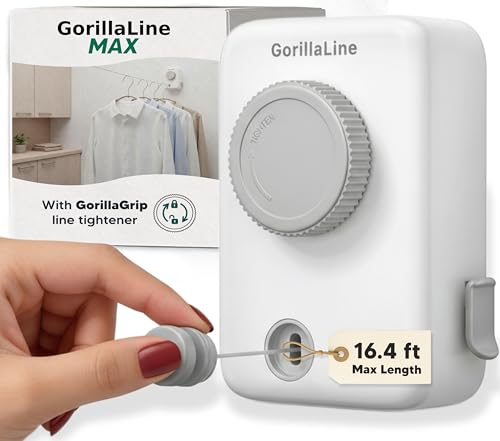
A single line is usually the simplest arrangement. It works well when you need a temporary place for towels, shirts, swimwear, or a small wash load and want the housing to disappear when not in use. CICUFY, Esoes, Danpoo, GorillaLine Max, and Kaeuoy are examples of this format in the selected products. Their documented reaches range from 13.7 to 16.4 feet, so measure the distance between the housing and receiving point before buying.
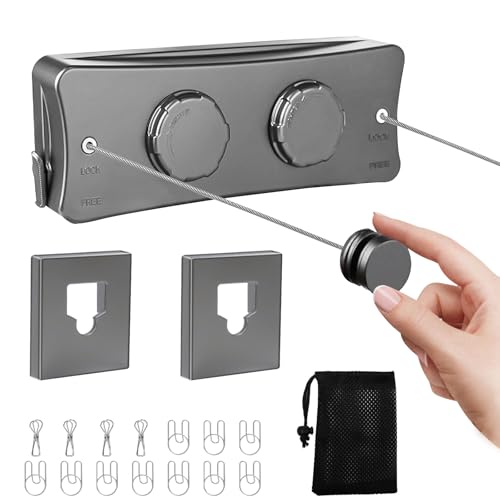
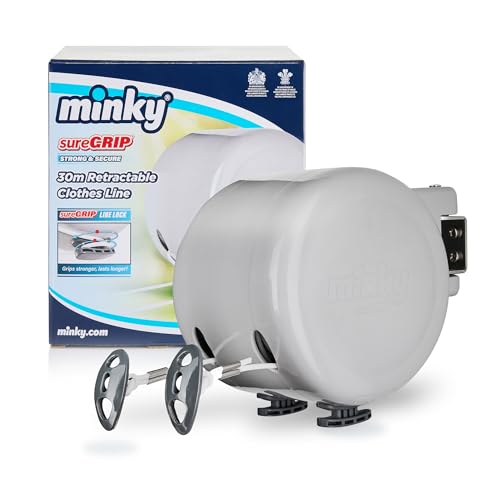
A dual or twin design can separate garments or create more hanging lanes without installing two housings. Yimerlen and Jekyeroyme provide two 16.7-foot lines, while MUSTORN documents a twin 13.8-foot layout. Minky and Riveda take a different approach with two lines reaching approximately 49 feet each. Longer lines can be useful outdoors, but they also require a suitable wall-to-wall span and careful attention to the stated load limits.
Compare capacity with the type of laundry
Several compact stainless-steel models document capacities around 40 to the current price. That makes them the more clearly specified choices for wet laundry, towels, curtains, or bedding, subject to proper mounting. Danpoo, Esoes, CICUFY, Yimerlen, Jekyeroyme, and Kaeuoy all provide a stated capacity in the supplied listing evidence.
Riveda is more explicitly limited: each of its two lines is stated to support up to the current price and is described for light to medium garments rather than heavy bedding or blankets. That is not necessarily a weakness if you plan to hang shirts and towels with clips, but it is a meaningful distinction. Minky and GorillaLine Max do not provide a supported load figure in the supplied evidence, so buyers should not assume that their long reach or heavy-duty wording equals a specific capacity.
Look for a usable tension system
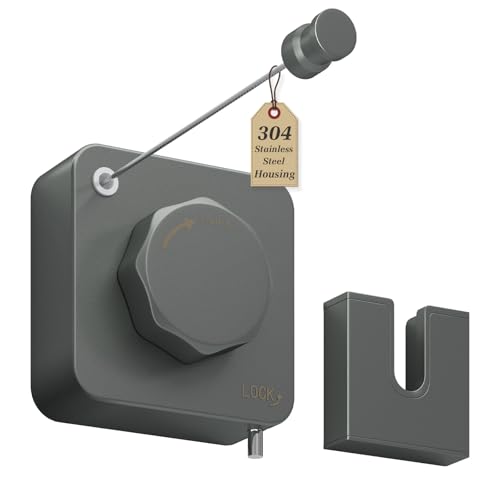
Sag control matters because wet garments can pull a line downward and allow clothes to bunch together. A lock button alone secures the line, while a separate tightening knob or adjuster lets you restore tension after loading. Danpoo uses an octagonal lock-and-tighten knob, and the compact 16.7-foot models from Yimerlen and Jekyeroyme document a lock-and-rotary-tightener process. Kaeuoy, CICUFY, Esoes, and MUSTORN also describe locking and tightening features.
GorillaLine Max emphasizes its GorillaGrip tightener and extra-taut line. That makes it a particularly relevant option when keeping the line firm is your primary concern, although no maximum load is supplied. Riveda instead emphasizes smooth, guided retraction and advises users not to let the lines snap back. Minky documents a protective casing and removable brackets, but the supplied evidence does not describe a specific tension adjuster.
Match materials to the installation environment
For humid bathrooms, balconies, or outdoor locations, look for documented resistance to rust, water, sunlight, or weather. The compact models commonly combine an ABS housing with stainless steel rope and an aluminum base. Esoes, Yimerlen, Jekyeroyme, Kaeuoy, and MUSTORN specifically describe rust-, water-, or sun-focused properties. Danpoo stands apart with a stainless steel case and mounting base plus a coated steel wire core.
Minky uses a PVC-coated line and UV-stable protective casing, with the line described as sunlight resistant and easy to wipe clean. Riveda describes a rust-resistant casing, while GorillaLine Max specifies a stainless steel housing. These descriptions support outdoor suitability, but they do not replace sensible placement: protect the housing from unnecessary impact, and follow the installation guidance for the receiving hook or bracket.
Decide between adhesive and drilled mounting
Drill-free installation can be useful in rental homes or on finished tile, marble, or glass, but it is not universal. The selected products here that rely more directly on permanent mounting should be evaluated for stud, masonry, or anchor compatibility before installation.
A drilled installation is typically the more direct choice when you want a fixed position and the wall can accept anchors. Danpoo specifically documents reinforced screw mounting with included metal screws and anchors. Riveda is designed for wall-to-wall mounting and includes hardware and instructions. Regardless of the method, the receiving point must be level and secure; a well-rated line cannot compensate for a weak anchor or an unsuitable adhesive surface.
Consider retraction and everyday handling
A retractable design saves space only if the line returns neatly and the housing remains unobtrusive. GorillaLine Max documents one-touch retraction, while Danpoo describes a damped mechanism intended to guide the line back smoothly. Riveda tells users to guide the line back slowly by hand, and its instructions warn against snapping it back. Products without a detailed return procedure should still be handled gently rather than released abruptly.
Also consider how you will hang clothing. Kaeuoy includes 10 windproof clips, Riveda supplies 24 wooden clothespins, and Yimerlen includes 14 attached clips. CICUFY’s telescopic hanging rod and Esoes’ built-in hanger slot are better suited to garments placed on hangers. These features can matter more than a small difference in line length if you regularly dry delicate items, shirts, or clothing that you do not want folded over a wire.
Final Recommendation
Yimerlen 16.7-Foot Double Retractable Clothesline ranks first overall in this specification-based comparison under the published weighted criteria.
The final choice among the best retractable clotheslines depends on the documented features that match your intended use.
Danpoo Stainless Steel Retractable Clothesline is the highest-scoring returned product and the first overall specification-based choice among these top retractable clotheslines. Its documented all-metal case and base, coated steel wire, 44-pound capacity, adjustable tension, and damped retrieval give it the most complete specification profile, though its 13.7-foot reach and permanent mounting favor fixed indoor or sheltered locations.
Choose Yimerlen if two 16.7-foot lines, clips, and flexible mounting are more useful than an all-metal housing. Esoes is a strong single-line alternative for apartments and RV walls, especially if you want a hanger slot. For a long outdoor span, Minky’s two approximately 49-foot lines and removable brackets are the clearest fit. Riveda offers similar reach with a more explicit light-to-medium garment limit and an included clip kit. The remaining compact options are best selected by their specific strengths: CICUFY for hanger support, MUSTORN for a twin layout, GorillaLine Max for its taut-line mechanism, and Kaeuoy for included windproof clips.
Frequently Asked Questions
How long should the best retractable clotheslines be?
Choose a line that fits the actual wall-to-wall distance rather than selecting the longest advertised reach automatically. The selected compact models extend roughly 13.7 to 16.7 feet, which suits many bathrooms, balconies, laundry rooms, and RV areas. Minky and Riveda document approximately 49-foot lines for larger outdoor spans. Leave enough room for the housing, receiver, and a level installation, and avoid stretching a line where the mounting points cannot remain secure.
Are retractable clotheslines suitable for heavy bedding?
Some selected products document capacities of 40 to the current price and specifically mention bedding, quilts, curtains, or heavy wet laundry. Danpoo, Yimerlen, Esoes, Jekyeroyme, CICUFY, and Kaeuoy therefore have clearer capacity evidence for heavier household loads. Riveda is explicitly intended for light to medium garments with a 10-pound limit per line. Always follow the product’s stated limit and install the housing and receiving point on suitable surfaces.
Is adhesive mounting reliable for a retractable clothesline?
The supplied listings document adhesive mounting as an option for smooth surfaces such as tile, marble, or glass. It can avoid drilling, but the evidence does not establish a universal load performance for every wall finish or adhesive installation. For heavier loads or uncertain surfaces, a drilled installation with appropriate anchors may be the more suitable approach. Level both mounting points and follow the product’s instructions rather than treating adhesive and screws as interchangeable in every situation.
What helps prevent laundry from bunching together?
A lock-and-tighten system is the clearest documented aid. Danpoo, Esoes, Yimerlen, Jekyeroyme, MUSTORN, CICUFY, and Kaeuoy describe a tightening knob or adjuster that lets users restore tension after loading. Clips can also help keep individual garments positioned: Kaeuoy and Riveda include clips, while Yimerlen documents attached clips. The line should still be loaded within its stated capacity, because tension control does not remove the need for secure mounting and sensible load distribution.
Which retractable clothesline is best for a renter?
Look for a selected model that documents both adhesive and drilled installation, then confirm that the wall surface is suitable for the adhesive method. Esoes, Yimerlen, Jekyeroyme, Kaeuoy, CICUFY, and MUSTORN provide that choice in the supplied evidence. Adhesive mounting is not automatically appropriate for painted drywall, textured walls, or heavy loads, so check the instructions and consider whether removing the unit could affect the finish. A compact single-line housing may also be easier to place discreetly than a dual-line unit.