Buying Guide
Choosing the best rubber outdoor doormats comes down to matching construction, drainage, and profile to the conditions at a specific entry. The picks above cover everything from heavyweight anchored mats to slim drainage-focused designs, and the criteria below explain what each feature contributes in real-world use.
Why Rubber Construction Matters
A rubber doormat handles UV, freezing temperatures, road salt, and wet shoes far better than fabric or polypropylene alternatives. Solid natural rubber, in particular, is documented for higher tensile strength and tear resistance across several entries here, including the A1 Home Collections 9-LB Heavy Duty Rubber Doormat and the GORILLA GRIP WeatherMAX Doormat. For households that leave a mat outside year-round, rubber-only or rubber-backed builds may resist cracking, warping, and fading better than mats with synthetic top fibers.
Weather Resilience and All-Season Use
For entries exposed to snow, rain, or strong sun, look for mats that explicitly list all-season construction and weather- or fade-resistant surfaces. The RESARE Front Door Mat documents handling of snowstorms, heavy rain, and intense sun, while the Ottomanson Waterproof Rubber Doormat is described as a heavy-duty solution for rain and snow. Mats that combine rubber construction with drainage features generally perform well when weather shifts quickly between wet and dry.
Traction, Safety, and Slip Resistance
Slip resistance is an important safety feature of an outdoor doormat. Rubber grid backings, beveled edges, and retention dams all help keep a mat flat and in place. The FRAMICS Welcome Mat uses a rubber grid backing for grip on smooth floors, and the RESARE mat adds beveled edges for smooth transitions. For households with kids, pets, or elderly residents, prioritizing documented traction features is a sensible move.
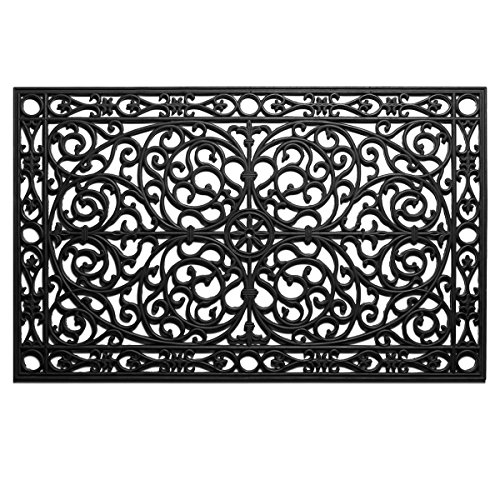
How a mat captures debris depends on its surface texture. Concave-convex patterns, raised ridges, and open lattice designs each offer a different approach. The GORILLA GRIP WeatherMAX Doormat relies on deep grooves and a retention dam, the Ottomanson mat uses raised rubber ridges for scraping, and the A1 Home Collections mat uses a rubber lattice that channels mud and water below the walking surface. Selecting between these depends on whether a shopper wants debris to sit on top for later cleaning or fall through for fast drainage.
Door Clearance and Profile Thickness
Low-profile mats make the biggest difference at entries with inswing doors, storm doors, or low thresholds. The GORILLA GRIP WeatherMAX at 0.25 inches, the RESARE mat at 0.2 inches, and the Ottomanson mat at 0.2 inches are all designed for tight clearance. Thicker 0.5-inch mats, like the Calloway Mills Gatsby and Calloway Mills Sungate, offer more cushion underfoot but may need to be paired with a door sweep or used at entries with more clearance.
Cleaning and Maintenance
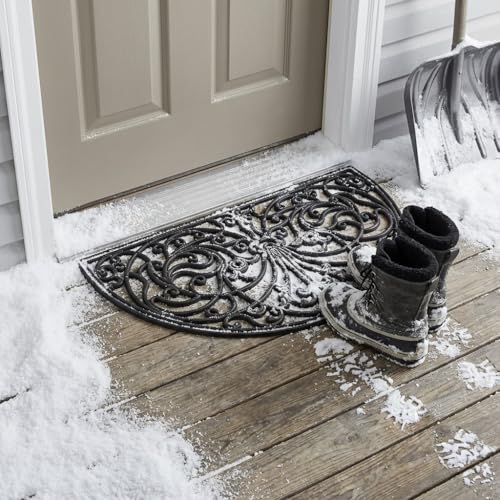
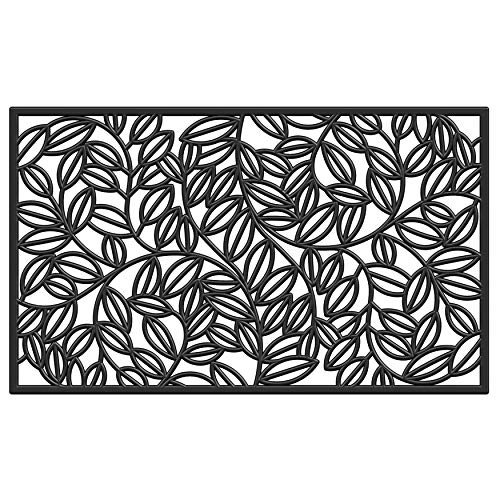
Rubber mats are well known for easy maintenance, and most options here use a simple rinse-and-shake routine. Hose-clean designs include the Calloway Mills Gatsby, Calloway Mills Lilac Vine, and Calloway Mills Sungate. Lattice designs like the A1 Home Collections mat and the Kempf Rubber Scroll Half Moon can be shaken out and rinsed in seconds. Buyers who want simple maintenance should lean toward open lattice or smooth rubber designs rather than grass-blade tops, which may trap moisture.
Size and Entryway Coverage
Coverage matters for both aesthetics and functionality. Standard single-door entries are well served by 17x30 and 18x30 sizes like the FRAMICS and Calloway Mills Lilac Vine mats. Wider entries, double doors, or garage thresholds benefit from 24x36 mats such as the Calloway Mills Gatsby, A1 Home Collections, Ottomanson, and Calloway Mills Sungate. For shoppers with extra-wide doors, the RESARE 32x47 size option provides a roomier footprint.
Matching Mat to Entry Type
Different entries ask different things of a mat. A covered porch may prioritize traction and scraping, while a fully exposed entry needs strong drainage and weather resilience. Half-moon shapes like the Kempf Rubber Scroll fit neatly against a single-door threshold, while rectangular mats like the Calloway Mills Sungate or A1 Home Collections work better for wider doorways. Selecting a mat by entry shape and exposure level keeps the layout clean and functional.
Final recommendation
A1 Home Collections 9-LB Heavy Duty Rubber Doormat 24x36 ranks first overall in this specification-based comparison under the published weighted criteria.
The final choice among the best rubber outdoor doormats depends on the documented features that match your intended use.
ubdyo Extra Durable Outdoor Mat 30x17 ranks first overall in this specification-based comparison under the published weighted criteria.
The ubdyo Extra Durable Outdoor Mat 30x17 stands out as the first overall specification-based choice, pairing a low 0.4-inch profile suited to tight door clearances with a PVC rubber backing engineered for stability and grass-like scraping blades that help capture dirt at the threshold. For households that need an anchored, weather-ready mat at a wider entry, the A1 Home Collections 9-LB Heavy Duty Rubber Doormat is a strong runner-up among top rubber outdoor doormats, with a documented 9-pound weight and open lattice drainage suited to exposed entries.
Frequently Asked Questions
Among the best rubber outdoor doormats, what size rubber outdoor doormat works best for a single front door?
A 17x30 or 18x30 mat, like the FRAMICS Welcome Mat or Calloway Mills Lilac Vine Rubber Doormat, fits most single-door thresholds without crowding the doorway. For wider or double-door entries, a 24x36 mat provides fuller coverage.
Are fully rubber doormats better than rubber-backed fabric mats?
Fully rubber mats, such as the Ottomanson Waterproof Rubber Doormat or Calloway Mills Gatsby, may resist fabric wear, hold up under UV and road salt, and last longer in exposed outdoor conditions. Rubber-backed fabric mats can offer softer scraping but may show top-layer wear over time.
How do drainage holes help outdoor rubber doormats?
Drainage holes, like those in the RESARE Front Door Mat and A1 Home Collections 9-LB Heavy Duty Rubber Doormat, allow rainwater and snowmelt to pass through the mat rather than pool on the surface. This helps reduce slippery patches and speeds up drying in wet climates.
Can a low-profile rubber doormat clear an inswing door?
Yes. Mats with profiles between 0.2 and 0.3 inches, including the RESARE mat, GORILLA GRIP WeatherMAX, and Ottomanson mat, are designed for low-clearance doors. Always measure the gap between the door and the floor before choosing a mat.
How do you clean a rubber outdoor doormat?
Most rubber doormats can be cleaned by shaking off loose dirt, spraying with a garden hose, and letting them air dry. Open lattice designs, like the Kempf Rubber Scroll Half Moon, shake clean in seconds, while smooth rubber mats benefit from a quick rinse to remove trapped debris.