Buying Guide
Choosing the best pore strips for oily skin starts with the type of buildup you want to address and the amount of application guidance you need. The products in this comparison are not ranked from hands-on testing. They are evaluated from supplied listing evidence, including stated ingredients, strip formats, target concerns, skin-type claims, and instructions.
Decide between a nose strip and broader coverage
Most selected products are designed primarily for the nose. That format is useful when shine and visible blackheads are concentrated around the nose, but it does not automatically cover the chin, cheeks, or forehead. Bioré T-Zone Blackhead Remover Strips is the clearest exception in this group because its listing documents three shapes for the face, nose, and chin. Choose it when area coverage matters more than a nose-only routine.
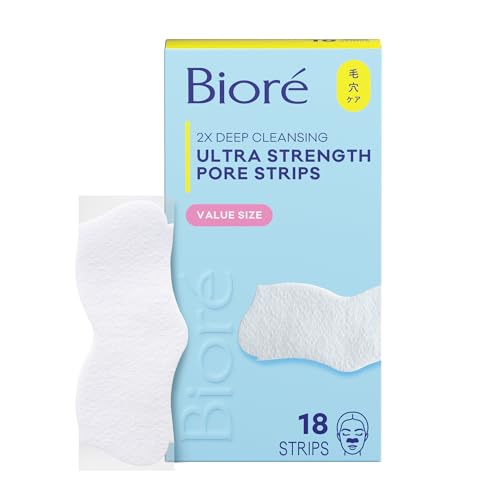
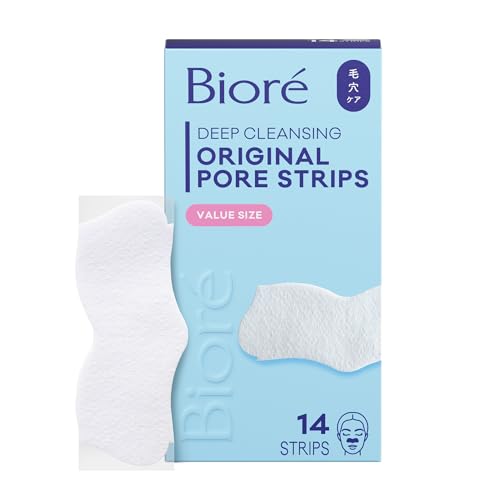
A standard nose strip may be preferable when you want focused application. Bioré Original Blackhead Remover Strips, Bioré Charcoal Deep Cleansing Nose Strips, Bioré Witch Hazel Ultra Strength Pore Strips, Shaeva Natural Charcoal Pore Strips, Yecuce 80-Count Natural Charcoal Pore Strips, YUXIANLB 120-Count Bamboo Charcoal Pore Strips, AUSLKA 70-Count Charcoal Pore Strips, and Kallteren Bamboo Charcoal Pore Strips all document nose-oriented designs. This narrow format can make the intended placement easy to understand, but the supplied evidence does not establish that one shape fits every nose equally well.
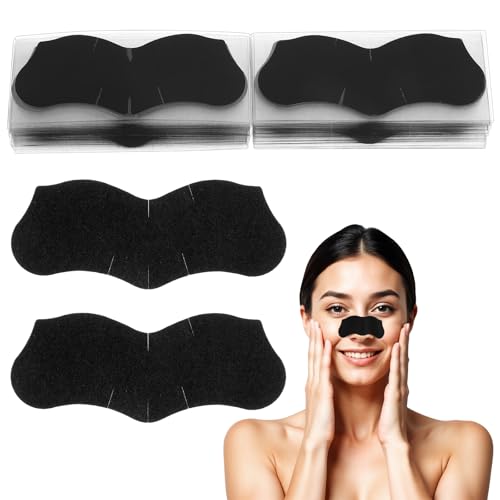
Charcoal is the most common design in the selected group. Bioré Charcoal Deep Cleansing Nose Strips, Shaeva Natural Charcoal Pore Strips, Yecuce 80-Count Natural Charcoal Pore Strips, YUXIANLB 120-Count Bamboo Charcoal Pore Strips, AUSLKA 70-Count Charcoal Pore Strips, and Kallteren Bamboo Charcoal Pore Strips identify charcoal or bamboo charcoal in their listings. These products are positioned around absorbing or removing oil and impurities, but those statements remain listing claims rather than independent performance findings.
Bioré Witch Hazel Ultra Strength Pore Strips adds natural witch hazel to a conventional nose-strip format, while Shaeva Natural Charcoal Pore Strips documents both witch hazel and licorice extract. These options may appeal to shoppers who want named botanical ingredients rather than charcoal alone. The listings do not provide complete ingredient panels, so shoppers with known sensitivities should check package information before use.
SYABO 2.0 Salicylic Acid Blackhead Strips uses a different approach. Its listing documents salicylic acid, Amazonian white clay, aloe, and other plant ingredients, and it is specifically described as suitable for oily and combination skin. Because it is a mask-style peel-off product rather than a simple pre-shaped nose strip, follow its directions rather than assuming it works exactly like the other formats.
Look for useful application instructions
Application directions are important because most adhesive strips require moisture and drying time. Bioré T-Zone Blackhead Remover Strips, Bioré Original Blackhead Remover Strips, and Bioré Witch Hazel Ultra Strength Pore Strips document a 10-minute period, while AUSLKA 70-Count Charcoal Pore Strips specifies 15 minutes. YUXIANLB 120-Count Bamboo Charcoal Pore Strips and Kallteren Bamboo Charcoal Pore Strips give 10-to-15-minute windows. The charcoal formats generally instruct users to wet the nose, apply the strip, let it dry, and peel slowly.
Kallteren Bamboo Charcoal Pore Strips provides detailed steps: wet the nose, press the strip into place, wait 15 minutes, remove it, and clean away residue. SYABO 2.0 Salicylic Acid Blackhead Strips similarly explains that the product should dry fully within a 10-to-15-minute period. These details make the routine easier to interpret, but they do not establish a particular result.
Do not remove a strip before the listed drying period unless the package says otherwise. The supplied listings also commonly frame use as weekly or one to two times per week. Treat those directions as product-specific guidance, and avoid combining assumptions from one product with another.
Consider skin-type language carefully
Several products state that they suit oily, combination, dry, normal, or sensitive skin. Yecuce 80-Count Natural Charcoal Pore Strips and YUXIANLB 120-Count Bamboo Charcoal Pore Strips provide broad lists, while Shaeva Natural Charcoal Pore Strips explicitly includes oily, combination, and sensitive skin. These claims can help with initial comparison, but they are not a substitute for reading the full label or considering your own skin history.
Adhesive removal can feel different from one person to another, and the supplied data does not provide independent irritation testing for most products. If your skin is reactive, review the complete package directions and ingredient information. Named ingredients such as salicylic acid, witch hazel, licorice, aloe, clay, and charcoal may be useful distinctions, but the evidence here does not establish which formula is universally gentlest.
Use pack count as a planning detail
Pack counts range from 10 to 120 pieces in the selected products. A larger pack can support a recurring routine, while a 10-count pack may be suitable when you want to try a format before using it repeatedly. Count alone does not indicate adhesion, cleansing ability, or skin comfort, so it should remain secondary to format, formula, and instructions.
The highest documented counts are YUXIANLB 120-Count Bamboo Charcoal Pore Strips at 120 pieces, Yecuce 80-Count Natural Charcoal Pore Strips at 80 pieces, and AUSLKA 70-Count Charcoal Pore Strips at 70 pieces. These products are still nose-focused, so a large count does not provide broader face coverage. Bioré T-Zone Blackhead Remover Strips documents multiple shapes, which may matter more if you want to address several areas.
How this comparison was scored
The editorial score uses six category-specific criteria: oil-control focus, blackhead and pore targeting, coverage and strip design, ingredient and material design, application guidance, and skin-type compatibility. Each product receives a 0.0-to-10.0 score on every criterion. The weights total 100, with oil control and pore targeting receiving the greatest emphasis because they most directly match the requested category. No marketplace signals or customer-opinion data appears in the public criteria.
Final recommendation
Bioré T-Zone Blackhead Remover Strips ranks first overall in this specification-based comparison under the published weighted criteria.
Bioré T-Zone Blackhead Remover Strips is the first overall specification-based choice for the best pore strips for oily skin because it documents face, nose, and chin shapes alongside direct blackhead, dirt, and oil targeting. It is the most versatile coverage design in this selected group.
For a nose-only routine, Bioré Witch Hazel Ultra Strength Pore Strips and Bioré Charcoal Deep Cleansing Nose Strips provide distinct formula directions. Shaeva Natural Charcoal Pore Strips is another option when witch hazel and licorice extract matter. SYABO 2.0 Salicylic Acid Blackhead Strips stands apart as a salicylic-acid and clay peel-off mask-style design for shoppers who want an ingredient-focused approach.
The top pore strips for oily skin are not interchangeable: some emphasize T-zone coverage, some use charcoal or botanical ingredients, and others provide detailed drying instructions. Select the product whose documented format and directions fit the area you plan to treat.
Frequently Asked Questions
Are the best pore strips for oily skin all charcoal-based?
No. Charcoal appears in several selected products, including Bioré Charcoal Deep Cleansing Nose Strips, Shaeva Natural Charcoal Pore Strips, Yecuce 80-Count Natural Charcoal Pore Strips, YUXIANLB 120-Count Bamboo Charcoal Pore Strips, AUSLKA 70-Count Charcoal Pore Strips, and Kallteren Bamboo Charcoal Pore Strips, but Bioré Original Blackhead Remover Strips and Bioré Witch Hazel Ultra Strength Pore Strips use different documented designs. SYABO 2.0 Salicylic Acid Blackhead Strips lists salicylic acid, Amazonian white clay, aloe, and plant ingredients instead. The supplied evidence supports comparing these formula types, not declaring one universally superior.
How long should a pore strip stay on the nose?
Follow the directions for the specific product. The selected listings commonly state about 10 to 15 minutes. Bioré T-Zone Blackhead Remover Strips, Bioré Original Blackhead Remover Strips, and Bioré Witch Hazel Ultra Strength Pore Strips identify 10 minutes, while AUSLKA 70-Count Charcoal Pore Strips identifies 15 minutes. YUXIANLB 120-Count Bamboo Charcoal Pore Strips and Kallteren Bamboo Charcoal Pore Strips provide 10-to-15-minute guidance. SYABO 2.0 Salicylic Acid Blackhead Strips also says to allow the product to dry fully within a 10-to-15-minute window.
Can these products be used on the chin or forehead?
Only when the listing documents that coverage or provides directions for it. Bioré T-Zone Blackhead Remover Strips specifically lists shapes for the face, nose, and chin. Most other selected products are described as nose strips, so do not assume that their size, adhesive shape, or directions are intended for the forehead or cheeks.
Which selected product has the most detailed usage directions?
Kallteren Bamboo Charcoal Pore Strips provides a clear sequence: wet the nose, apply the strip, wait 15 minutes, peel, and remove residue. YUXIANLB 120-Count Bamboo Charcoal Pore Strips and SYABO 2.0 Salicylic Acid Blackhead Strips also document timing and preparation details. Always give the package directions priority if they differ from the listing summary.
Are pore strips a substitute for a complete oily-skin routine?
The supplied evidence presents these products as targeted strips or peel-off treatments for oil, dirt, and blackheads. It does not establish that they replace cleansing, moisturizing, sunscreen, or professional skin care. Use them only as directed and review the full product label, especially if you have sensitive skin or are using other active ingredients.