Buying Guide
Selecting the best saltwater fishing hooks is mainly a matter of matching the hook design to the bait, rig, target fish, and environment. The listings in this comparison cover circle hooks, traditional O’Shaughnessy J hooks, and treble hooks. They differ substantially in how they are intended to be used, so a larger pack is not automatically a better choice for every trip.
Start with hook style
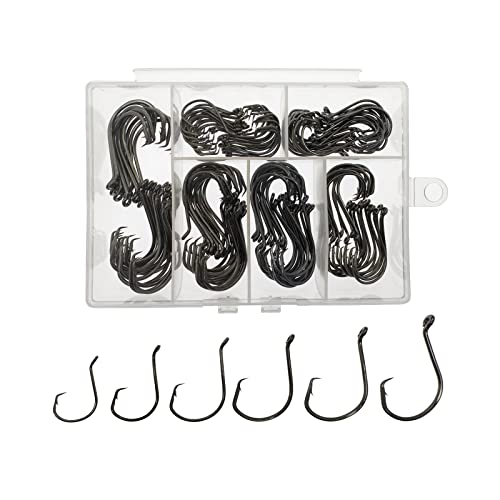
Circle hooks are the dominant design in the comparison. Their inward-turning point is documented on the FishTrip, UCEC, Anmuka, and Afmivs listings, while FishTrip specifically identifies an inline, non-offset point. These hooks are generally presented for live bait, cut bait, chunk bait, and catch-and-release applications. Their listed design emphasizes corner-of-the-mouth placement rather than a traditional aggressive hookset. The supplied evidence supports describing their intended behavior, but it does not support promising a particular catch rate.
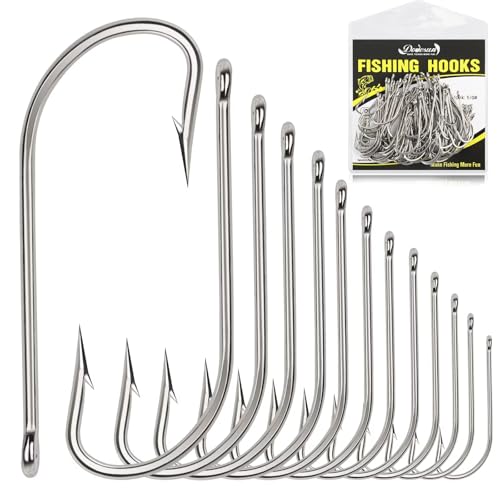
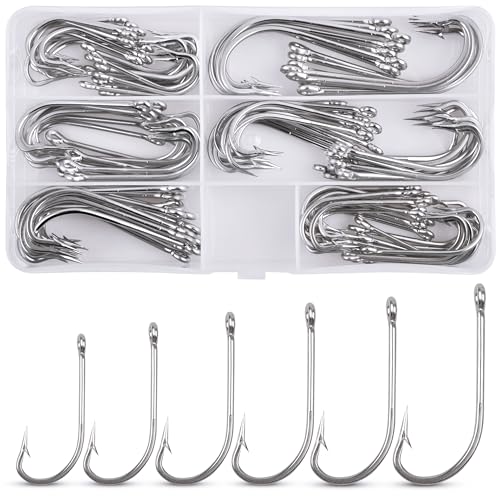
J hooks provide a different baiting approach. AGOOL, SILANON, ECATIFIN, JSHANMEI, and Dovesun use the O’Shaughnessy pattern, with long or straight shanks and ringed eyes on several models. Long shanks can help position natural bait such as squid, crabs, shrimp, fish heads, or cut bait, according to the listings. They are also identified for trolling, chunking, jigging, bottom fishing, beach fishing, and pier fishing. Choose this format when bait presentation and a traditional hookset matter more than circle-hook behavior.
Treble hooks serve another role. LURELINK is designed for replacing or upgrading hooks on hard baits such as crankbaits, spoons, and topwater plugs. That makes it a relevant saltwater hook option, but not a substitute for a single circle or J hook on a bait rig. Check the lure’s existing hook size and attachment hardware before selecting a replacement.
Match the size range to your fishing
Size coverage is one of the largest differences between these products. UCEC lists 11 sizes from #6 through 8/0, while FishTrip lists 11 sizes from #1 through 12/0. JSHANMEI lists choices through 10/0, and Dovesun lists 12 choices from #6 through 8/2. Broad ranges are useful for anglers targeting changing species or carrying one general assortment, but they also mean that some included sizes may remain unused.
More focused packs can be easier to evaluate. ECATIFIN covers seven listed sizes through 3/0, and SILANON covers six sizes from 2/0 through 7/0. These choices may make more sense when your bait and target fish are predictable. Consider the bait’s thickness and the amount of hook gap left after rigging; a hook that is too small may be crowded by the bait, while a very large hook may be unsuitable for smaller presentations. The supplied listings document size choices, not universal species-to-size rules.
Saltwater use places extra importance on material and finish. Several products identify stainless steel, including AGOOL, SILANON, and JSHANMEI. ECATIFIN lists a black nickel finish and high-carbon steel, while LURELINK identifies an anti-corrosion coating. The circle-hook assortments commonly list high-carbon steel and corrosion-resistance or anti-rust claims.
These are product specifications rather than independent durability tests. Regardless of material, rinse hooks with fresh water after saltwater use, dry them before storage, and inspect points and finishes regularly. Dovesun’s listing specifically advises rinsing hooks after use. Storage also matters: compartment boxes help separate sizes and reduce the chance of handling a loose mass of sharp hooks.
Compare strength, point, and eye details
Forging, reinforced bodies, 2X or 5X strength claims, high-carbon steel, and sharp or chemically sharpened points appear throughout the supplied evidence. FishTrip lists 5X reinforcement and 1080 carbon steel, while LURELINK lists 5X strength and reinforced shanks. AGOOL, SILANON, and JSHANMEI list forged construction and 2X-heavy profiles. These descriptions can help distinguish intended use, but they should not be treated as laboratory measurements.
Eye design is also practical. Ringed eyes appear on the O’Shaughnessy models and are identified for trolling, chunking, or jigging. Anmuka lists a loop eye, while the rigged products excluded from this top ten add leaders and swivels. A closed or smoothly formed eye can simplify knot tying, but knot choice and line size still depend on the complete rig.
Decide how much quantity you need
Bulk assortments such as UCEC, Anmuka, and Afmivs provide multiple sizes and replacement hooks in organized cases. They suit anglers who regularly change bait or fish different waters. Focused packs such as JSHANMEI can be more appropriate when you already know the size and style you want. FishTrip’s 25-piece pack is similarly targeted toward a particular circle-hook design rather than a large replacement supply.
Also account for the hook format. Treble hooks may be counted differently by size, and their attachment to a lure makes them a replacement component for that presentation. Single hooks are easier to sort by bait and rig, while treble hooks need compatibility with the lure’s split ring and body.
Final recommendation
FishTrip 5X Strong Inline Circle Hooks ranks first overall in this specification-based comparison under the published weighted criteria.
UCEC 240-Piece Circle Hook Assortment is the first overall specification-based choice among these best saltwater fishing hooks because it combines 11 listed sizes, a reusable box, high-carbon steel, and a documented circle-hook design. FishTrip is the better fit for an inline, heavy-duty circle hook with a focused pack, while AGOOL and SILANON are strong traditional J-hook choices for long natural baits.
For anglers who want the top saltwater fishing hooks for lure maintenance, LURELINK is the specialized pick because its treble format and size range are explicitly aimed at hard-bait replacement. ECATIFIN is useful when smaller inshore bait sizes and a black nickel finish are priorities. JSHANMEI and Dovesun favor size flexibility in O’Shaughnessy patterns, whereas Anmuka and Afmivs offer general circle-hook assortments with storage cases.
No listing here represents a hands-on test, and the ranking does not use customer sentiment. Before buying, verify the selected size, inspect the point and finish when received, and choose a style that matches your rigging method.
Frequently Asked Questions
What are the best saltwater fishing hooks for live or cut bait?
The listed circle-hook options are the most directly aligned with live, cut, and chunk bait. FishTrip specifically mentions chunk bait, cut bait, and live bait, while UCEC, Anmuka, and Afmivs also document circle-hook use for bait and saltwater fishing. Select size according to the bait and target fish rather than quantity alone.
Are stainless-steel hooks necessary for saltwater?
They are not the only documented option, but stainless steel is a clearly stated material on AGOOL, SILANON, and JSHANMEI. Other selected products list high-carbon steel with corrosion-related claims or coatings. Whichever material you choose, rinse and dry hooks after saltwater use and inspect them before the next trip.
Should I choose circle hooks or J hooks?
Choose circle hooks when the listed corner-placement and bait applications fit your fishing method. Choose O’Shaughnessy J hooks when you want a long-shank profile for natural bait, trolling, chunking, or jigging. The two styles are not interchangeable in every rig, and the supplied evidence does not establish one as universally superior.
What are treble hooks used for in saltwater fishing?
LURELINK’s treble hooks are intended for replacing or upgrading hooks on hard baits, including crankbaits, spoons, and topwater plugs. They are a specialized lure component rather than a general replacement for a single bait hook. Confirm the lure’s size and attachment hardware before installation.
How should saltwater hooks be stored?
Use a compartmented or reusable box to separate sizes and keep sharp points from becoming tangled. UCEC, Anmuka, Afmivs, and several other selected products list organized storage. After fishing, rinse away salt, dry the hooks thoroughly, and check for dulling, rust, or coating damage before storing them.