Buying Guide
This comparison treats the best satin nickel door hinges as a specification question rather than a hands-on performance test. The useful starting points are the existing hinge dimensions, corner shape, screw-hole pattern, door weight, and the number of hinges needed. A finish name alone does not establish compatibility. A 3.5-inch hinge can be unsuitable if the frame uses a 4-inch preparation, and a square corner will not automatically replace a rounded corner without checking the mortise.
Match the hinge size first
Measure the existing hinge leaf from end to end and side to side, then compare the result with the listing. The selected products divide mainly into 3.5-inch and 4-inch formats. The HOSOM six-pack, Design House 3.5-inch pack, Amazon Basics 18-pack, SORGMACH three-pack, AmzGod 30-pack, JIW 18-pack, and TDCHINGES 12-pack are aimed at the 3.5-inch class. The AmzGod, Design House, and Goldenwarm 4-inch options are intended for a larger preparation.
The two sizes should not be treated as interchangeable. A 4-inch hinge changes the leaf dimensions and hole locations, while a 3.5-inch hinge may leave an unsuitable gap or fail to cover the existing mortise. If replacing one hinge rather than an entire set, use the old hinge as the physical reference and confirm the screw-hole pattern before ordering.
Check the corner profile
Corner shape is the next major compatibility issue. Square-corner products include the HOSOM six-pack and JIW 18-pack, while several other selections use rounded corners. The SORGMACH hinge specifies a 5/8-inch radius, and the TDCHINGES 12-pack and AmzGod 30-pack identify a 1/4-inch-radius model or description. These radii can look similar in a listing photo but can require different mortise preparations.
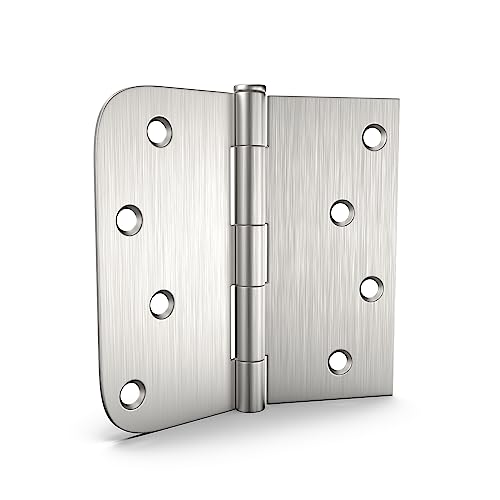
The Goldenwarm 4-inch hinge is unusual because the listing describes one side as square and the other as having a 5/8-inch radius. That may be useful when the existing preparation calls for the documented mixed profile, but it should not be assumed to solve every mismatch. Compare the old hinge directly, including the shape at both corners and the location of the screw holes.
Compare construction and bearing style
Construction details vary from general steel or iron descriptions to a specific stainless-steel grade. The SORGMACH set identifies 304 stainless steel and ball bearings, which gives it the clearest material and mechanism documentation in this selection. Other products use steel or iron with plain-bearing descriptions. The HOSOM six-pack also states an ANSI Grade 1 certification, while SORGMACH and several AmzGod descriptions mention ANSI/BHMA testing or certification language.
These statements are product-listing evidence, not independent verification. They are still useful for separating products with documented construction details from products that only identify a finish. If the installation is exposed to moisture, the SORGMACH material description may deserve closer attention. For a typical interior replacement, the fit and screw pattern remain more important than choosing a mechanism based only on marketing language.
Decide whether you need ball bearings, plain bearings, or damping oil
A ball-bearing hinge and a plain-bearing hinge describe different mechanisms. SORGMACH explicitly lists ball bearings. The AmzGod, JIW, TDCHINGES, and Goldenwarm selections describe plain-bearing operation or damping oil. The Amazon Basics self-closing model adds a self-closing mechanism and is a distinct option, although it was not selected for this top 10 because its single-hinge format provides less complete project utility than the chosen sets.
Damping oil and pre-lubrication are recurring features in the supplied evidence. They are described as supporting smooth or quiet operation, but this guide does not independently test noise or movement. Damping oil can also affect maintenance: Goldenwarm’s listing cautions that its sticky lubricant can make the pin difficult to remove. If frequent door removal is expected, a removable-pin design without a documented removal complication may be more convenient.
Count hinges and included hardware
Pack size is a practical distinction. A three-pack is generally positioned for one door in several listings, while six-, 10-, 12-, 18-, and 30-pack options are better suited to multiple doors or stock replacement parts. The Design House 3.5-inch set includes 10 hinges, the Amazon Basics option includes 18, and the AmzGod and TDCHINGES selections offer especially large quantities.
Included screws reduce the chance of discovering that the hinge leaves and fasteners do not match. The Amazon Basics 18-pack lists 108 screws; the JIW 18-pack also lists 108; the TDCHINGES 12-pack lists 72; and the AmzGod 30-pack lists 210. Those counts are useful planning information, but screw length and thread compatibility with the frame still deserve inspection. An extra-long screw can help when replacing hardware in existing holes, yet it should be used only where the frame and surrounding material can accept it.
Consider removable pins and door maintenance
A removable pin can simplify taking a door down for painting, repair, or adjustment. The Design House 3.5-inch hinge, HOSOM six-pack, Design House 4-inch hinge, and Goldenwarm model document removable-pin features. Other listings provide pin-removal guidance without making the feature equally prominent. This matters most when the door will need periodic removal or when working in a tight space.
The hinge should still match the door’s existing preparation. A removable pin is not a substitute for the correct size, corner profile, or screw-hole layout. For a replacement, keep one original hinge available until the new set has been checked against the frame.
Plan for interior or exterior use carefully
Several listings use broad application language that includes bedrooms, bathrooms, garages, sheds, or other buildings. That wording does not establish that every installation is appropriate. Confirm the door material, exposure, hinge size, and local hardware requirements. The SORGMACH listing is the clearest selected example for a stainless-steel material, while the Design House 3.5-inch product specifically presents itself as an interior-door option.
Satin nickel and brushed nickel wording also varies across listings. The selected products are included because their titles, descriptions, or specifications connect them to satin nickel, brushed nickel, or a satin nickel model designation. Finish appearance can differ between manufacturers, so matching a nearby knob or lever may require comparing physical samples or product images rather than relying on the color name alone.
Use the ranking as a starting point
The ranking emphasizes fit information, construction and mechanism documentation, installation hardware, operation features, and pack utility. It does not use customer sentiment, marketplace popularity, or volatile listing metrics. The highest positions therefore favor products with more complete technical evidence and a clear use case. Before buying, verify the hinge size, corner radius, finish appearance, quantity, and screw requirements against the door in front of you.
Final Recommendation
HOSOM 6 Pack 3.5-Inch Square-Corner Hinges ranks first overall in this specification-based comparison under the published weighted criteria.
The final choice among the best satin nickel door hinges depends on the documented features that match your intended use.
HOSOM 6 Pack 3.5-Inch Square-Corner Hinges is the first overall specification-based choice. It combines a common 3.5-inch format, square corners, steel construction, a stated ANSI Grade 1 certification, removable pins, included screws, and a useful six-hinge quantity. For rounded corners, the Design House 3.5-inch set offers a practical 10-pack with removable pins and mounting screws, while the Amazon Basics 18-pack is better suited to a larger interior replacement project.
Among the top satin nickel door hinges, SORGMACH is the clearest material-led choice because its listing identifies 304 stainless steel and ball bearings. If the door uses a larger 4-inch preparation, the Design House 4-inch model has the most specific per-hinge support statement, and Goldenwarm provides a documented mixed-corner design. For broad square-corner work, JIW’s 18-pack and HOSOM’s six-pack give two different quantity options.
The final decision should follow the existing hinge rather than the pack’s marketing position. Measure the leaf, confirm the corner profile, inspect the screw holes, and check whether three hinges are required per door. That process is more reliable than assuming any satin nickel finish will fit every interior or exterior door.
Frequently Asked Questions
What size should I choose for standard interior doors?
Several selected products use a 3.5 x 3.5-inch format, including HOSOM, Design House, Amazon Basics, SORGMACH, JIW, and TDCHINGES models. Measure the existing hinge before choosing, because some doors use 4-inch hinges instead. Size, corner profile, and hole pattern should all match.
Are rounded and square-corner hinges interchangeable?
Not necessarily. A square corner and a rounded corner can require different mortise shapes. HOSOM and JIW document square-corner designs, while SORGMACH, Design House, and other selected products use rounded profiles. Compare the replacement with the old hinge before installation.
Which of the best satin nickel door hinges uses stainless steel?
The SORGMACH 3.5-inch set specifically identifies 304 stainless steel and ball bearings. Other selected products describe steel or iron construction. The material distinction may be relevant where moisture or corrosion exposure is a concern, but the complete installation context still matters.
How many hinges do I need for one door?
Several listings position a three-pack for one door, and some recommend using three hinges per door. Door design, size, weight, and the existing installation can change that requirement. Follow the door manufacturer’s guidance where available and match the current layout when replacing hardware.
What should I check before ordering a satin nickel replacement?
Confirm the finish appearance, hinge height and width, corner radius, screw-hole count, screw lengths, pin style, and pack quantity. Also check whether the listing describes plain bearings, ball bearings, damping oil, or self-closing operation. The best satin nickel door hinges are the ones whose documented specifications match the door and frame preparation.