Buying Guide
Choosing the best serving spoons starts with the foods, containers, and table settings you use most often. A spoon for a shallow family bowl has different requirements from one used in a deep chafing dish. The products above are ranked from listing-based specifications rather than hands-on testing, so the comparison focuses on what each listing actually documents.
Choose a single spoon or a set
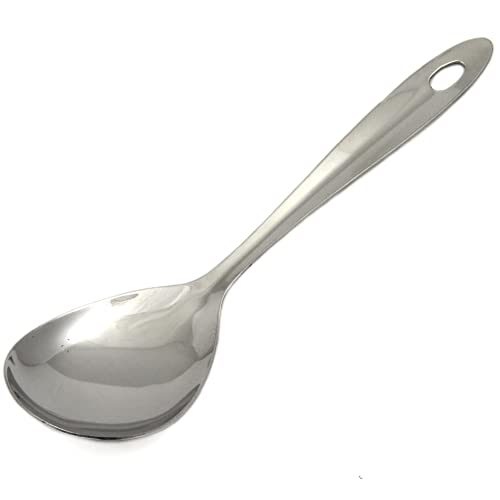
A single spoon can be the right choice when you already own slotted tools or want a replacement for one frequently used utensil. The Chef Craft Select is a straightforward one-piece option, while the Zulay Kitchen model adds longer reach and a wider documented bowl. Single-piece products also reduce the need to store tools you may rarely use.
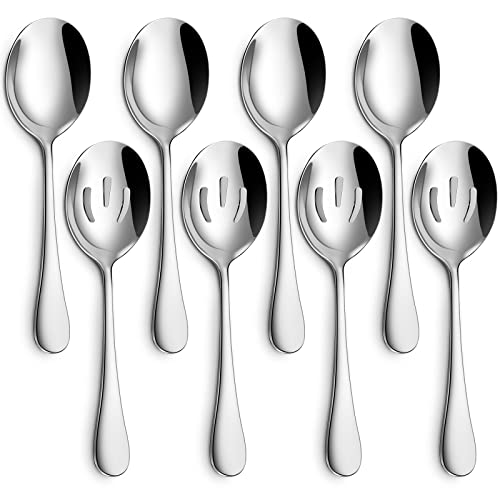
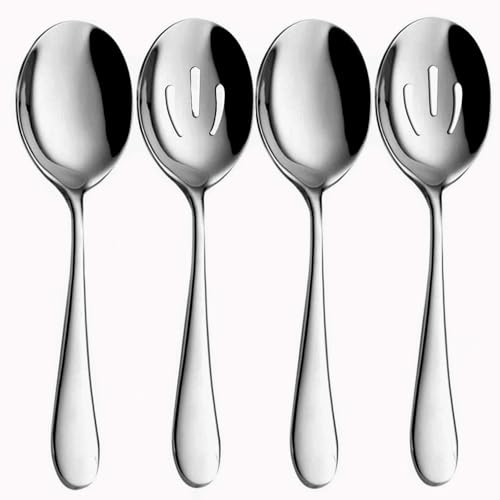
Sets are more useful when several dishes are served at once. The common solid-and-slotted combination lets you scoop foods with their juices and drain liquid from vegetables, pasta, or fried foods. AYFDISHS and VIVANI use a moderate four-piece format, while Hiware expands that arrangement to eight pieces. Larger sets can make sense for buffets, holidays, catering, or households that want matching tools at both the table and the stove.
Compare solid, slotted, and ladle designs
A solid serving spoon is the general-purpose format for rice, potatoes, pasta, salads, sauces, and side dishes. A slotted spoon allows liquid or oil to drain, which is helpful for vegetables and foods served from cooking liquid. When a set includes both, it covers more tasks than a solid-only collection.
A ladle is useful when soups, stews, or sauces are frequent menu items. MUJINON and Hoosook each document a three-piece combination with a solid spoon, slotted spoon, and soup ladle. These sets are more versatile for cooking and serving, though they may not provide as many matching spoons for a full buffet.
Match reach to your containers
Length affects control, clearance, and convenience. The selected products range from the 8.5-inch VIVANI set to the 13-inch Magatu Dongbo set. Shorter spoons can be easier to place on a family table or use with smaller containers. Longer spoons can keep hands farther from hot cookware and reach deeper bowls, but they may need more drawer or utensil-crock space.
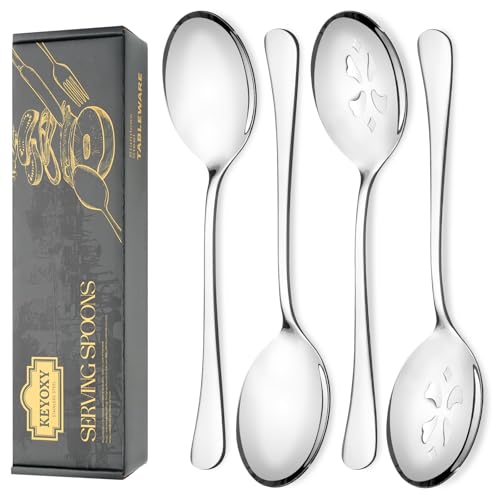
Kirecoo lists a 12.72-inch length for its two-piece set, Zulay Kitchen lists 11.5 inches for its single spoon, and KEYOXY lists 10 inches for every piece in its four-piece set. If you serve from large pots or deep buffet pans, prioritize a documented longer reach. For everyday side dishes, a mid-length model may be easier to handle.
A larger bowl can move more food per scoop, but bowl size is not consistently supplied in product listings. Zulay Kitchen documents a 3-inch-wide head, while Hiware lists a bowl measuring 2.9 by 2.1 inches. These details are more useful than vague claims about being large because they give you a clearer basis for comparison.
If bowl dimensions are not listed, avoid assuming that two spoons with similar lengths have identical capacities. The spoon head shape, width, and depth can all affect how much food it holds. For portioning from casseroles, rice dishes, and vegetables, look for a listing that provides bowl measurements or clearly describes a wide head.
Consider stainless steel versus silicone
Stainless steel dominates this comparison because it is documented across the selected sets as durable, rust-resistant, polished, or suitable for regular use. All-metal spoons also coordinate naturally with silver serveware. The 18/8 and 18/0 designations identify the listed stainless steel composition, but they should not be treated as a guarantee of performance beyond the supplied evidence.
Silicone can be preferable around nonstick cookware. Hoosook combines a silicone exterior with stainless steel cores and specifically describes soft edges for nonstick surfaces, along with a stated heat limit of 446°F. That design may feel less rigid than a traditional all-metal spoon, but it provides a documented cookware-friendly feature. Choose based on the surfaces and serving style in your kitchen.
Review cleaning and storage details
Dishwasher-safe care is documented for most selected products, which can simplify cleanup after gatherings. VIVANI recommends drying after washing to help maintain its polished appearance. Smooth surfaces and mirror finishes are common in the stainless steel listings and may make residue easier to remove, but this comparison does not independently test cleaning results.
Storage features can also matter. Zulay Kitchen, Magatu Dongbo, and Hoosook list hanging holes. A long utensil may fit better in a crock than a drawer, while a larger multi-piece set may require more room. Before buying, check whether you want individual hanging storage, drawer storage, or a complete group kept together.
Think about quantity and matching style
Quantity should follow the way you host. Two pieces are enough for a small kitchen that needs one solid and one draining tool. Four pieces provide duplicates for serving multiple dishes. Six or eight pieces are more practical when several guests serve themselves or when you want a consistent table presentation.
Most selected products use silver stainless steel, while Hoosook uses black silicone and MUJINON lists black handles. Finish is primarily a coordination decision because the supplied evidence does not establish that one appearance performs better than another. Gold or mixed-serveware sets exist in the broader candidate pool, but they were not selected for this comparison.
Final Recommendation
Hiware 8-Piece 18/8 Stainless Steel Serving Set ranks first overall in this specification-based comparison under the published weighted criteria.
Zulay Kitchen 11.5-Inch Stainless Steel Serving Spoon is the first overall specification-based choice among these best serving spoons. Its documented wide bowl, long reach, ergonomic handle, dishwasher-safe care, and hanging hole make it a well-rounded single utensil for deep bowls and buffet dishes.
For a larger event set, Hiware offers four solid and four slotted spoons with stated bowl dimensions. Choose AYFDISHS or VIVANI when a four-piece format is enough. Kirecoo and Magatu Dongbo stand out for reach, while Hoosook is the most targeted pick for nonstick cookware. These top serving spoons are not ranked from hands-on testing; they are organized from the supplied specifications and feature descriptions.
Frequently Asked Questions
What should I look for in the best serving spoons?
Start with the serving design you need, then compare material, length, bowl dimensions, handle details, cleaning instructions, and quantity. A solid spoon handles general scooping, while a slotted spoon helps drain liquid. If you use nonstick cookware, a silicone-edged design such as Hoosook may be worth considering because its listing specifically describes soft edges for those surfaces.
Are serving spoon sets better than single spoons?
Neither format is automatically better. A single spoon is efficient when you need one replacement or already own complementary tools. Sets are more useful for buffets and meals with several shared dishes. Hiware provides eight pieces, while Kirecoo provides two, illustrating the difference between event capacity and compact storage.
What serving spoon length is most useful?
The answer depends on your containers. Lengths around 8.5 to 8.7 inches may suit family tables and moderate-size bowls. Models around 10 to 13 inches can provide more reach for deep cookware or buffet vessels. Measure your storage area as well as your serving dishes before choosing a long model.
Can stainless steel serving spoons be used with nonstick pans?
The supplied listings do not establish that every stainless steel spoon is safe for nonstick cookware. If cookware protection is a priority, choose a product that documents a suitable design. Hoosook specifically describes soft silicone edges for nonstick surfaces and a stainless steel core, making its stated use case clearer than a general metal spoon listing.
How many serving spoons do I need for a party?
For a small meal, two utensils may cover the basics. Four pieces can provide solid and slotted duplicates for several dishes. Larger gatherings may benefit from six or eight matching spoons, especially when guests serve themselves. Count the dishes that need separate utensils and consider whether any require draining or ladling.