Buying Guide
Choosing among the best silicone industrial lubricants starts with the part, not the container. Silicone products may be sold as greases, fluids, or aerosols, and each format places the lubricant differently. A grease is generally easier to keep on a seal, O-ring, bearing, or low-speed contact point. An aerosol is more convenient for rails, guides, hinges, channels, conveyors, and other areas where broad or directional coverage is useful. The supplied listings include both types, so the right choice depends on the maintenance task and the evidence documented for that product.
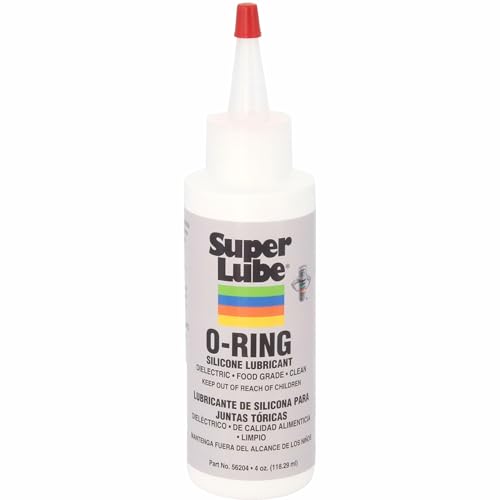
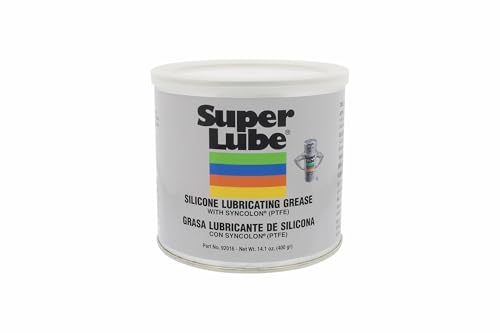
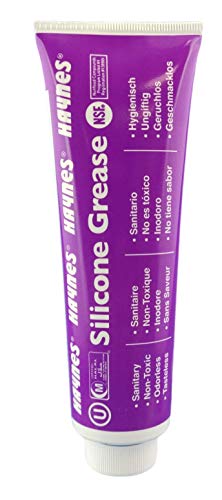
Use a silicone grease when the application calls for a persistent coating on a seal, gasket, O-ring, valve, or enclosed contact. Super Lube O-Ring Silicone Lubricant 56204 is specifically described for O-rings, gaskets, vacuum equipment, and automotive or industrial parts. Haynes Food Grade Silicone Grease is focused on valves, O-rings, EPDM seals, and food-processing equipment. Super Lube Silicone Grease 92016 is broader, with listed uses that include bearings, control cables, locks, and machine maintenance.
Choose an aerosol when access, coverage, or speed of application matters. CRC Extreme Duty Silicone Lubricant 03030 is listed for guides, rails, conveyors, sliding mechanisms, electric motors, and mold-release applications. CRC Heavy Duty Silicone Lubricant 05074 covers metal, rubber, nylon, wood, and other non-metal surfaces. Aerosol format can be useful for maintenance routes involving multiple moving points, but it may provide less precise retention than grease on a small seal.
Check material compatibility
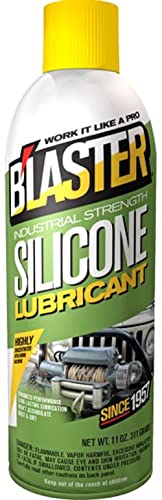
Silicone lubricants are often selected for mixed-material equipment, but product evidence still matters. B’laster Industrial Strength Silicone 16-SL lists elastomers, metal, plastic, wood, rubber, vinyl, and leather. CRC Heavy Duty Silicone Lubricant 05074 lists nylon, rubber, metal, wood, and non-metal surfaces.
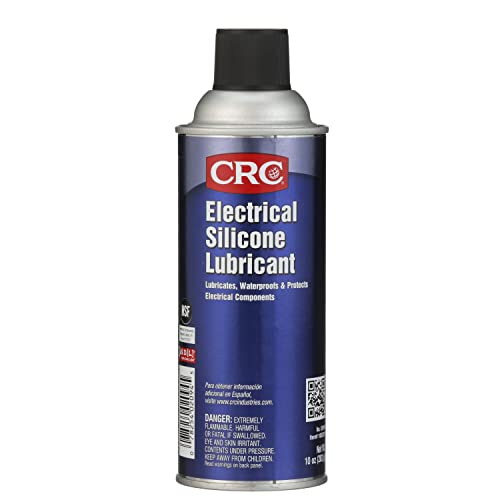
For seals and elastomers, look for a product that expressly identifies O-rings, gaskets, rubber, or EPDM. Super Lube O-Ring Silicone Lubricant 56204 and Haynes Food Grade Silicone Grease provide targeted seal-related evidence. For electrical parts, CRC Electrical Silicone Lubricant 02094 is the more appropriate documented fit because its listing specifically covers waterproofing and protecting electrical components and says it is safe for most plastics in electrical components.
Consider water, corrosion, and contamination
Moisture exposure changes the buying decision. Super Lube Silicone Grease 92016 is described as a moisture barrier that resists water washout and provides rust protection. CRC Electrical Silicone Lubricant 02094 is positioned for corrosion protection on electrical equipment in wet or harsh environments. CRC Water-Based Silicone Lubricant 03035 is listed for food-processing and handling equipment and is described as non-flammable, NSF H1 registered, and suitable for conveyors, rails, bottling machinery, ovens, and freezers.
A clean film can be preferable around dust-sensitive mechanisms. B’laster 16-SL is described as leaving a no-track film that will not accumulate dust and dirt, while CRC Heavy Duty Silicone Lubricant 05074 is described as clear and odorless. These descriptions support a cleaner-maintenance use case, but they do not establish a universal result for every machine or environment. Follow the equipment maker’s compatibility requirements and the lubricant label.
Use temperature evidence carefully
Temperature claims are useful when explicitly documented. CRC Extreme Duty Silicone Lubricant 03030 lists a range of -100°F to 450°F, giving it the broadest stated range among the selected products. CRC Electrical Silicone Lubricant 02094 lists -40°F to 400°F.
Several selected products do not have a numeric operating range in the supplied evidence. That does not mean they are unsuitable, but it limits what can responsibly be concluded. For food-processing seals, Haynes Food Grade Silicone Grease is documented for preventing valve and O-ring sticking in both high and low temperatures, while Super Lube O-Ring Silicone Lubricant 56204 is described as heat stable. Where equipment operates near a specification limit, verify the manufacturer’s technical data before use rather than relying on a general category description.
Food and beverage equipment requires more than a silicone label. Super Lube Silicone Grease 92016, Super Lube Silicone Aerosol 91110, Super Lube O-Ring Silicone Lubricant 56204, CRC Water-Based Silicone Lubricant 03035, and Haynes Food Grade Silicone Grease include food-related or NSF documentation in the supplied evidence. These products are more appropriate starting points for incidental food-contact maintenance than products without that documentation.
NSF H1 registration concerns incidental food contact; it does not remove the need to clean surfaces, apply the product according to instructions, or observe plant procedures. The same principle applies to drinking-water or sanitary equipment: select a product whose supplied documentation matches the specific application, and do not infer certification from the word food-grade alone.
Use dispensing control to improve coverage
An extension tube or integrated actuator can matter when the target is a narrow channel, lock, connector, or seal. Super Lube Silicone Aerosol 91110 includes an extension tube for pinpoint application. CRC Water-Based Silicone Lubricant 03035 uses a Perma-Lock two-way actuator for broad or precision spraying. CRC Electrical Silicone Lubricant 02094 has a 360-degree valve, which may help with application orientation.
For larger maintenance programs, pack size and format also affect workflow. Sprayway All Purpose Industrial Silicone SW077 is supplied as a case of 12 20-ounce cans and is positioned for professional and industrial trade use. That format may suit recurring shop or production maintenance, while a single can or small tube may be more practical for limited repairs. This is a purchasing consideration, not a claim about lubricant performance.
How this comparison was scored
The editorial ranking uses five category-specific criteria: industrial application fit, material compatibility, moisture and corrosion protection, documented temperature range, and application control and format. Their weights total 100. Scores were based only on the supplied feature and specification fields. No hands-on testing, customer sentiment, rating information, review information, popularity signal, or marketplace label was used in the published criteria. Products were grouped by parent identifier where supplied, so variants within one parent were not counted as separate choices.
Final recommendation
Super Lube O-Ring Silicone Lubricant 56204 ranks first overall in this specification-based comparison under the published weighted criteria.
Super Lube Silicone Grease 92016 is a strong starting point among the best silicone industrial lubricants because it combines broad industrial utility, waterproofing, rust protection, and NSF H1 documentation. It is suited to maintenance teams that need one grease for several common applications, including O-rings, bearings, control cables, locks, and machine work.
For a production or food-handling environment, CRC Water-Based Silicone Lubricant 03035 is a compelling alternative because its listing names conveyors, guides, rails, bottling machinery, ovens, and freezers while also documenting a water-based, non-flammable, NSF H1 formula. For seal-focused work, Super Lube O-Ring Silicone Lubricant 56204 and Haynes Food Grade Silicone Grease are better matched to O-rings, gaskets, valves, and EPDM seals.
If the deciding factor is a clearly stated broad temperature range, CRC Extreme Duty Silicone Lubricant 03030 leads the selected aerosol options. For electrical equipment, CRC Electrical Silicone Lubricant 02094 is the more focused choice. The top silicone industrial lubricants therefore separate into practical roles: grease for retained coverage, aerosol for access and reach, specialized seal products for O-rings, and electrical or food-contact formulas for sensitive equipment.
Before ordering, confirm the surface materials, temperature requirements, food-contact rules, and application method required by the equipment manufacturer. Treat the listing evidence as a comparison point, not a substitute for the product label or technical data sheet.
Frequently Asked Questions
What are the best silicone industrial lubricants for O-rings?
Super Lube O-Ring Silicone Lubricant 56204 is the most directly targeted selected option because its listing specifically names O-rings, gaskets, vacuum equipment, and industrial parts. Haynes Food Grade Silicone Grease is another strong fit for O-rings, valves, and EPDM seals, particularly in food-processing or sanitary applications.
Which selected product has the widest documented temperature range?
CRC Extreme Duty Silicone Lubricant 03030 has the widest stated range in the supplied evidence, from -100°F to 450°F. CRC Electrical Silicone Lubricant 02094 lists -40°F to 400°F. Use these figures as listing specifications and confirm actual equipment requirements before application.
Are silicone greases or sprays better for industrial maintenance?
Neither format is universally better. Greases such as Super Lube Silicone Grease 92016 and Haynes Food Grade Silicone Grease are suited to seals, O-rings, valves, and parts where retained coverage matters. Sprays such as CRC Heavy Duty Silicone Lubricant 05074 are easier to distribute over accessible channels, rails, and mixed-material surfaces. Choose based on part geometry and required coverage.
The supplied evidence identifies NSF H1 or food-grade documentation for Super Lube Silicone Grease 92016, Super Lube Silicone Aerosol 91110, Super Lube O-Ring Silicone Lubricant 56204, CRC Water-Based Silicone Lubricant 03035, and Haynes Food Grade Silicone Grease. Confirm that the exact use falls within the relevant certification and facility procedures.
What should be checked before applying a silicone lubricant?
Confirm compatibility with the metal, plastic, rubber, vinyl, wood, or electrical materials involved. Check the documented temperature range when available, review moisture and corrosion needs, and select a spray or grease that can be applied accurately. For food, drinking-water, or electrical equipment, verify the product documentation and follow the equipment manufacturer’s instructions.