Buying Guide
The best single-coil solid electric guitars are easiest to compare by separating pickup design from the rest of the instrument. A guitar may use three conventional single-coils, two single-coils, or an HSS arrangement that includes a humbucker and a documented coil-split function. Those are not identical designs, but each can support a player looking for clear, bright, or single-coil-style sounds.
Start with the pickup layout
A three-pickup SSS instrument provides the most direct match for a traditional single-coil brief. The EART SSS and Squier Affinity Series Stratocaster both document three single-coil pickups. The Monoprice Cali Classic also lists three standard single-coils. These layouts generally give the player multiple pickup positions without adding a humbucker to the circuit.
Two-pickup designs can be more focused. The Squier Debut Beginner Telecaster lists two single-coils and three-way switching, while the MUSILY MBT identifies a classic single-coil setup with a three-way selector. This arrangement may appeal to players who prefer a simpler control scheme and a hardtail or string-through-body format.
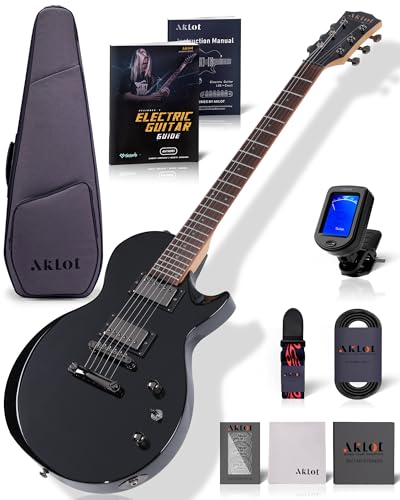
HSS guitars deserve a separate category in your decision. The Donner DST-200, Donner DST-152, MOSEN, and AODSK models document two single-coils plus a humbucker. Their switching and coil-split features can provide single-coil-style tones while also covering thicker humbucker sounds. The AKLOT is more specialized: it uses coil-split humbuckers in a single-cut body and documents single-coil-style clarity, so it is an alternative rather than a conventional SSS or two-single-coil guitar.
Compare neck and fret details
Neck shape and fretboard specifications are among the most useful listing details because they describe how the instrument is intended to feel. The Squier models use slim or comfortable C-shaped neck profiles. The Donner DST-200 and MOSEN also specify C-shaped necks. These descriptions can help beginners narrow the field, but they do not replace trying a neck in person.
The EART provides the most elaborate neck specification: a U-to-C compound profile and a 7.25-to-9.5-inch compound radius. Its stainless steel frets are hand polished and hand dressed. The AKLOT takes a different approach with a hybrid-D profile, medium-jumbo frets, 24 frets, and a 12-inch radius. Those details may suit players who prioritize upper-fret access and lead-focused layouts.
Consider bridge and tuning hardware
Bridge design affects the kind of setup you will manage. The Squier Affinity uses a two-point tremolo, while the Donner DST-200 and AODSK document tremolo bridges. The MOSEN also lists a tremolo system. These bridges allow pitch movement but may require more attention during string changes or setup than a fixed bridge.
The Squier Debut Beginner Telecaster uses a hardtail bridge, and the MUSILY MBT specifies a string-through-body bridge. The Monoprice listing does not provide comparable bridge detail, so it should be evaluated more cautiously on this point. Sealed tuning machines are documented on the Squier models, and the Donner DST-152 lists vintage-style tuning machines. Avoid assuming equivalent hardware where the listing does not say so.
Review construction evidence
Material descriptions vary considerably. EART documents a roasted mahogany body, roasted maple neck, bone nut, and stainless steel frets. MUSILY lists a mahogany body, maple neck and fingerboard, bone nut, and string-through-body construction. The Donner DST-200 identifies a poplar body and Canadian maple neck, while AODSK lists a solid poplar body and maple neck.
Material names alone do not prove that one guitar will sound or feel better. They are useful for comparing documented specifications, especially when one listing supplies much more detail than another. Treat broad phrases such as “resonant” or “premium” as descriptions rather than measured performance claims.
Decide whether a kit is useful
Several ranked guitars include accessories. Monoprice includes a gig bag. The Donner DST-200 includes a gig bag and cable, while the DST-152 adds an amplifier, headphone jack, tuner, capo, strap, and other starter items. MOSEN includes a mini amplifier with auxiliary and headphone inputs, and AODSK lists an amplifier, digital tuner, spare strings, bag, strap, capo, picks, and cleaning cloth. AKLOT includes a bag, tuner, strings, strap, picks, and a lesson guide.
A kit can reduce the number of separate purchases, but accessories should not outweigh the guitar’s pickup layout and hardware. If you already own an amplifier or tuner, a more focused guitar may be the better fit.
Check practical ownership details
Confirm the model, finish, handedness, and included equipment on the listing before ordering. Warranty information also differs: the Squier Debut lists two years, Monoprice lists one year, and AKLOT lists two years. EART, MUSILY, and the other models have different or more limited coverage. These are listing terms, not a guarantee of service experience.
Final Recommendation
Donner DST-200 Electric Guitar Kit ranks first overall in this specification-based comparison under the published weighted criteria.
EART SSS Solid-Body Electric Guitar is the highest-scoring returned product and the first overall specification-based choice among the best single-coil solid electric guitars. Its SSS layout, roasted body and neck materials, bone nut, stainless steel frets, and compound neck details give it the most complete documented package.
Choose the Squier Affinity Series Stratocaster for a familiar three-single-coil format with a lightweight body and tremolo. Select the Squier Debut Beginner Telecaster if you prefer two single-coils and a hardtail. Monoprice is a sensible kit-oriented option because it includes a gig bag. MUSILY stands out for its mahogany, maple, bone-nut, and string-through-body details.
For broader sound coverage, the Donner DST-200 is the most specification-aligned specification-based HSS choice, while the Donner DST-152 is particularly practical for headphone practice. MOSEN and AODSK offer similarly broad starter packages. AKLOT belongs on the shortlist for players who want coil-split sounds, 24 frets, and a single-cut design. Together, these are the top single-coil solid electric guitars and single-coil-style alternatives supported by the supplied specifications.
Frequently Asked Questions
What should I look for in the best single-coil solid electric guitars?
Start with the pickup layout, then compare neck profile, fret count, bridge type, tuning machines, body and neck materials, and included equipment. A documented SSS layout is the closest match to a traditional single-coil brief. HSS and coil-split models can be useful when you also want humbucker-style sounds.
Is HSS the same as an SSS guitar?
No. HSS means the guitar has two single-coils and one humbucker. A coil-split control may provide single-coil-style operation from the humbucker, but it is not the same pickup layout as three conventional single-coils. The Donner, MOSEN, and AODSK models in this comparison are HSS instruments.
Is a hardtail better for a beginner than a tremolo?
Neither design is universally better. A hardtail, such as the one documented on the Squier Debut Beginner Telecaster, may offer a simpler fixed-bridge arrangement. Tremolo-equipped models provide pitch movement but can involve additional setup considerations. Choose based on whether tremolo use is important to your playing.
Do included accessories matter when choosing a guitar?
They can matter if you are starting from zero. An amplifier, tuner, cable, bag, or spare strings may make a kit more immediately useful. However, accessories should come after the core guitar specifications. Confirm exactly what is included because packages differ between models and listings.
Can a single-cut coil-split guitar replace a conventional single-coil guitar?
It can provide a related single-coil-style option, but it should not be treated as identical. The AKLOT uses coil-split humbuckers and documents a 24-fret single-cut design. That may suit players who want thicker humbucker sounds as well as split tones, while a conventional SSS or two-single-coil guitar is the more direct choice for classic single-coil layouts.