Buying Guide
Choosing among the best tremolo solid electric guitars in 2026 comes down to how you want the bridge to behave, what tonewoods you prefer under your hands, and how much tonal range you need from the pickups. Each section below maps a real specification category to the guitars in this comparison so you can decide with confidence.
Tremolo Bridge Type and Pitch Range
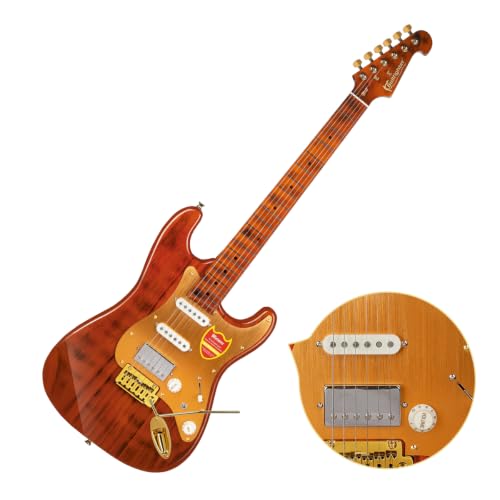
The tremolo system is the heart of this category, and the bridges here fall into three main camps. The Leo Jaymz Tsunami uses a full double-locking tremolo designed for dive bombs and aggressive vibrato, while the Steinberger Spirit GT-PRO Deluxe uses Steinberger’s R-Trem with direct-pull tuners and a patented double bridge for distinctive headless feel. The Bullfighter D190 also uses a compact double-locking tremolo with an integrated arm lock, which helps prevent loosening during performance.
Most of the other guitars in this comparison use a 2-point or synchronized tremolo. The TOSTAR TST-500, EART TL-380, Squier Affinity Series Stratocaster, Squier Classic Vibe 70s Stratocaster, and Donner DST-550 all use a 2-point or synchronized tremolo suited to traditional vibrato technique. If you prioritize dive bombs, prioritize a double-locking or R-Trem design; if you want classic vibrato with simpler setup, a 2-point or synchronized tremolo will serve you well.
Body Construction and Tonewoods
Body tonewoods shape resonance, weight, and long-term feel. The Leo Jaymz Tsunami uses a solid mahogany body with a roasted maple neck for warm low end and bright sustain, while the EART TL-380 uses book-matched roasted mahogany paired with a roasted Canadian maple neck and fingerboard for enhanced stability and tonal warmth.
The TOSTAR TST-500 uses a mahogany body with a roasted flame maple neck, rosewood fingerboard, and stainless-style rounded frets for a premium feel. The Ibanez GRX20 and Donner DST-550 use poplar bodies with maple necks for a lighter weight, while the Squier Affinity and Squier Classic Vibe 70s Stratocaster use traditional S-style body designs in lighter constructions. The Steinberger GT-PRO Deluxe uses a 3-piece hard maple thru-neck with rosewood fingerboard and maple body wings, supporting sustained resonance under heavy tremolo use.
Pickup Configuration and Tonal Versatility
Pickup layout determines how wide your sonic palette can be. The Leo Jaymz Tsunami offers an HH configuration with a rail humbucker in the neck and a push-pull coil-split on the bridge humbucker, so you can move from thick humbucker drive to bright single-coil voice on the fly. The EART TL-380 uses HSH pickups with a dedicated mini coil-split switch, and the TOSTAR TST-500 offers an Alnico 5 HSH/SSH layout with a 5-way selector and push-pull coil-split for real single-coil voices from humbuckers.
The Squier Affinity Stratocaster and Squier Classic Vibe 70s Stratocaster both use three single-coil pickups for traditional chime and mid-gain tones, while the Ibanez Gio GRX70QA and Donner DST-550 add an HSH or H-S-S layout that mixes single-coils and humbuckers. The Bullfighter D190 uses high-output pickups aimed at rock and metal, and the Donner DST-550 uses ThunderForge pickups with an independent 7-tone toggle for unusually wide pickup combinations. If you want classic Strat-style tones, prioritize three single-coil layouts; if you want modern versatility, look for HH, HSH, or coil-split designs.
Neck Profile and Playability
Neck profile and fret count directly affect how the guitar feels under your hand. The Leo Jaymz Tsunami uses a roasted maple neck with 24 frets and a 25.5-inch scale, giving lead players plenty of high-register range. The EART TL-380 pairs a roasted maple neck with a 9.5-14 inch compound radius and a U-to-C profile that adapts naturally to chording and bending.
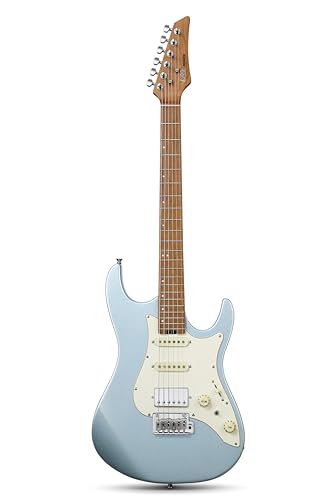
The Squier Affinity and Squier Classic Vibe 70s Stratocaster use slim C-shaped necks for comfortable learning and classic S-style feel, while the Ibanez GRX20 and Ibanez Gio GRX70QA use Ibanez’s standard slim neck design for fast movement. The TOSTAR TST-500 uses a smooth C-shaped roasted flame maple neck with stainless-style rounded frets for long-term comfort, and the Bullfighter D190 supports stage-ready playability with its double-locking setup. Players who want maximum upper-register access should look for 24 frets, while players focused on chording may prefer the feel of a 22-fret neck.
Tuning Stability and Supporting Hardware
Tuning stability under tremolo use depends on the bridge, tuners, and nut working together. The Leo Jaymz Tsunami combines a double-locking tremolo with 18:1 tuning machines for pinpoint accuracy, and the Steinberger GT-PRO Deluxe pairs its R-Trem with 40:1 ratio direct-pull tuners. The Donner DST-550 uses 1:18 fully enclosed locking tuners alongside its synchronized tremolo, while the TOSTAR TST-500 uses semi-locking tuning machines with its 2-point tremolo. The EART TL-380 uses EART custom die-cast tuning machines with a bone nut for solid intonation. Players planning aggressive bar work should prioritize double-locking tremolos combined with quality locking or high-ratio tuners.
Final Recommendation
Leo Jaymz Tsunami ranks first overall in this specification-based comparison under the published weighted criteria.
After comparing hardware, tonewoods, pickups, and playability, the Leo Jaymz Tsunami stands out as the first overall specification-based choice among the best tremolo solid electric guitars in 2026. Its double-locking tremolo, 18:1 tuners, roasted maple neck, and HH coil-split pickup configuration cover more tremolo techniques and tonal situations than most competitors in this category. For players wanting a vintage-style S-platform, the Squier Classic Vibe 70s Stratocaster and Squier Affinity Series Stratocaster are the most specification-aligned options, while the Steinberger Spirit GT-PRO Deluxe is the right pick for players who want a specialized headless tremolo design. Together, these models represent the top tremolo solid electric guitars in this comparison for players prioritizing tremolo hardware, tonal range, and build quality.
Frequently Asked Questions
Among the best tremolo solid electric guitars, what makes a tremolo bridge different from a hardtail?
A tremolo bridge allows the player to rock a bar to lower or raise pitch, while a hardtail is fixed. In this comparison, the Leo Jaymz Tsunami, Steinberger Spirit GT-PRO Deluxe, and Bullfighter D190 use double-locking or R-Trem designs for aggressive pitch work, while models like the Squier Affinity Series Stratocaster and Ibanez GRX20 use 2-point or synchronized tremolos for traditional vibrato.
Which solid body electric guitar in this list has the widest tonal range?
The TOSTAR TST-500 and EART TL-380 both offer HSH or HSH-compatible pickups with dedicated coil-split switches, giving you access to humbucker warmth and single-coil sparkle in one instrument. The Leo Jaymz Tsunami also supports coil-split via a push-pull tone knob on its HH layout.
Are roasted maple necks really more stable?
This typically improves resistance to humidity and temperature shifts compared to untreated maple, supporting more consistent playability.
What should I look for in a tremolo solid electric guitar for expressive playing?
Look for a bridge system that matches your style. For dive bombs and aggressive vibrato, double-locking systems like the Leo Jaymz Tsunami or the Steinberger R-Trem are strong choices. For traditional S-style vibrato, the Squier Affinity Series Stratocaster, Squier Classic Vibe 70s Stratocaster, and the 2-point bridges on the TOSTAR TST-500 and EART TL-380 are well matched. Pair the bridge with quality tuners, such as 18:1 or locking designs, to keep tuning stable.
How do I decide between an S-style, T-style, or double-cut body?
T-style bodies like the EART TL-380 offer a single-cut shape and a different weight balance. Double-cut designs such as the Donner DST-550 combine elements of both. Choosing among the top tremolo solid electric guitars often comes down to which body shape feels best during long playing sessions.