Buying Guide
The best snowmobile powersports pads are not interchangeable simply because they share a general snowmobile label. Brake-pad shape, backing-plate design, retaining hardware, friction material, and vehicle fitment can vary by make, model, year, and brake assembly. Start with the exact application and then use construction and specification details to narrow the choice.
Confirm the snowmobile application first
Fitment documentation carries the greatest weight in this comparison. The SPI SM-05059 identifies Ski-Doo use and lists OEM numbers 415053600 and 415129172. The SPI full-metal Arctic Cat pad identifies OEM numbers 3602-061 and 1702-475 and states that a retaining pin is included. These details are more useful for a replacement decision than a broad claim that a pad fits many machines.
The PWC Engine listings are also application-led. The Polaris option states a model-year range and an exclusion for 340 Lite, while the Ski-Doo Mach Z 780 pad names its model years and two OEM numbers. The Arctic Cat Mountain Cat, Jag, Jag LC, and Panther listings provide model or family names and OEM references. Read every exclusion and year range carefully before ordering.
Compare friction-material descriptions
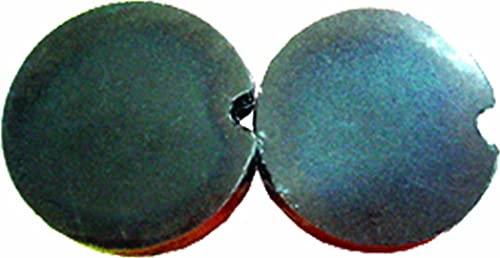
Material information helps explain how a listing is positioned, but it does not replace fitment verification. The DP Brakes SNX pads use HH+ friction-rated sintered metal and list a ceramic heat-shield feature. The SPI Arctic Cat pad is described as full metal, while the SPI Ski-Doo pad is described as metal.
Several PWC Engine products are identified as semi-metallic and OEM-style, including the Polaris, Ski-Doo Mach Z 780, Arctic Cat Mountain Cat, Arctic Cat Jag, and Arctic Cat Panther choices. The Caltric Yamaha set does not document its friction material, so it should be evaluated through its application, part-number, dimension, and package information rather than an assumed compound.
Heat management is relevant when comparing snowmobile brake pads, but public listing language should be treated as specification evidence rather than a verified test result. DP Brakes lists a ceramic heat shield and describes it as eliminating brake fade. PWC Engine states that several semi-metallic pads have minimal fade at high temperatures and are suited to performance applications. Those statements explain advertised design intent; they do not establish identical results across every machine or riding condition.
If a listing provides no thermal feature, do not infer one from the material name alone. The SPI full-metal Arctic Cat pad and SPI metal Ski-Doo pad offer fitment information, but the supplied evidence does not document a ceramic layer, fade test, or other heat-control feature.
Check what the package contains
Package completeness can affect a replacement job. The Caltric Yamaha listing explicitly includes two brake pads as one set. The SPI Arctic Cat full-metal listing includes a retaining pin. Other selected listings do not clearly state a pad count or included hardware, so confirm whether the product matches the number of pads removed and whether existing clips or pins must be reused.
A listed part number is useful when checking a service manual, parts diagram, or the number printed on the old component. Keep the complete part number, not just the brand name, when comparing listings.
Use dimensions as a secondary check
Dimensions can help detect an obvious mismatch, but they should not be the only fitment method. The DP listings provide multiple dimensions, as do the SPI options. Caltric gives metric and inch measurements of 59.53 mm by 9.95 mm by 57.1 mm. Compare those figures with the removed pad only after confirming the application and part number.
The absence of dimensions is not proof that a pad will not fit. Several PWC Engine listings have model and OEM-number evidence but no dimensional data. In those cases, the application reference is the more useful starting point.
Match documentation to your needs
For material and heat-feature documentation, the DP Brakes SNX choices are notable. For a make-specific replacement with included hardware, the SPI full-metal Arctic Cat pad is useful. The SPI Ski-Doo option is similarly focused on OEM-number matching. For Yamaha owners, the Caltric two-pad set supplies a broad application list, dimensions, part numbers, and a stated warranty.
The semi-metallic PWC Engine options cover several older, model-specific applications. Their listings describe OEM-style construction and, in several cases, high-temperature fade characteristics. They may be appropriate when the listed model, year, and OEM number match exactly. Avoid choosing solely by generic material language; compatibility remains the controlling issue.
Pre-order checklist
Before ordering the best snowmobile powersports pads, record the snowmobile make, model, engine or trim designation, and model year. Compare the listing’s OEM number with a reliable vehicle record or the removed pad. Check whether the listing specifies a pair, a single pad, or a set, and look for retaining pins or other hardware. Finally, compare dimensions and review warranty information where supplied. If details conflict, pause rather than assuming that a similar-looking pad is interchangeable.
Final Recommendation
SPI Full Metal Brake Pads for Arctic Cat ranks first overall in this specification-based comparison under the published weighted criteria.
DP Brakes SNX High Friction HH+ Snowmobile Pads SDP852SNX is the first overall specification-based choice among these best snowmobile powersports pads. Its HH+ sintered-metal construction, ceramic heat-shield listing, dimensions, break-in guidance, and one-year manufacturer warranty provide a detailed technical record.
The right alternative depends on the machine. Choose the SPI full-metal Arctic Cat pad when its OEM references and retaining pin match the vehicle. Consider the SPI Ski-Doo pad for its direct Ski-Doo and OEM-number documentation. For Yamaha owners, the Caltric two-pad set supplies a broad application list, dimensions, part numbers, and a stated warranty. The PWC Engine options are focused replacements for specific older Polaris, Ski-Doo, and Arctic Cat applications.
These are the top snowmobile powersports pads by supplied specification evidence, not by hands-on testing. Confirm the exact model, year, OEM number, pad count, and hardware requirements before purchase, and treat advertised heat or fade language as listing information rather than an independent performance result.
Frequently Asked Questions
How do I choose the best snowmobile powersports pads for my machine?
Start with the snowmobile’s make, model, year, and engine or trim designation. Match the product’s OEM number or application statement, then use dimensions as a secondary check. Also confirm whether the listing supplies a pair, a single pad, or hardware such as a retaining pin.
Yes. The supplied listings describe the DP Brakes products as HH+ friction-rated sintered metal, while several PWC Engine options are described as semi-metallic and OEM-style. These labels identify different construction descriptions, but the evidence does not establish that one material is universally better for every snowmobile. Fitment and the machine’s intended brake specification should come first.
Which selected pad includes retaining hardware?
The SPI full-metal Arctic Cat pad listing specifically says that a retaining pin is included. The other selected listings do not consistently document included hardware, so check package details before assuming that pins, clips, or springs are supplied.
Do all snowmobile brake pads list dimensions?
No. The DP, SPI, and Caltric listings provide dimensional information, while several PWC Engine listings focus on vehicle applications and OEM numbers without supplying dimensions. When dimensions are absent, use the exact application and OEM reference for verification rather than estimating compatibility from appearance.
Are the best snowmobile powersports pads tested in this comparison?
No. This is a specification-based comparison using public listing data. It does not include hands-on testing, independent braking measurements, installation checks, or customer-opinion summaries. Heat, fade, durability, and noise statements are included only when the supplied listing describes them.