Buying Guide
The best soup mug sets are defined less by appearance than by how well their documented specifications match your serving routine. Start with portion size, then check the handle, heating instructions, lid design, cleanup requirements, and number of pieces. This comparison uses public listing features and specifications only; it is not a hands-on test and does not summarize customer opinions.
Choose the right capacity
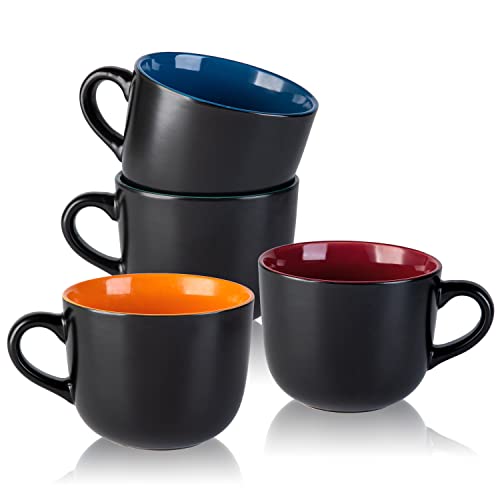
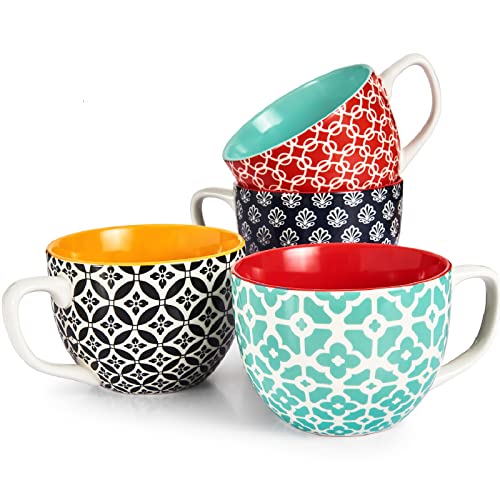
Capacity is the clearest dividing line in this group. The 16-ounce 10 Strawberry Street set is suited to moderate servings, while KooK’s 18-ounce crocks offer a similarly restrained format for French onion soup and other meals. The 22-ounce GBhome set sits between compact and jumbo options. A 24-ounce mug, such as the DELLING, Teocera, GBhome, DOWAN, or AmorArc set, gives more room for soup with toppings, cereal, chili, or stew. The Vicrays 27-ounce format goes larger, and the vancasso option reaches 38 ounces for oversized ramen, leftovers, or substantial individual meals.
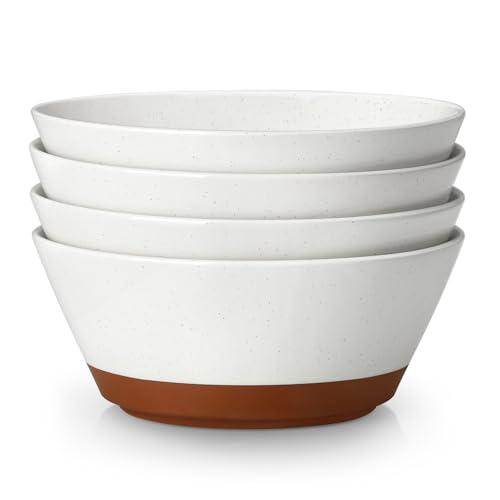
Capacity does not equal usable fill level. A broad opening can make spoon access easier, while a deeper design may help contain foods such as noodles or stew. The supplied listings describe wide-mouth or deep shapes for several products, but they do not provide a standardized usable-fill measurement. Leave room for toppings and safe carrying rather than treating the stated ounce figure as a recommendation to fill to the rim.
Compare handle styles
A handle is one of the main reasons to choose soup mugs instead of ordinary bowls. DELLING and KooK document two-handle crock designs, which can distribute the grip across both sides when moving a hot serving. Teocera describes handles large enough for three or four fingers, while Vicrays says its handle can accommodate the entire hand. GBhome, AmorArc, and DOWAN also specify large handles.
These descriptions are useful design clues, but they are not test results. Handle comfort depends on hand size, the amount of food inside, and how hot the vessel becomes. If you regularly move soup from a microwave or oven, prioritize a clearly described handle and follow the maker’s heating guidance. A lid does not replace a secure grip, and a handle does not make a bowl suitable for travel.
Decide whether lids matter
Covered models are useful for storing leftovers and reducing splatter during reheating. The GBhome 24-ounce and 22-ounce sets include vented lids and porcelain spoons, while vancasso pairs its 38-ounce bowls with vented, silicone-sealed lids. KooK also documents steam-release vents. The 10 Strawberry Street set includes lids, but its listing expressly says the lids should not go in the microwave or oven.
Read lid instructions separately from bowl instructions. GBhome says the vent should be opened before microwave heating and cautions that its lids are not intended for upside-down or liquid-filled takeout. Do not infer transport safety from the word “leak-proof.”
Check heating and storage compatibility
For oven-to-table use, DELLING documents oven capability up to 500°F, and KooK documents oven and broil safety for its stoneware bowls. The other selected products document different combinations of microwave, dishwasher, freezer, and oven use. The 10 Strawberry Street mugs are listed as microwave, oven, and dishwasher safe, but again, their lids are excluded from microwave and baking use.
If you only reheat soup, microwave compatibility may be enough. If you prepare casseroles or broil cheese, choose a product whose bowl-level oven or broil instructions specifically support that job. Temperature limits and lid restrictions matter more than a general “versatile” description. Move from freezer to oven only when the listing explicitly supports that sequence; DELLING is the clearest example here.
Consider material and cleanup
Porcelain and stoneware appear throughout the selected products. Teocera, DOWAN, and DELLING identify porcelain, while KooK and 10 Strawberry Street identify stoneware. Several ceramic listings describe lead- or cadmium-related material claims, but those are product statements rather than independent verification. Smooth or glazed interiors may be easier to wipe, and dishwasher compatibility can reduce routine cleanup.
The best soup mug sets for frequent use should match your actual cleaning habits. GBhome, DOWAN, Teocera, DELLING, and the open AmorArc set document dishwasher use. Also consider cabinet shape: DELLING states that its bowls stack, and GBhome documents stackability for its 22-ounce set.
Match set size to your household
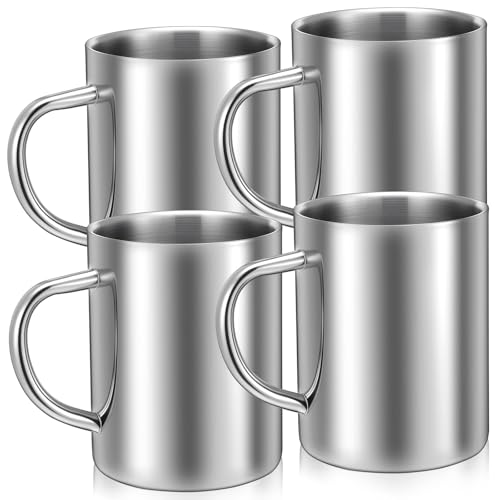
A set of four is the most common format in this comparison and works well for a family, entertaining, or keeping replacements available. DELLING’s set of six is more suitable when several people eat soup together. The vancasso option provides two large bowls, while the 10 Strawberry Street set gives four covered 16-ounce mugs. A larger set is not automatically better if storage is limited, and a two-piece set may be more practical for a couple or individual meal-prep routine.
Also check what is actually included. GBhome supplies spoons and lids, while several open mug sets supply only the mugs. A spoon can be convenient for soup, cereal, or noodles, but it also adds another item to wash and store. Treat included accessories as a feature, not as proof of better bowl performance.
Final Recommendation
DELLING 24 Oz Soup Bowls with Handles, Set of 6 ranks first overall in this specification-based comparison under the published weighted criteria.
DELLING 24 Oz Soup Bowls with Handles, Set of 6 is the first overall specification-based choice among these best soup mug sets. Its combination of 24-ounce capacity, two handles, stackability, six-piece coverage, and documented oven, microwave, dishwasher, and freezer compatibility gives it the broadest stated use range.
Choose vancasso if 38 ounces and a vented lid are more important than compact storage. Teocera is a strong fit when handle dimensions and a four-finger grip are priorities. GBhome’s covered 24-ounce set is the more complete serving package because it includes spoons and lids, while KooK is the better match for broil-friendly French onion soup. For moderate portions, the 16-ounce 10 Strawberry Street set remains a sensible covered option.
These top soup mug sets differ substantially in capacity, lid restrictions, and oven guidance. Before ordering, confirm the intended serving size, available cabinet space, and whether you need open bowls, covered storage, or oven-to-table use.
Frequently Asked Questions
What capacity should I choose for soup?
Choose 16 to 18 ounces for moderate portions, 22 to 24 ounces for a fuller meal with toppings, and 27 to 38 ounces for large ramen, chili, stew, or leftovers. The stated capacity is not a required fill level, so leave room to carry the mug safely and avoid spills.
Are soup mugs with lids safe for microwave use?
Only when the listing says so, and the lid may have separate instructions. GBhome and KooK document vented lids for microwave-related use, with the vent opened before heating. The 10 Strawberry Street listing says its lids are not microwave safe. Always follow the product-specific instructions and remove or vent the lid as directed.
Can I use these mugs in the oven?
Some bowls are documented for oven use, but the details vary. DELLING states oven use up to 500°F, and KooK documents oven and broil safety for its bowls. The 10 Strawberry Street mugs are oven safe, but their lids are not. Do not assume an oven-safe bowl makes its lid oven safe.
What is the advantage of a handled soup mug over a regular bowl?
The handle provides a designated grip for carrying a hot serving and can keep hands away from the bowl body. Two-handle crocks, such as DELLING and KooK, distribute the grip across both sides. A handle does not eliminate heat or spill risk, so use normal care when moving hot food.
Are the best soup mug sets also suitable for meal prep?
Covered models can support upright refrigerator storage and reheating when their listings document those uses. GBhome and vancasso include vented lids, but their supplied guidance cautions against treating the containers as upside-down or liquid-filled takeout vessels. For meal prep, check refrigerator, microwave, lid, and transport instructions independently.