Buying Guide
Choosing among the best stainless steel kitchen timers starts with the kind of timing you actually do. A single mechanical dial is suitable for one short cooking task, while a digital or multi-channel model is more useful when several dishes, baking stages, or reminders overlap. The products here are ranked from listed specifications and features, not from hands-on testing.
Mechanical versus digital operation
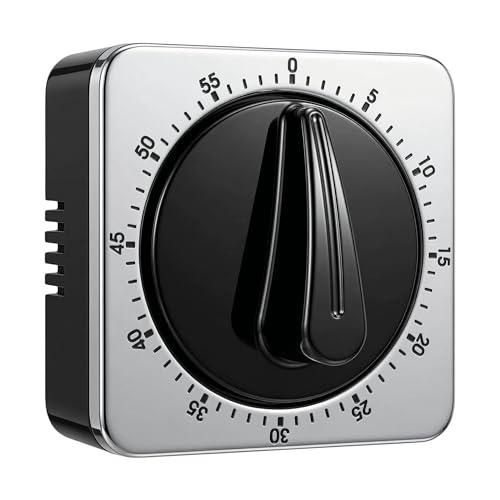
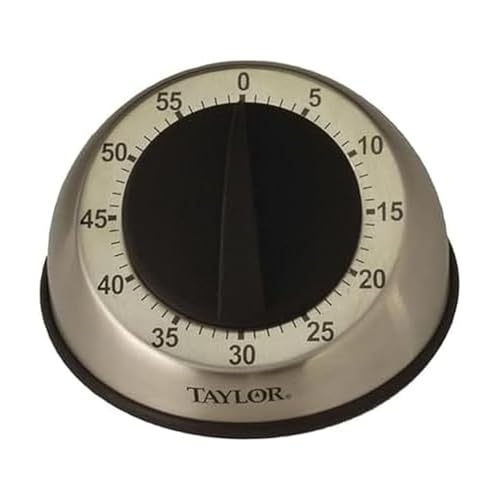
Mechanical timers are the simplest option. Taylor, Searon, ALBAYRAK, Hongjie, and INTRESTIN use wind-up designs that do not require batteries or charging. That can be useful in a kitchen drawer, a classroom, or a workspace where a dead battery would be inconvenient. Their trade-off is limited flexibility: the listed mechanical models center on approximately 60-minute countdowns and do not provide count-up, clock, or multiple independent channels.
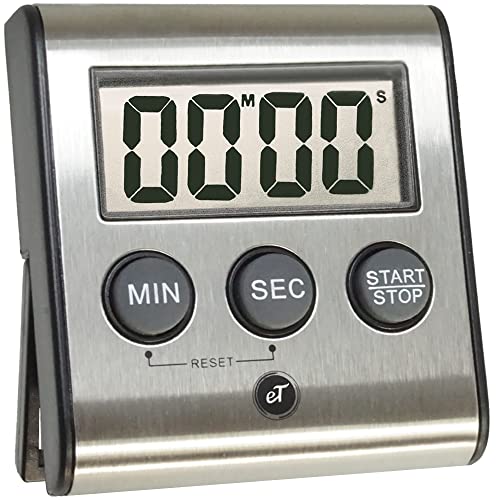
Digital timers offer more control. The eTradewinds eT-23 supports count-up and countdown functions and includes memory, while the TempPro TM02 adds clock and calendar modes to two simultaneous countdowns. Lyxtiorn provides clock, count-up, and countdown modes with a 99-minute, 59-second maximum. Digital displays are helpful when you want an exact numerical readout rather than estimating progress from a dial.
Match capacity to the cooking task
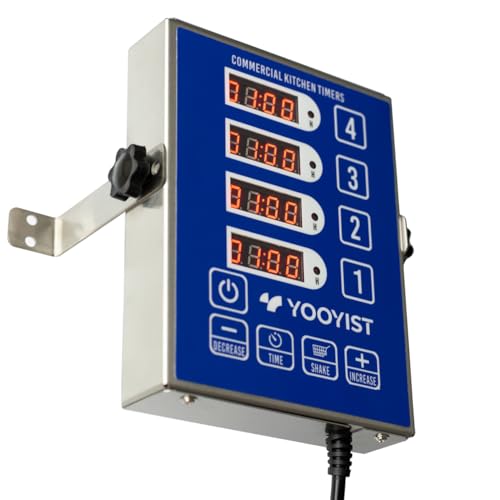
For one recipe with a short bake or simmer, a mechanical 60-minute timer may be enough. If a recipe runs longer, check the documented maximum before buying. The TempPro TM02 supports durations up to 23 hours and 59 minutes. YOOYIST provides four channels, and Lmaqfum provides eight, making those designs better suited to a commercial station or a home cook managing several pots.
Multi-channel timers are not automatically better for every kitchen. They generally take more space and may rely on wall power or a larger control panel. Their advantage appears when separate alerts matter more than compactness. Lmaqfum also lists interval reminders for each channel, while YOOYIST emphasizes memory and oversized LED digits.
Consider alarm behavior
Alarm control matters when a timer must be heard over ventilation, conversation, or other appliances. YOOYIST lists an ultra-loud alarm, ALBAYRAK specifies an 85dB mechanical alarm, and Taylor lists a loud nine-second ring. These claims describe the listings; they are not independent sound measurements from this guide.
A loud alert is not always desirable. TempPro offers adjustable volume and silent mode, and digital multi-channel designs can separate alerts by channel or use visual indicators. The eTradewinds eT-23 omits button beeps according to its listing, which may suit users who prefer quieter setup. Before choosing, decide whether you need a strong audible signal, a silent visual alert, or both.
Check visibility and placement
A timer is easier to use when it stays visible and does not move while buttons or dials are operated. Magnetic backs are documented on the eT-23, Searon, ALBAYRAK, Hongjie, and Lyxtiorn models. They can be useful on suitable metal refrigerator, oven, or cabinet surfaces. Some digital designs also offer a stand or hanging option: the eT-23 has a kickstand, Lyxtiorn supports desk and wall placement, and YOOYIST is wall-mount-ready.
For a busy line, oversized digits can matter more than a compact body. YOOYIST lists oversized LED digits, while the eT-23 and TempPro TM02 describe large LCD displays. Mechanical options rely on bold or large dial markings instead. Keep the viewing distance in mind, and check that the selected mounting method suits the available surface.
Understand power and setup
Battery-free mechanical designs avoid battery replacement but require winding. INTRESTIN specifically explains that the dial must first be wound clockwise before being turned back to the desired time. Digital models require batteries or AC power. YOOYIST uses 110V or 220V AC power, while the eT-23 lists one included AAA battery. Lyxtiorn’s listing says its battery is not included.
Memory and automatic shut-off can reduce repeated setup. The eT-23 lists a three-minute idle auto shut-off, and both eT-23 and TempPro document memory functions. For a timer used repeatedly for the same recipe, those features may be more useful than an unusually long maximum duration.
Review the stainless steel claim carefully
Not every silver-colored timer is documented as stainless steel. This comparison includes products whose titles, features, or specifications identify stainless steel construction or a stainless steel surface. ALBAYRAK goes further by naming 304 stainless steel. YOOYIST and Lmaqfum describe stainless steel bodies, while TempPro describes a stainless steel jacket. A stainless exterior may be appealing for its appearance and wipe-clean design, but the supplied listings do not establish waterproofing, heat resistance limits, or independent durability results.
Final recommendation
YOOYIST 4-Channel Commercial Kitchen Timer ranks first overall in this specification-based comparison under the published weighted criteria.
YOOYIST 4-Channel Commercial Kitchen Timer is the first overall specification-based choice among the best stainless steel kitchen timers because its four independent channels, large LED digits, memory, loud alarm, and AC operation cover demanding multitask timing. Lmaqfum is the better fit when eight channels and interval reminders are more important than compact size, while the eTradewinds eT-23 is a more approachable home option with a large LCD, strong magnetic placement, count-up and countdown modes, and auto shut-off.
For simple battery-free timing, Taylor, Searon, ALBAYRAK, Hongjie, and INTRESTIN all use mechanical formats, with differences in dial style, material detail, alarm documentation, and size. TempPro is a practical middle ground for two digital events plus clock functions. Lyxtiorn is a basic digital alternative with flexible placement. These are among the top stainless steel kitchen timers to consider when the product’s documented controls and power method match your routine.
Frequently Asked Questions
What are the best stainless steel kitchen timers for multiple dishes?
YOOYIST and Lmaqfum are the clearest choices in this comparison. YOOYIST lists four independent channels, while Lmaqfum lists eight and adds interval reminders. Both are described as commercial-style units with stainless steel construction. They are more appropriate for simultaneous tasks than the single-dial mechanical models.
Are mechanical stainless steel timers better than digital timers?
Neither design is universally better. Mechanical models such as Searon and ALBAYRAK work without batteries or charging and keep operation simple. Digital models such as the eT-23 and TempPro TM02 can offer memory, count-up functions, longer settings, or multiple timers. Choose based on whether power-free simplicity or timing flexibility matters more.
Which timer is best for a refrigerator or oven?
Look for a documented magnetic back. The eT-23, Searon, ALBAYRAK, Hongjie, and Lyxtiorn listings identify magnetic placement. A magnetic back only helps on a suitable metal surface, so users should also consider a kickstand, wall mount, or desk placement if the intended location is not magnetic.
Do these timers include batteries?
The supplied evidence varies. The eT-23 lists one AAA battery included, YOOYIST uses AC power, and mechanical models such as Taylor and INTRESTIN do not need batteries. Lyxtiorn states that its battery is not included. Check the individual listing before purchase because power details affect readiness out of the box.
How long can a stainless steel kitchen timer run?
The answer depends on the model. Several mechanical choices are described as 60-minute timers. Lyxtiorn lists 99 minutes and 59 seconds, while TempPro supports up to 23 hours and 59 minutes. YOOYIST and Lmaqfum are multi-channel products, with Lmaqfum specifically listing up to 99 hours and 59 minutes per channel. Always verify the stated range for the recipe or workflow you need to time.