Buying Guide
Choosing among the best battery kitchen timers starts with the timing tasks you actually perform. A compact single timer is enough for pasta, toast, or a short baking step, while long-range or multi-channel models make more sense for slow cooking, meal preparation, or a kitchen where several events overlap. The products above are compared from supplied listing features and specifications, not from hands-on testing.
Match the timing range to your cooking
The maximum countdown is one of the clearest differences in this category. Taylor documents a 99-minute, 59-second display, which fits most ordinary cooking and baking tasks. The eTradewinds eT-23 is also positioned as a conventional count up/down kitchen timer, although the supplied listing does not state a maximum duration.
For longer sessions, KTKUDY reaches 24 hours, while VOULOIR, TempPro TM01, and the four-channel TPNEG document ranges close to 100 hours. The Antonki 24-hour two-pack and TempPro TM02 also extend well beyond a basic 99-minute timer. A longer range can be useful for slow-cooker meals, smoking meats, proofing, exercise, or study periods, but it may add more digits and controls than you need for everyday stovetop cooking.
Decide whether you need one event or several
A single countdown keeps operation simple. Taylor and eTradewinds are aimed at straightforward timing, and VOULOIR, TempPro TM01, and the basic Antonki two-pack document one timer per unit. These designs can be easier to understand when the main goal is starting one countdown quickly.
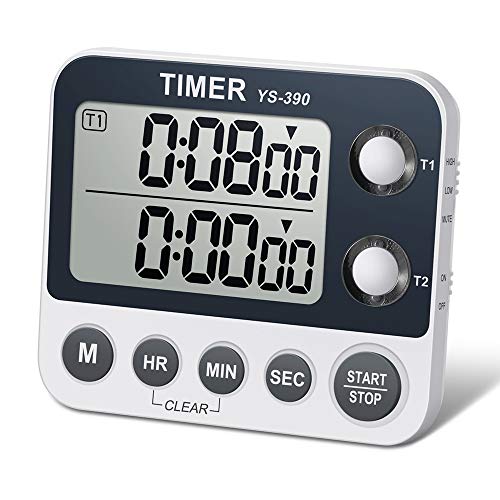
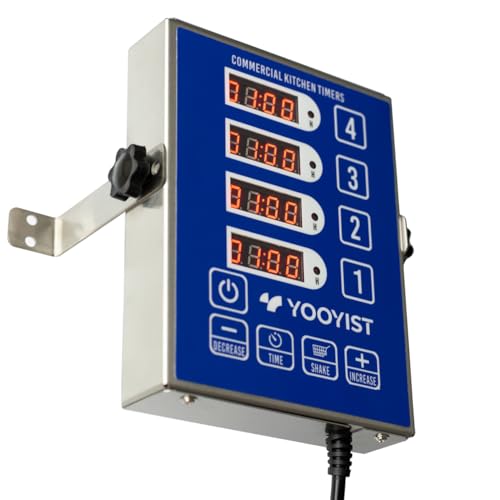
If you regularly coordinate multiple dishes, look at the multi-event models. TPNEG has four independent channels, the largest documented capacity in this comparison. HomeMall and TempPro TM02 each support two events, although their approaches differ: HomeMall emphasizes two independent count up/down timers, while TempPro TM02 adds two countdowns alongside clock and calendar modes. Antonki’s 24-hour two-pack gives you two physical timers, which can be placed in different rooms or on separate appliances.
Check display size and visibility
A timer is only useful if its remaining time is easy to read from where you work. HomeMall uses a large display, VOULOIR specifies a large LCD with big font, and the Antonki 24-hour model lists a 2.2-inch LCD. TempPro TM02 documents a 2.6-inch LCD, making it one of the more display-focused choices in the group. Taylor instead documents a 0.75-inch readout in a smaller body.
Large digits can help when the timer sits across a kitchen, while a compact display may be preferable on a crowded counter. TempPro TM01 adds a touch backlight for dim conditions. The visual information supplied here describes display design, not viewing performance under every lighting angle, so treat size and backlight as useful indicators rather than a guarantee of visibility in your kitchen.
Choose the alert style for your environment
Sound is another important distinction among the best battery kitchen timers. A loud alarm is helpful when the timer is near a running hood or when you are in another room. TPNEG offers a high-volume beep with flashing, and Antonki’s 24-hour model documents a 96 dB alarm. VOULOIR, HomeMall, and TempPro models also provide audible alerts.
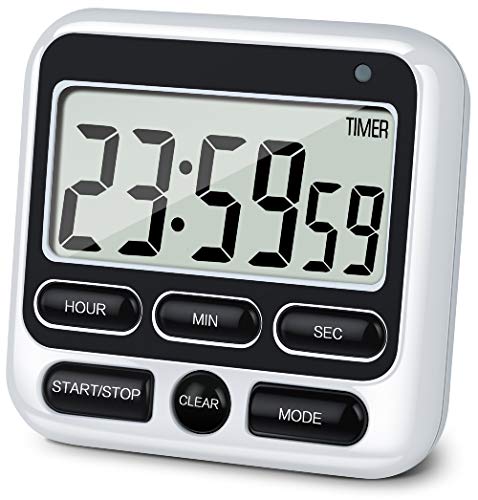
A silent or flashing mode is better for open-plan homes, sleeping children, meetings, or quiet study areas. TPNEG, KTKUDY, both Antonki models, VOULOIR, TempPro TM02, and TempPro TM01 document silent or flashing alternatives. Taylor and eTradewinds focus on audible alerts in the supplied evidence, so they may be less adaptable when sound must be minimized. Adjustable volume is especially useful when one timer serves both quiet and noisy settings.
Consider memory and repeat-use controls
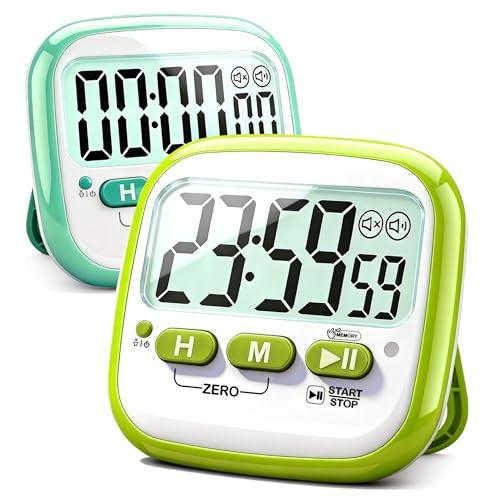
Memory functions reduce repeated entry when you prepare the same recipe or run a familiar routine. HomeMall stores a reusable time, eTradewinds includes auto memory, and KTKUDY, VOULOIR, and the TempPro models document memory features. The 24-hour Antonki model goes further by describing both last-used and permanent preset memory.
Power switches and automatic shut-off can also matter. HomeMall, KTKUDY, and several other models document on/off controls, while the eTradewinds listing describes automatic shut-off after idle time. The Antonki 24-hour model also lists auto shut-off. These features are intended to help conserve battery power, but actual battery life depends on use and is not independently tested here.
Pick the most useful mounting method
Magnetic placement is convenient on a refrigerator or another metal surface, but a stand or hanging hole gives you alternatives when the nearest surface is not magnetic. TPNEG uses three magnets and a retractable bracket. HomeMall, KTKUDY, VOULOIR, both Antonki models, and the TempPro timers document combinations of magnet, stand, or hook placement.
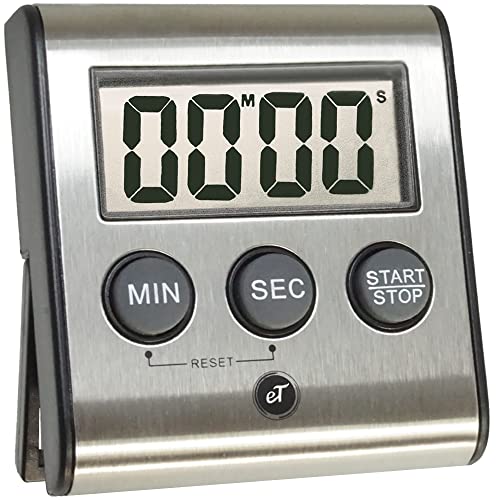
The eTradewinds eT-23 emphasizes a strong magnetic back and kickstand, while Taylor uses a clip, magnet, or stand. Consider where you will press the buttons: a stable countertop stand may be preferable if you need to adjust settings frequently, while a refrigerator magnet keeps the timer visible and off the work surface.
Confirm the battery arrangement
Battery details vary. Taylor, eTradewinds, HomeMall, and the Antonki products document included batteries. TPNEG uses two AAA batteries sold separately, and VOULOIR specifies two AAA batteries that are not included. Other listings document battery operation or replacement instructions without clearly stating whether batteries arrive in the package. Check the listing at purchase if immediate out-of-box use matters.
The number of units also affects the decision. Antonki’s two-pack models provide separate timers for different rooms or tasks, while TPNEG concentrates four channels in one device. Multi-packs can be convenient for shared households, but a single larger timer may be easier to manage if you want one central display.
Final Recommendation
TPNEG 4-Channel Digital Kitchen Timer ranks first overall in this specification-based comparison under the published weighted criteria.
TPNEG is the highest-scoring returned product and the first overall specification-based choice among the best battery kitchen timers. Its four independent channels, long countdown range, loud or silent alerts, and three-magnet placement give it the broadest documented coverage for busy meal preparation. The main trade-off is that its two AAA batteries are sold separately.
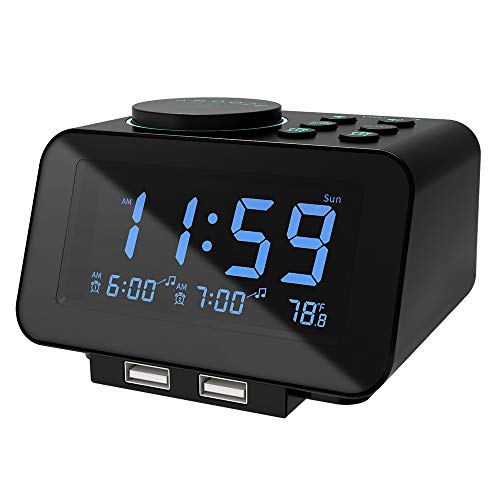
For a simpler setup, HomeMall is a strong alternative with two events, memory, adjustable volume, and a battery included. Choose Taylor when compact size and basic count up/down timing matter more than advanced alerts. The eTradewinds eT-23 suits a stainless-steel look and strong magnetic placement, while KTKUDY is a better fit when a timer, clock, and alarm are useful together.
Among the top battery kitchen timers for long sessions, VOULOIR and TempPro TM01 offer extended ranges, and TempPro TM02 adds dual countdowns with clock and calendar functions. Antonki’s two-packs are practical when you want two ready-to-use units, especially for separate cooking areas or household routines. These recommendations reflect documented specifications only; they do not represent hands-on test results or customer sentiment.
Frequently Asked Questions
What features matter most in the best battery kitchen timers?
Prioritize the maximum timing range, display size, alert choices, placement options, and battery details. If you cook several dishes at once, also check whether the model supports multiple independent events. TPNEG, HomeMall, and TempPro TM02 document multi-event operation, while Taylor is a simpler single-timer design.
Are battery kitchen timers better with silent alerts?
Silent flashing alerts are useful in classrooms, meetings, quiet homes, or when an audible alarm would be disruptive. They are not essential for every kitchen. Models such as KTKUDY, VOULOIR, both Antonki selections, and the TempPro timers document silent or flashing modes, while several others emphasize audible alarms.
Should I buy a long-range timer for ordinary cooking?
Not necessarily. A 99-minute timer is sufficient for many recipes, and Taylor provides that kind of compact, straightforward format. Long-range models such as VOULOIR, TempPro TM01, and TPNEG are more appropriate when you time slow-cooker meals, extended proofing, smoking, exercise, or other tasks lasting several hours.
Is a two-pack more useful than one multi-channel timer?
A two-pack gives you separate physical displays that can be placed in different locations. A multi-channel timer keeps several events on one device. Antonki’s two-packs suit distributed timing, while TPNEG is better when you want four channels visible and managed from one central unit.
Check the battery type, number required, and whether batteries are included. The supplied listings mention AAA batteries across the category, but inclusion varies: some products include them, while TPNEG, VOULOIR, and other listings specify that batteries are separate or do not clearly state inclusion. Also look for an on/off switch or auto shut-off if conserving battery power is important.