Buying Guide
The best stoneware bowl sets are easier to compare when you separate meal format from appearance. A compact cereal bowl, a wide pasta bowl, and a complete dinnerware set can all be made from stoneware, but they serve different routines. Start with the food you prepare most often, then check capacity, diameter, care instructions, storage, and the number of pieces.
Choose the right bowl profile
Cereal and soup bowls generally offer a deeper, more contained shape. The Pokini 22-ounce set is aimed at cereal, soup, oatmeal, and ice cream, while the 24-ounce vancasso Starry set is described for soup, pasta, cereal, and dessert. These capacities are suitable when you want a bowl that handles breakfast and lighter meals without taking up the room of a wide pasta bowl.
A middle-size bowl around 26 to 28 ounces is more flexible for households that rotate between cereal, soup, salads, fruit, noodles, and oatmeal. The HaWare, LE TAUCI embossed, Bosmarlin, and AmorArc wavy-rim sets all document capacities in this range. These are useful all-purpose formats, but the listed dimensions and shapes still differ. A 6-inch bowl will generally occupy less shelf width than an irregular 7.3-inch bowl.
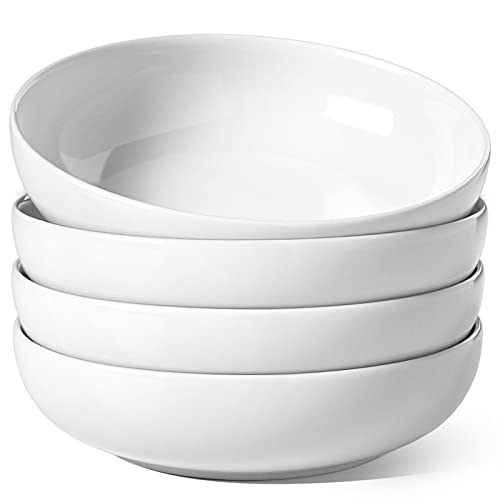
Wide pasta bowls are better for foods that benefit from surface area. The LE TAUCI 45-ounce set is 8.5 inches wide and 2.4 inches deep, while the AmorArc pasta options are also 8.5 inches across and hold 36 ounces. The vancasso Bonita set goes further with a documented 50-ounce capacity. These profiles can accommodate pasta, salads, stews, and larger portions, but they may require more cabinet space and may be less secure for very liquid foods.
Check material and finish details
The supplied listings use stoneware, ceramic, or porcelain-ceramic terminology. Several describe high-temperature firing, chip resistance, or dense construction. These statements are product claims rather than independent test results, so they should be read as specification evidence, not a guarantee of long-term performance.
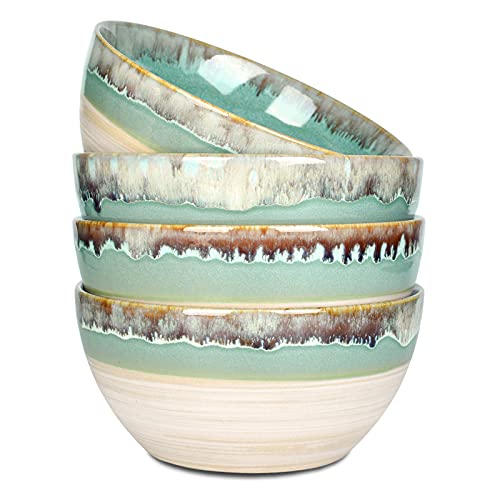
Finish affects both appearance and routine handling. HaWare uses a double-glaze kiln-change finish, LE TAUCI adds embossed exteriors, and vancasso Starry uses kiln-altered glaze with color gradients. Choose reactive or altered glaze if variation is desirable; select a smoother, more uniform look if matching is your priority.
Review microwave, oven, and dishwasher claims
Care compatibility is not identical across the category. Many selected sets list dishwasher and microwave use. Some also list freezer or oven use. The LE TAUCI embossed set, AmorArc wavy-rim set, vancasso Starry set, and LE TAUCI pasta set document particularly broad appliance compatibility. Other products list fewer uses, so do not assume that one bowl’s instructions apply to another model from the same brand.
Lids and handles can be useful for reheating or leftovers, but the AmorArc handled set was not selected because its documented set composition is smaller and its listing includes restrictions for carrying liquid food. For a bowl set intended mainly for table service, conventional open bowls are usually simpler to compare.
Plan for cabinet storage
Stackability is important because stoneware bowls can be wider and heavier than thin cereal bowls. The selected listings frequently describe stackable designs. The Pokini set emphasizes space-saving stacking, and Bosmarlin describes a slight radius that helps the bowls stack. Wide pasta bowls can still require more shelf width even when they nest, so measure the usable height and depth of your cabinet before choosing a large six-piece set.
Irregular or embossed designs can add visual interest but may not nest as uniformly as straight-sided bowls. HaWare’s irregular-rounded shape is specifically described as stackable, while its larger footprint should still be considered. Smooth glazed interiors can also be helpful for cleaning, especially when serving saucy foods.
Match set count to household use
A set of four is appropriate for couples, small households, or buyers who already own additional dinnerware. A set of six is more useful for family breakfasts, regular entertaining, or replacing several mismatched bowls at once. Capacity and piece count should be considered together: six compact bowls may be more practical for daily use than four very large bowls, while six large bowls may be the better fit for hosting.
Also check whether the listing describes a true bowl-only set. The selected products are bowl-focused, while complete dinnerware sets may include plates and mugs in addition to bowls. If you need coordinated place settings rather than extra bowls, a full dinnerware collection may be more appropriate, but it is a different purchase decision.
Compare design with your existing tableware
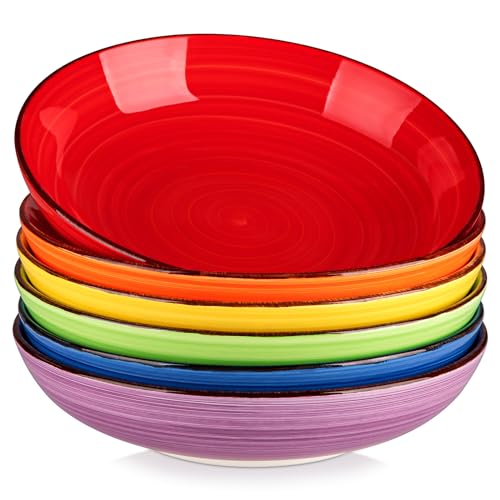
Color names such as green, brown, cream, white, and assorted reactive finishes are useful starting points, but reactive and kiln-altered glazes can create piece-to-piece variation according to the listings. Consider whether the set should blend with existing plates or act as an accent. Embossed exteriors, wavy rims, spiral patterns, and matte finishes create different visual effects without changing the basic serving function.
Final Recommendation
AmorArc 36oz Pasta Bowls, Set of 6 ranks first overall in this specification-based comparison under the published weighted criteria.
AmorArc 36oz Pasta Bowls, Set of 6 is the highest-scoring returned product and the first overall specification-based choice among these best stoneware bowl sets. Its combination of generous capacity, six-piece composition, reactive glaze, stackability, and microwave, dishwasher, and freezer claims makes it especially practical for larger households.
For a four-piece alternative, the AmorArc 36oz set keeps the same large format with a smaller count. Choose the AmorArc 28-ounce wavy-rim set or the LE TAUCI embossed set when you want more moderate everyday capacity and stronger decorative detail. The Pokini 22-ounce set is a sensible compact option, while the vancasso Bonita 50-ounce set is better suited to large servings and entertaining.
Among the top stoneware bowl sets, the best match depends on whether you prioritize capacity, cabinet space, finish, or the number of matching pieces. Verify the current listing instructions before use, especially for oven, freezer, and microwave applications.
Frequently Asked Questions
Among the best stoneware bowl sets, what capacity is best for everyday cereal and soup?
A capacity around 22 to 28 ounces is a practical starting point for cereal, soup, oatmeal, fruit, and dessert. The Pokini 22-ounce, vancasso Starry 24-ounce, Bosmarlin 26-ounce, and AmorArc 28-ounce sets document those formats. Larger bowls can work for cereal, but they may feel oversized and occupy more storage space.
Are wide pasta bowls useful beyond pasta?
Yes. The selected listings describe wide bowls for salads, stews, soup, oatmeal, dessert, rice, and other foods. The LE TAUCI 45-ounce set has a wide 8.5-inch profile, while the AmorArc 36-ounce sets are also designed for pasta, salads, and stews. A wide bowl offers more surface area, but its shallower shape may be less suitable for carrying very liquid meals.
Do reactive-glaze bowls have matching colors?
Not always. Several listings state that reactive or kiln-altered glazes create variations and that individual pieces may differ. This can make each bowl distinctive, but buyers seeking a uniform color should review the product images and listing details carefully. The AmorArc, Bosmarlin, HaWare, and vancasso options all document finishes with visual variation.
How many bowls should a household buy?
Four bowls suit a smaller household or an existing dinnerware collection. Six bowls provide more flexibility for family meals, guests, or replacing several pieces at once. The six-piece AmorArc 36-ounce and vancasso Bonita sets emphasize larger serving capacity, while the six-piece Pokini set offers a more compact cereal-bowl format.
What should I verify before putting stoneware in an appliance?
Check the specific listing and care instructions for the exact model. The selected products document different combinations of microwave, dishwasher, freezer, oven, and refrigerator compatibility. Do not infer that a feature applies across an entire brand or across similar-looking bowls. This is particularly important when moving from standard table service to heating, freezing, or oven use.