Buying Guide
The best kids’ step stools are not interchangeable: a low bathroom platform, a folding carry stool, and a tall helper tower solve different problems. Start by identifying the surface a child needs to reach, then compare the stool’s documented height, step arrangement, footprint, and stability features. Product listings can use similar language for very different designs, so the specifications matter more than a generic “toddler stool” label.
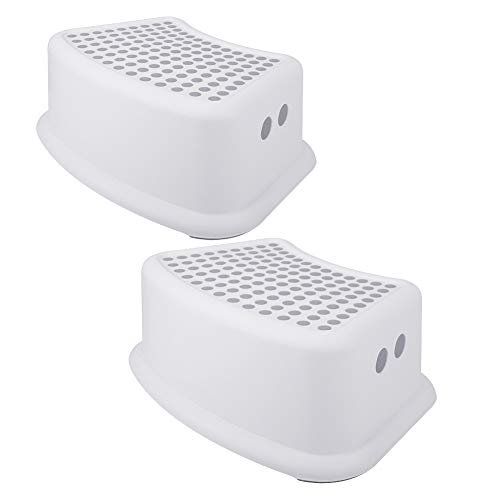
For potty training and hand washing, a low platform that can sit close to a toilet or sink is often the most targeted design. Dreambaby measures 5.6 inches high and is contoured around toilet bases. Disney’s stool has a similar bathroom-oriented contour, while Tiawudi supplies two 5.3-inch stools that can be placed in separate rooms. These designs are easier to compare with the child’s routine because their intended use is clearly documented.
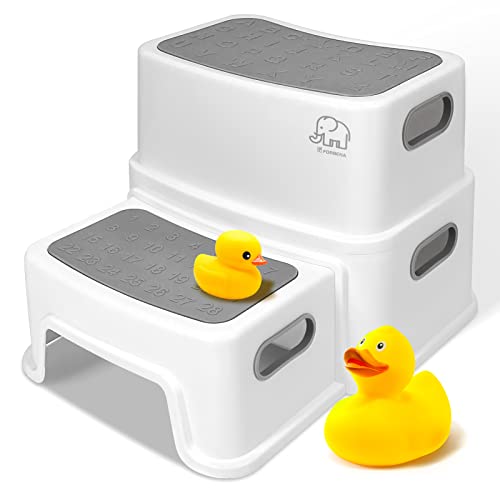
A low stool may not be enough for a kitchen counter. The Onasti standing tower is 28.3 inches high and uses three steps, double armrests, and an A-frame structure. It can also convert to a two-step stool or chair. AMBIRD and Reeple provide two-step wooden formats for sinks, toilets, and other household tasks. Forbena also uses two steps, though its listing does not provide the height of each level. Choose the reach needed for the actual counter or sink rather than assuming every two-step model reaches the same point.
Stability has several parts: the standing surface, the base, and the child’s ability to climb or step down. OXO Tot documents a textured top and non-slip base. ACSTEP lists rubber straps on each leg, a secure lock, and a widened circular surface. Dreambaby combines 117 rubber dots with a non-slip base, while Disney lists gripping rubber on both the top and bottom.
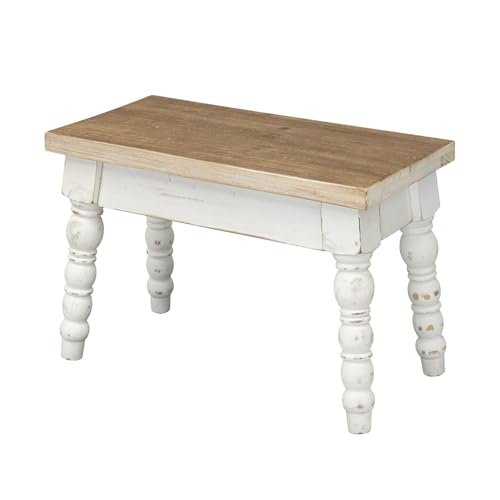
The wooden models use different approaches. Reeple and AMBIRD list non-slip strips or surfaces, crossbars, and non-slip pads. MODE HOME documents protective pads on the legs, but its supplied information does not mention a textured standing surface. That distinction is useful: a floor pad may help the stool stay positioned, while a textured top addresses foot contact. None of these specifications replaces active supervision or careful placement.
Consider handles and independence
Handles can make a stool easier for a child to move, but they also affect the overall design. OXO Tot has soft handles, ACSTEP folds into a carryable form, and Forbena includes carrying handles. Onasti and the wooden two-step models use side armrests that support climbing access. Tiawudi, Disney, and Dreambaby do not list handles in the supplied evidence, so they may be better treated as place-and-use bathroom stools.
For younger children, a design that supports controlled access may be more useful than the lightest possible model. Onasti’s armrests and A-frame are intended for a taller standing tower, while a low stool has less climbing height but also less reach. Review the complete dimensions and keep the stool on the type of surface specified by the maker. ACSTEP, for example, directs use on a dry, flat surface.
Decide between plastic, bamboo, and solid wood
Plastic models are represented by Dreambaby, Forbena, OXO Tot, Disney, Tiawudi, and ACSTEP. Several document wipe-clean or washable care, and Forbena specifically lists water resistance. These qualities suit bathroom routines. Plastic can also support lighter portable formats, such as the OXO Tot and ACSTEP.
Reeple and AMBIRD use natural bamboo, while MODE HOME uses solid wood. Bamboo models provide a more furniture-like appearance and can include two levels, handles, and armrests. MODE HOME is narrower than the wooden toddler designs, making it worth considering where floor space is limited. Wood-based options may require more attention around moisture than a listed water-resistant plastic model; the supplied evidence does not establish identical care requirements for every product.
Check storage and assembly
Folding is valuable when the stool must be stored between uses. ACSTEP folds in seconds, and Reeple describes a folding support design. MODE HOME has removable legs for disassembly, while Onasti, Forbena, and AMBIRD require or describe assembly in their listings. OXO Tot, Dreambaby, Disney, and Tiawudi are presented as simpler single-platform formats, although the evidence does not state that every one arrives fully assembled.
Measure the intended storage location before choosing. A broad, stable stool may be more comfortable in use but harder to tuck beside a toilet. A narrow design may store well but provide less standing room. The product’s listed length, width, and height should be compared with the bathroom, kitchen, or bedroom space where it will remain.
Read weight limits in context
Weight capacities vary across this group, from the current price on Onasti to the current price on MODE HOME. A higher listed capacity does not by itself prove better child safety or stability. It is one specification to compare alongside the structure, base, surface, and intended use. Also note whether the listing describes a single stool or a set: Tiawudi supplies two stools, while the other reviewed entries are individual products.
Final recommendation
Onasti 3-Step Toddler Standing Tower ranks first overall in this specification-based comparison under the published weighted criteria.
Onasti is the first overall specification-based choice among the best kids’ step stools because its tall three-step access, armrests, non-slip features, and convertible design cover more documented use cases than the other selected products. OXO Tot is the simpler compact alternative, while Forbena is especially practical for wet bathroom routines. Families wanting wood can compare Reeple’s folding design with AMBIRD’s assembled bamboo format. The top kids’ step stools should be selected by reach, footprint, and contact-point stability—not by capacity alone. Use every stool on an appropriate surface and supervise children during climbing and standing.
Frequently Asked Questions
Begin with the toilet and sink positions. Dreambaby and Disney document contoured shapes that nest near a toilet, while Forbena lists water resistance and wipe-clean care. A low stool such as Tiawudi may suit hand washing when only a modest boost is needed. If the sink is higher, compare a two-step model such as Forbena, Reeple, or AMBIRD and check its full dimensions before purchase.
They can be, particularly when the stool is stored after each use. ACSTEP folds in seconds, and Reeple describes a foldable bamboo frame. Folding adds a setup step and does not automatically make a product suitable for every surface. Confirm that the lock or support structure is fully engaged, and follow the maker’s instructions for placement and use.
Neither format is universally better. A standing tower such as Onasti offers substantially more reach and uses armrests and multiple steps, which can help with higher counters. A single-step stool such as OXO Tot, Dreambaby, or Disney is lower and simpler for bathroom routines. Match the format to the task, the child’s ability, and the available floor area.
What safety features should I compare?
Look for documented grip on both the standing surface and the floor-facing base. Examples include OXO Tot’s textured surface and non-slip base, ACSTEP’s leg rubber straps and secure lock, and Reeple’s non-slip strip and pads. Handles or armrests can also support access, but they do not replace supervision. Follow any surface or environmental restrictions in the product listing.
Some listings state capacities that include adult weight, such as Reeple’s 300-pound claim, AMBIRD’s 300-pound claim, or MODE HOME’s 330-pound claim. Capacity alone is not enough to establish suitability for every adult task. Check the product’s structure, dimensions, standing surface, and intended-use instructions before anyone uses it.