Buying Guide
The best bathroom suction soap dishes are defined less by appearance than by how their mounting system, drainage, and material fit your bathroom. The products selected here are all documented as soap holders using suction-based or suction-assisted installation, but the listings consistently limit that installation to smooth, non-porous surfaces. Glass, polished tile, mirrors, stainless steel, and some acrylic surfaces are repeatedly named. Grout lines, porous stone, painted walls, wallpaper, wood, and textured surfaces are commonly excluded.
This is a specification-based comparison using public listing data. It is not a hands-on test, and it does not summarize customer opinions. Because suction depends on the installation surface, treat stated capacity figures as listing information rather than a guarantee for every wall or countertop.
Match the mounting system to the surface
Before choosing a dish, inspect the exact spot where it will go. OXO recommends smooth glazed surfaces, mirrors, or glass. TESOT, AIDILI, and LEVERLOC similarly identify smooth, non-porous surfaces as the preferred environment. A clean and completely dry surface is particularly important in TESOT’s instructions. Do not assume that a suction cup will work over grout, painted drywall, unfinished stone, or a bumpy wall.
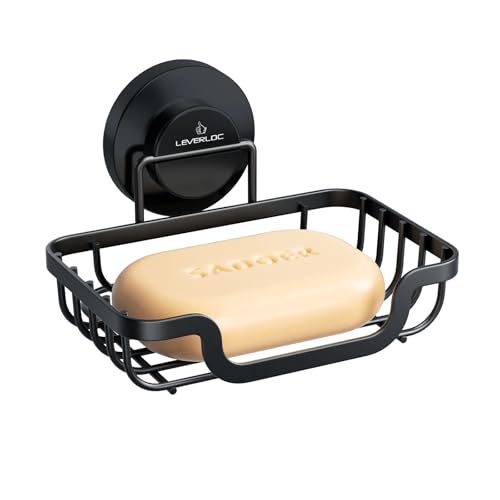
Installation styles vary. OXO documents a lever-activated StrongHold cup. SlipX uses a one-push installation approach, while LEVERLOC describes pressing a marked area until the seal forms. These systems are intended to avoid drilling, screws, glue, and tools. HASKO also documents optional adhesive mounting discs for a rough surface, but its listing still warns against many porous or uneven materials. That makes the discs an installation option, not a reason to ignore the stated restrictions.
Repositioning is useful in rentals or when the shower layout changes. SlipX, AIDILI, and LEVERLOC describe removal and reinstallation procedures. These may involve releasing the edge with a card, rinsing the cup, and preparing it again. Follow each product’s supplied instructions rather than repeatedly forcing the holder from the wall.
Prioritize drainage for bar-soap care
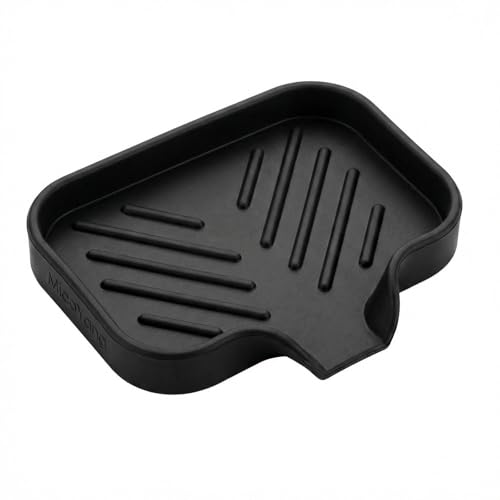
A soap dish that retains water can leave the bar sitting in a wet tray. The selected products address this in different ways. SlipX lists more than 80 drain holes. OXO uses draining slots, and the LEVERLOC models use hollowed or integrated drainage designs. AIDILI’s open-line base is intended to let water flow away, while HASKO’s two-pack is described as self-draining and supplied with soap savers.
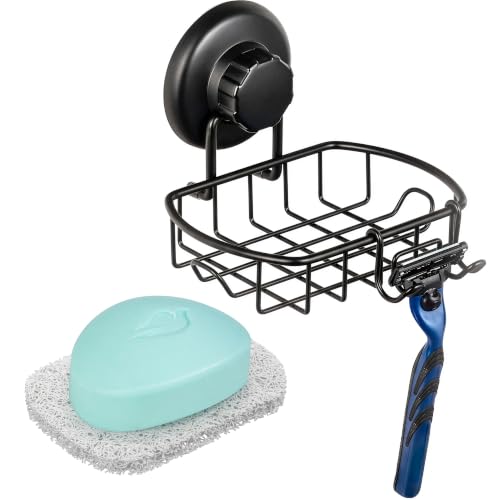
TAILI takes a more layered approach with a stainless steel wire grid and a removable silicone pad, both described as part of the drainage system. That removable insert may be helpful when residue accumulates because it can be rinsed separately. Drainage claims describe design intent; they do not establish a measured drying time. Placement still matters, particularly if the dish sits where the shower stream hits it directly.
Choose material for the bathroom environment
Stainless steel is the dominant metal material in the selected models. HASKO specifies polished SS304, TESOT specifies 304 stainless steel, and the LEVERLOC and TAILI listings describe stainless steel as rust-resistant or rustproof. These options may suit humid shower environments when a metal appearance is preferred.
Plastic remains a practical alternative. SlipX uses durable plastic and is described as rust-free, while the AIDILI products use designs described as rust-resistant. Plastic can also keep the holder lighter, but the supplied evidence does not establish comparative strength or lifespan. Avoid treating terms such as durable or rustproof as hands-on performance findings; they are product-listing descriptions.
Decide how much storage you need
A basic single tray is appropriate when the only goal is to keep one bar within reach. OXO and the compact LEVERLOC stainless steel dish fit that focused use. Hook-equipped designs add room for a razor, loofah, sponge, or brush. HASKO, AIDILI, TAILI, and TESOT document this type of added utility.
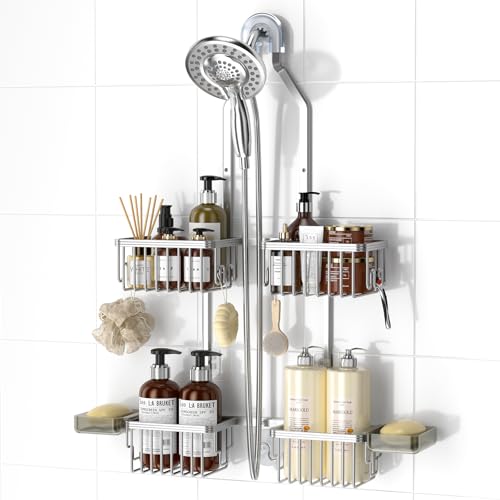
For more organization, AIDILI’s two-layer model separates storage vertically, and HASKO’s two-pack can place matching holders in two locations. TESOT’s four hooks offer the most clearly stated hanging capacity in this group, but its 6.7-inch length makes measuring especially important. HASKO’s single basket states support for up to the current price, while SlipX, TESOT, and the LEVERLOC models state capacities of up to the current price. Products without a listed capacity should not be assumed to support the same load.
Plan cleaning and maintenance
Removable components can simplify routine cleaning. SlipX has a removable tray, and TAILI has a removable silicone pad. HASKO’s listing describes an easy-clean removable tray, while several suction systems can be released, rinsed, and repositioned. Open drainage also reduces enclosed areas where water may collect, although soap residue still needs periodic rinsing.
Look at the underside and edges of the dish as well as the tray. A design with separate parts may take slightly more handling but can provide better access for rinsing. A fixed, simple tray may be easier to use day to day. The right choice depends on whether your priority is the fewest parts or access for cleaning.
Final recommendation
SlipX Solutions Strong Hold Suction Cup Soap Dish ranks first overall in this specification-based comparison under the published weighted criteria.
SlipX Solutions Strong Hold Suction Cup Soap Dish is the highest-scoring returned product and the first overall specification-based choice among the best bathroom suction soap dishes. Its more than 80 drain holes, removable tray, repositioning guidance, rust-free plastic, and stated 11-pound capacity create the most balanced evidence set.
Choose HASKO’s SS304 model if metal construction, hooks, and a higher stated capacity are more important than a removable tray. The LEVERLOC stainless steel holder with hooks is another strong fit for a single shower location, while HASKO’s two-pack is more appropriate when two areas need matching storage. AIDILI’s two-layer dish is the better documented choice for vertical organization, and OXO is a straightforward option for buyers who prefer a lever-based mount.
Among the top bathroom suction soap dishes, TESOT is the best fit when four hooks justify a larger footprint. TAILI is notable for its removable silicone-and-wire drainage design. Regardless of model, confirm that the intended mounting spot is smooth, dry, and non-porous before installation.
Frequently Asked Questions
What surface works best for the best bathroom suction soap dishes?
Smooth, clean, dry, and non-porous surfaces are the consistently documented choice. Glass, mirrors, polished tile, stainless steel, and some acrylic surfaces are named by the selected products. Avoid grout lines, porous stone, painted walls, wallpaper, wood, and textured or uneven surfaces unless the specific listing provides another approved method.
Do suction soap dishes need drainage holes?
Drainage features are useful for moving water away from the bar. The selected products use holes, slots, open-line bases, hollow designs, grids, or layered drainage systems. These features support the goal of keeping soap from sitting in pooled water, but the listings do not provide independent drying-time measurements.
Which selected dish offers the most added hanging storage?
TESOT documents four hooks, making it the clearest choice when hanging storage is the priority. HASKO, LEVERLOC, AIDILI, and TAILI also document hooks, but the number and arrangement differ. Check the available wall space before selecting a wider model such as TESOT.
Can these holders be moved after installation?
Several selected products are described as removable and reusable, including SlipX, AIDILI, and LEVERLOC models. Removal may require sliding a card behind the suction cup or following a release step. Rinse and prepare the cup as directed before repositioning, and do not move a loaded holder by pulling forcefully.
Are stainless steel dishes preferable in a humid shower?
Stainless steel models may appeal to shoppers seeking a metal holder described as rust-resistant or corrosion-resistant. HASKO specifies SS304, while TESOT specifies 304 stainless steel. Plastic models can also be appropriate, particularly when a rust-free or lightweight design is preferred. The supplied listings do not establish a comparative lifespan between materials.