Buying Guide
This guide compares the best synthetic golf gloves using documented material construction & durability, grip performance & control, fit, comfort & sizing range, breathability & moisture management, weather versatility, flexibility & stretch engineering, and closure & hand security.
What Defines The best synthetic golf gloves
Synthetic golf gloves are engineered to deliver consistent grip, predictable fit, and easy care across changing course conditions. The best synthetic golf gloves combine a tactile palm material with stretch panels, breathable backings, and reinforced stress zones so the glove holds up through repeated swings. Unlike all-leather options, synthetic designs rely on textile engineering to balance feel, durability, and routine maintenance.
When comparing the best synthetic golf gloves, focus on the materials listed for the palm, the type of mesh or stretch fabric on the back of the hand, and how the closure system is described. A glove that documents specific palm technologies and stretch panels usually performs more consistently than a generic synthetic listing.
Key Specification Areas To Compare
Palm Material And Reinforcement
Palm construction drives both grip and durability. Look for terms such as synthetic suede, microfiber, synthetic leather, or polyurethane, often paired with reinforcement patches in high-friction zones. Gloves like the Callaway Weather Spann and Mizuno MX pair synthetic palm bases with targeted leather pads at contact points, while the GH CLUB option layers a silicone coating over a polyurethane palm for extra hold. Vice Golf’s Duro line uses synthetic suede with internal leather inserts to combine a soft feel with reinforced structure.
Breathability And Moisture Management
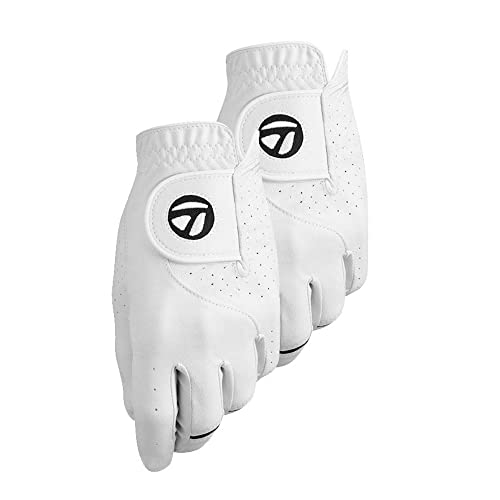
Ventilation design directly affects comfort in warm or humid climates. Documented features such as PowerNet mesh (FootJoy WeatherSof), FlexMesh (Mizuno MX), micro perforations (TaylorMade Stratus Tech), and elastic mesh panels (Honma) indicate airflow-focused engineering. Microfiber-based gloves such as the FINGER TEN 3-pack also emphasize moisture wicking for hot and wet play.
Fit, Sizing, And Stretch Engineering
Fit is where many synthetic gloves stand out. Look for stretch technologies such as 4-way stretch material, spandex panels, or Lycra fingers, which help the glove move naturally with the hand. The Handy Picks glove combines 4-way stretch with micro-perforated leather, while the Zero Friction Compression-Fit design uses a universal sizing approach to simplify fit selection. Mizuno’s double-stitch thumb is a useful cue for secure fit at a key wear zone.
Weather Versatility
If you play in rain, heat, or both, prioritize gloves with explicit all-weather language. The TaylorMade Stratus Tech highlights sweat and humidity resistance through HyperTec, the Vice Golf Duro is designed for all-weather conditions, and the GH CLUB and FINGER TEN gloves both target wet and hot play with coated or microfiber builds. Honma also markets an all-weather design with breathable mesh panels for moisture control.
Closure Systems And Security
A reliable closure keeps the glove stable through the swing. Look for hook-and-loop straps, ComforTab closures, or wristband-and-velcro systems. FootJoy’s WeatherSof documents a ComforTab closure, Mizuno uses a hook-and-loop strap, and the GH CLUB glove pairs a wristband with a strong velcro for added hold. A clear closure description usually signals a more refined fit system.
Matching A Glove To Your Playing Style
If you prioritize feel and club contact, lean toward options that document targeted leather or suede inserts, such as the Callaway Weather Spann, Mizuno MX, or Vice Golf Duro. If breathability is your priority in hot conditions, consider the TaylorMade Stratus Tech or FootJoy WeatherSof for their mesh and perforation details. Players who want a durable rotation for practice may prefer multi-pack gloves like the FINGER TEN 3-pack or TaylorMade Stratus Tech 2-Pack.
Final Recommendation
Callaway Weather Spann Glove ranks first overall in this specification-based comparison under the published weighted criteria.
The final choice among the best synthetic golf gloves depends on the documented features that match your intended use.
Among the top synthetic golf gloves compared here, the Callaway Weather Spann Glove stands out as the first overall specification-based choice thanks to its FUSETECH premium synthetic construction combined with a leather palm and thumb, micro ventilation on palm, thumb, closure, and fingers, and a clear focus on flexibility and durability. For golfers who prefer a multi-pack format with strong stretch and breathability, the TaylorMade Stratus Tech 2-Pack is a close alternative, while the Mizuno MX Synthetic Glove is a strong pick if you want leather-style feel with synthetic easy care. Together, these options cover most of the reasons players choose top synthetic golf gloves in the first place.
Practical Tips Before You Buy
- Check that the listed hand orientation matches your dominant hand so the closure sits on the correct wrist.
- Compare size charts across brands because sizing labels such as medium/large can vary between FootJoy, Mizuno, and Honma.
- Look for ventilation features that match your climate; micro perforations and mesh panels behave differently in humid versus dry heat.
- Decide between a single-glove premium build and a multi-pack rotation based on how often you practice.
- Consider closure design if you have wrist sensitivity; ComforTab and velcro systems feel different under repeated tightening.
Frequently Asked Questions
Among the best synthetic golf gloves, what makes a synthetic golf glove a good choice?
Synthetic golf gloves use engineered materials such as microfiber, synthetic suede, or synthetic leather that resist moisture, hold their shape after washing, and often wear differently than premium all-leather gloves. Many of the best synthetic golf gloves add stretch panels and mesh for breathability.
Are synthetic golf gloves good in wet weather?
Many synthetic gloves are explicitly designed for wet play. Gloves such as the FINGER TEN All Weather 3-Pack, the GH CLUB Silicone Grip Glove, and the Vice Golf Duro are documented for all-weather or wet-condition performance, with materials that resist saturation and dry quickly.
How do I choose the right size for a synthetic golf glove?
Compare each brand’s size chart, look for stretch features such as 4-way stretch or spandex panels, and consider universal-fit designs if you are between sizes. The Handy Picks and Mizuno MX gloves document stretch-based fit, while the Zero Friction option uses a universal fit to reduce sizing guesswork.
How long does a synthetic golf glove typically last?
Durability depends on construction rather than a fixed number of rounds. Reinforced palms, double-stitched thumbs, and wear-zone patches, as seen on the Callaway Weather Spann, Mizuno MX, and GH CLUB gloves, generally extend usable lifespan, while 2- and 3-pack formats let you rotate gloves to manage wear.
What is the difference between a single glove and a multi-pack synthetic glove?
A single-glove purchase suits golfers who want a specific premium model, while a multi-pack such as the TaylorMade Stratus Tech 2-Pack or FINGER TEN 3-Pack is designed for frequent practice and rotation. Multi-packs can be useful in humid climates where gloves need drying time between rounds.