Buying Guide
The best tiered clothes hangers are not all built the same way. Some are complete multi-layer garment hangers with padded arms, clips, or swing bars. Others are cascading organizers that hold separate hangers. Start by identifying the clothing you want to store, then compare capacity, retention, access, construction, and available closet depth.
Choose the right tiered design
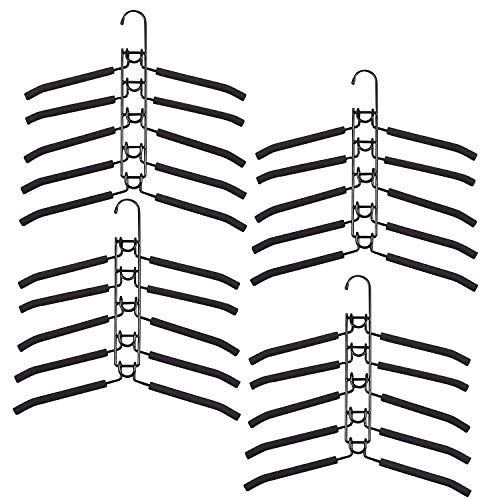
There are three useful designs in this comparison. Multi-layer shirt hangers place several padded or coated arms below one hook. DOIOWN, TOPIA HANGER, and YiSeyruo use this approach for shirts, coats, sweaters, jackets, and other garments. Their main advantage is that the storage arms are integrated into one unit.
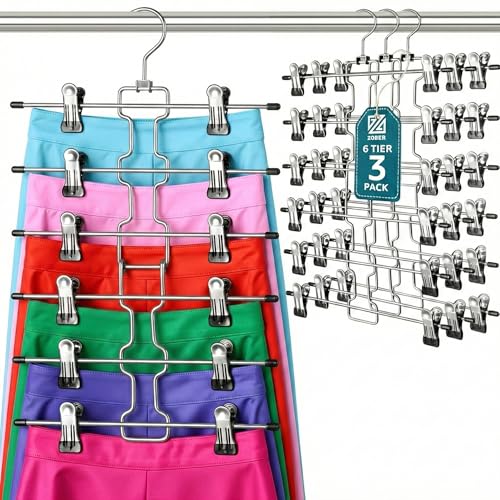
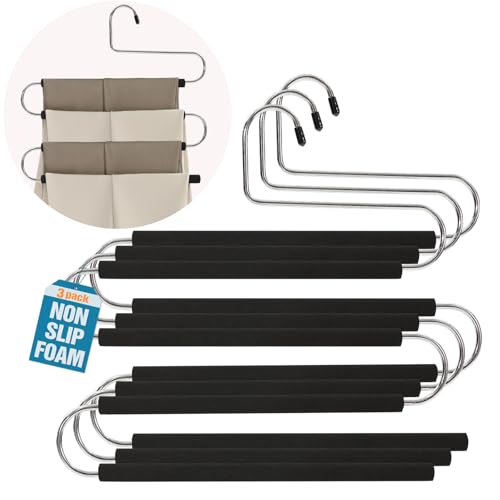
Clipped tiered hangers are better for trousers, skirts, shorts, and jeans. MORALVE, ZOBER, and ICOFUPO document features such as adjustable clips, foam padding, or open-ended arms. Clips hold the garment by its edge, while open-ended arms let you slide clothing on and off without removing the hanger from the closet rod.
Cascading organizers hold separate standard hangers. DUCOO and Wonder Hanger Max document compatibility with common hanger types, while YZÉ By Yizhe uses multiple slots for lightweight daily clothing. This format lets you keep favorite shirt or suit hangers in place, but it adds another step because each garment still needs its own hanger.
Match capacity to garment weight
A higher tier count does not automatically mean a better choice. YZÉ By Yizhe documents nine slots, while DOIOWN and TOPIA HANGER document six layers. That capacity can be useful in a narrow closet, but the available evidence should guide what you place on each unit. YZÉ By Yizhe is described for lightweight clothing, whereas DOIOWN provides a stated 30-pound capacity and stainless steel tubing.
For heavier coats, suits, denim, or sweaters, look for a documented load figure or a metal frame. MORALVE and Wonder Hanger Max each state a 30-pound capacity in their listings. The other metal options describe sturdy or rust-resistant construction but do not provide a comparable numerical load rating. Avoid treating a general durability statement as a tested capacity.
Also check the hanger’s width and height against the closet. The listings range from compact plastic organizers to wider metal structures. A six-tier hanger may hold more garments while occupying more horizontal room than a narrow cascading unit. Measure the rod area and consider whether nearby clothing will still be easy to remove.
Consider garment security
Padded arms and coated clips help address different storage problems. EVA foam arms on DOIOWN, TOPIA HANGER, and YiSeyruo are described as non-slip and designed to reduce scratching or shoulder bumps. That makes them suitable when the garment rests directly on the arm.
For pants and skirts, adjustable clips are more precise. ZOBER documents sliding clips with rubber coating, and MORALVE documents non-slip adjustable clips. These features allow the grip points to be positioned for different garment widths. The evidence supports improved positioning and retention, but it does not establish that every fabric will remain crease-free.
Open slots and enclosed holes also behave differently. ICOFUPO’s open-ended arms prioritize direct access, while DUCOO’s enclosed holes are intended to keep separate hangers from slipping out. Wonder Hanger Max uses open slots and is documented as compatible with many hanger types. Choose enclosed holes when retention is more important than quick hanger removal; choose open slots when you frequently rearrange outfits.
Decide how much access you need
A swivel hook can make a tiered organizer easier to turn toward you. DOIOWN, MORALVE, feasteery, DUCOO, Wonder Hanger Max, and other selected products document 360-degree rotation. This is useful for viewing garments from different angles, but it does not replace adequate clearance around the closet rod.
Horizontal and vertical hanging modes serve different purposes. Vertical storage usually makes the most of a small wardrobe, while horizontal positioning can make a group of clothes easier to inspect. MORALVE, TOPIA HANGER, YZÉ By Yizhe, DUCOO, and Wonder Hanger Max document both orientations. If you switch frequently between seasonal storage and daily outfits, this flexibility can be more useful than simply choosing the greatest number of tiers.
Swing arms and detachable sections add another access option. feasteery documents individually swinging arms for pants, and YiSeyruo documents detachable sections. These designs may make one item easier to reach without moving every other garment, though the supplied listings do not provide hands-on access testing.
Compare materials and maintenance implications
Metal frames are common among clipped and padded models. Stainless steel appears in DOIOWN, TOPIA HANGER, feasteery, and ICOFUPO, while ZOBER uses chrome-plated metal and YiSeyruo describes rust-resistant iron. These specifications support choosing metal when a rigid frame is a priority.
Plastic is more common in cascading organizers. DUCOO uses reinforced ABS plastic, Wonder Hanger Max uses reinforced plastic, and YZÉ By Yizhe uses polypropylene. Plastic can keep the organizer relatively simple and light, but the supplied evidence varies: some products state a load figure, while others are described only for lightweight clothing. Use the documented intended application rather than assuming all plastic models have the same strength.
Final recommendation
DOIOWN Space Saving 6 Tier Coat Hangers ranks first overall in this specification-based comparison under the published weighted criteria.
DOIOWN Space Saving 6 Tier Coat Hangers is the first overall specification-based choice among these best tiered clothes hangers. Its combination of six padded layers, stainless steel tubing, swivel and foldable movement, broad garment compatibility, and stated load capacity gives it the most balanced specification profile.
Choose MORALVE if adjustable clips, wood-and-metal construction, and two hanging orientations fit your wardrobe better. ZOBER is a strong clipped alternative for pants and skirts, while feasteery favors swing-arm access for trousers. For shirts and outerwear, TOPIA HANGER and YiSeyruo provide padded metal options.
Among the top tiered clothes hangers that hold separate standard hangers, DUCOO is the better fit when enclosed holes matter, and Wonder Hanger Max is the better fit when heavy-duty documentation and universal hanger compatibility matter. YZÉ By Yizhe offers the most documented slots but is better matched with lightweight clothing. ICOFUPO is a focused pants option with open-ended padded arms.
Frequently Asked Questions
What are the best tiered clothes hangers for pants and skirts?
ZOBER and MORALVE are strong choices when adjustable clips are important. feasteery and ICOFUPO are better fits when you prefer swing arms or open-ended arms. Compare the number of tiers, clip placement, padding, and whether you want to remove the garment from the rod or slide it directly onto an arm.
Are tiered hangers suitable for heavy coats?
Some are documented for heavier garments, but the evidence differs by model. DOIOWN and Wonder Hanger Max state a 30-pound capacity, and MORALVE also lists support up to the current price. TOPIA HANGER cautions against thick clothing. Do not generalize one product’s capacity claim to every tiered hanger.
Is an enclosed-slot cascading organizer better than an open-slot model?
An enclosed-slot design such as DUCOO is intended to keep separate hangers in place. An open-slot design such as Wonder Hanger Max may make hanger removal and rearrangement easier. The better choice depends on whether retention or quick access is more important in your closet.
How many tiers should a closet hanger have?
Choose based on the clothing type and the available space. Four or five tiers can be easier to manage for pants and skirts, while six or more layers can increase shirt storage. YZÉ By Yizhe documents nine slots for lightweight clothing, but more slots may increase the vertical height and make individual garments harder to reach.
What should I check before buying?
Check the hanger’s documented dimensions, tier count, material, padding or clip type, swivel function, hanging orientations, and intended garment range. Also confirm whether it is a complete garment hanger or an organizer that requires separate standard hangers.