Buying Guide
The best vegetarian mushroom supplements are not interchangeable. A product may use one mushroom species, several named species, or a broad blend of 10 or more. The listings also differ in whether they identify fruiting bodies, mycelium, biomass, extraction ratios, beta-glucans, polysaccharides, or only a general mushroom complex. Reading those distinctions helps you compare what is actually documented rather than treating every capsule formula as equivalent.
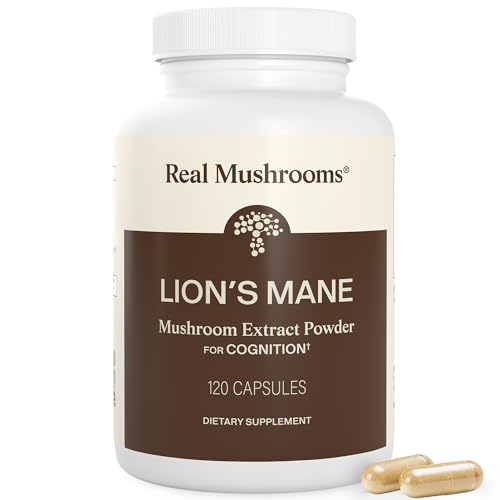
Single-mushroom products are the most focused option in this comparison. Real Mushrooms Lion’s Mane Capsules identify organic lion’s mane fruiting bodies and provide a beta-glucan statement. Nutricost Organic Reishi Mushroom Capsules similarly focus on one species and state both the serving amount and amount per capsule. These formats may be easier to evaluate when you already know which mushroom you want to include in your routine.
Multi-mushroom products are designed around variety. FreshCap Mushrooms Ultimate Mushroom Supplement names six species, while Naturealm Sacred 7 Mushrooms names seven. VEGATOT 10-in-1 Mushroom Complex and Rainbow Light Mushroom Complex each list 10 species. NATURE TARGET 14-in-1 Mushroom Complex goes further with 14 named mushrooms. More species does not automatically establish a better formula; it simply gives you a broader ingredient profile to review.
Check whether the source material is specified
Fruiting-body language is an important label distinction. FreshCap states that its capsules use 100% whole fruiting bodies and says the mushrooms are triple-extracted. Naturealm also says its product uses 100% organic fruiting-body extract and excludes mycelium and grain. NATURE TARGET identifies pure fruiting bodies. Those statements provide more source detail than a label that only says mushroom blend.
Other selected formulas intentionally use different designs. Rainbow Light describes a full-lifecycle approach that includes primordia, extracellular compounds, fruit bodies, and mycelia. The key consideration is whether the product explains its source material clearly enough for your preference.
Look for measurable markers
A stated amount of mushroom material is useful, but it does not tell the entire formulation story. FreshCap supplies both a 12:1 extraction ratio and 29% beta-glucans. Real Mushrooms states more than 30% beta-glucans and says the figure is verified by third-party labs. NATURE TARGET states 30% polysaccharides. These are among the clearest active-compound markers in the supplied evidence.
Some products provide a total blend amount instead. Naturealm states 1,000 mg per serving, Youtheory states 1,000 mg of full-spectrum mushrooms and 200 mg of L-theanine, and Nutricost Organic Reishi states 1,500 mg per serving. VEGATOT lists the mushroom species and one-capsule serving format but does not provide an extraction ratio or active-compound percentage. Compare like with like: a total milligram figure, an extract ratio, and a beta-glucan percentage describe different aspects of a formula.
Review dietary and capsule details
Vegetarian and vegan shoppers should verify the capsule and ingredient language rather than relying only on the product category. The selected products provide explicit support: FreshCap, Naturealm, NATURE TARGET, Rainbow Light, and Real Mushrooms identify vegan formats, while Youtheory and Nutricost Organic Reishi identify vegetarian capsules. VEGATOT specifies vegetable capsules.
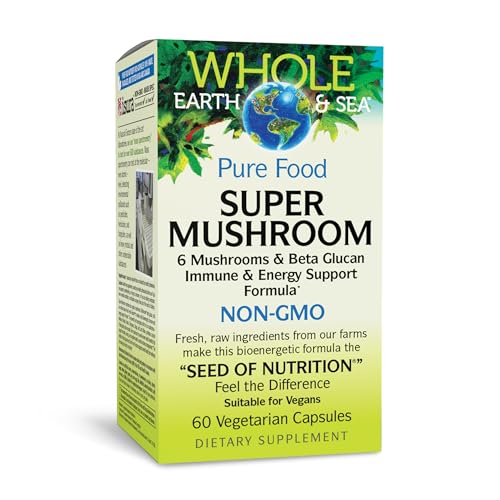
Dietary exclusions can also matter. Naturealm lists gluten-free and soy-free attributes, while NATURE TARGET lists gluten, dairy, soy, wheat, and peanut exclusions. FreshCap identifies organic, non-GMO, gluten-free, vegan, and Paleo-friendly attributes. Whole Earth & Sea from Natural Factors lists a particularly broad exclusion set, including wheat, gluten, yeast, soy, corn, egg, fish, shellfish, animal products, salt, tree nuts, and GMOs. These claims describe label composition; they do not replace checking the current package if you have a medically significant allergy.
Consider serving structure
Serving instructions affect how practical a product may be. Whole Earth & Sea states one capsule per day with food or as directed by a health professional. VEGATOT describes a one-capsule daily formula. FreshCap specifies two capsules per day, Nutricost Organic Reishi provides 120 capsules for 60 servings, and Naturealm describes three capsules per day for a 30-day supply. Youtheory lists 60 capsules as a 20-day supply, which corresponds to three capsules per day based on the supplied listing.
A larger capsule count does not necessarily mean a lower daily serving. Compare the stated serving size, capsules per serving, and amount per serving together. This is especially important for broad blends where the total amount is distributed across many mushroom species.
Testing language varies widely. FreshCap states third-party testing, Real Mushrooms says its beta-glucan figure is verified by third-party labs, and Naturealm says every batch is independently tested for purity and potency. Whole Earth & Sea states that every batch is third-party tested by ISURA for more than 800 contaminants. NATURE TARGET identifies an NSF and cGMP-certified facility and third-party testing. These details do not prove personal results, but they give you more information about how the listing describes quality control.
Other selected products provide less specific testing information. Double Wood identifies US growing and manufacturing, while Youtheory states that its ingredients are organic and its capsules are vegetarian. When comparing formulas, give more weight to evidence that identifies what was tested or what standard is referenced, rather than treating a general quality phrase as equivalent to a named testing detail.
Match the design to your priorities
For fruiting-body and extraction detail, FreshCap, Naturealm, and NATURE TARGET are the clearest fits. For a focused single mushroom, Real Mushrooms Lion’s Mane and Nutricost Organic Reishi provide distinct alternatives. For a full-lifecycle format, Rainbow Light is the selected example. For a broad species list, NATURE TARGET, VEGATOT, Rainbow Light, and Double Wood offer different approaches. For a formula that adds L-theanine, Youtheory is the relevant choice.
The top vegetarian mushroom supplements should therefore be judged by the evidence you value most: source material, measured markers, species breadth, capsule format, dietary exclusions, or testing detail. Keep the comparison tied to the listing specifications and avoid assuming that a broad blend or a larger stated amount answers every need.
Final Recommendation
NATURE TARGET 14-in-1 Mushroom Complex ranks first overall in this specification-based comparison under the published weighted criteria.
FreshCap Mushrooms Ultimate Mushroom Supplement is the first overall specification-based choice because it combines six named mushrooms, 100% whole fruiting bodies, a 12:1 extraction ratio, 29% beta-glucans, organic certification, and third-party testing. Naturealm Sacred 7 Mushrooms is a close fit for shoppers who want seven mushrooms with fruiting bodies only and a vegan label. NATURE TARGET 14-in-1 Mushroom Complex is the broadest documented blend, with 14 named mushrooms and 30% polysaccharides.
Among the more focused options, Real Mushrooms Lion’s Mane offers the clearest lion’s mane source and beta-glucan details, while Nutricost Organic Reishi provides a precise reishi serving amount. Whole Earth & Sea is notable for its whole-food positioning and ISURA testing statement. VEGATOT, Rainbow Light, and Double Wood give you broad blends with different capsule and ingredient-source approaches, and Youtheory adds a stated L-theanine amount. Together, these choices cover the main documented designs in this category. The best vegetarian mushroom supplements for you depend on which of those specifications aligns with your dietary and formulation preferences. These are the top vegetarian mushroom supplements in this comparison based on the supplied public listing evidence.
Frequently Asked Questions
What should I compare in the best vegetarian mushroom supplements?
Compare the named mushroom species, source material, extraction details, active-compound markers, capsule type, serving size, dietary exclusions, and testing statements. A product with more mushrooms is not automatically more transparent; the useful question is how specifically the listing describes each part of the formula.
Are fruiting bodies and mycelium the same design?
No. The selected listings describe them differently. FreshCap, Naturealm, and NATURE TARGET identify fruiting-body formulas, while Rainbow Light describes a full-lifecycle formula containing fruit bodies and mycelia. Review the exact source language if this distinction matters to you.
Is a single-mushroom capsule or a blend more suitable?
That depends on whether you prefer a focused ingredient profile or broader species coverage. Real Mushrooms Lion’s Mane and Nutricost Organic Reishi are single-mushroom examples. FreshCap, Naturealm, VEGATOT, Rainbow Light, Double Wood, and NATURE TARGET are blend examples with several named species.
What does a beta-glucan percentage tell me?
It is a stated marker of one compound group in the formula. FreshCap lists 29% beta-glucans, and Real Mushrooms lists more than 30% with third-party verification. Other products use different information, such as a total mushroom amount or a polysaccharide percentage, so those figures should not be treated as identical measurements.
How can I verify that a capsule suits a vegetarian diet?
Look for explicit wording such as vegetarian capsules, vegetable capsules, or vegan capsules. In this comparison, Youtheory and Nutricost Organic Reishi state vegetarian capsules, while FreshCap, Naturealm, NATURE TARGET, Rainbow Light, and Real Mushrooms state vegan formats. Check the current package for updated ingredient and allergen information.