Buying Guide
The best vegetarian bilberry supplements are not interchangeable. Public listings may describe whole fruit, leaf, concentrated extract, standardized anthocyanins, or a broader eye-support blend. Start by deciding which type of specification matters most to you, then compare the capsule material, amount information, supporting ingredients, and manufacturing details.
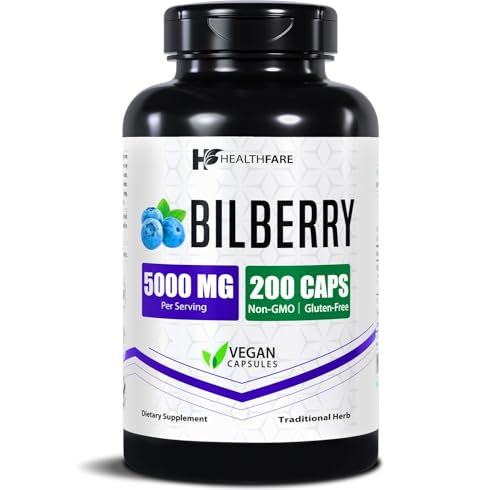
“Vegetarian” and “vegan” are useful clues, but the wording still deserves a close read. A vegan capsule claim generally gives clearer evidence that the shell does not contain gelatin. Oregon’s Wild Harvest, Pure Mountain Botanicals, Vision Defender BP, Nature’s Way, NOW Foods, NusaPure, and Healthfare explicitly document vegan or plant-based formats in their supplied listings. Supersmart, Piping Rock, and Nutricost identify vegetarian capsules.
If avoiding animal-derived ingredients is important, look for a direct vegan statement or a named plant-based shell such as HPMC. Vision Defender BP specifically identifies a plant-based HPMC capsule shell. A capsule count alone does not establish the capsule material, and a product described simply as a capsule should not automatically be treated as vegetarian.
Whole-fruit formulas can appeal to shoppers who want more of the named plant rather than only a concentrated fraction. Oregon’s Wild Harvest lists 640 mg of organic whole bilberry fruit together with 240 mg of bilberry fruit extract. Pure Mountain Botanicals takes a different whole-plant approach by combining 250 mg of organic bilberry leaf with 50 mg of bilberry fruit extract.
Extract-focused products may provide more specific concentration information. Supersmart lists 100 mg of Vaccinium myrtillus fruit extract in each vegetarian capsule and standardizes it to 25% anthocyanosides. Nature’s Way also lists a 25% anthocyanin standard, while Vision Defender BP documents 80 mg of bilberry extract standardized to 36% anthocyanins.
Do not compare milligram figures across products as if they represented the same material. A whole-fruit amount, a leaf amount, a 4:1 extract ratio, and a standardized extract are different types of information. Nutricost lists 300 mg of 4:1 bilberry extract per serving, while NusaPure lists 500 mg of bilberry extract per serving, but neither supplied listing states an anthocyanin percentage. That does not make the products invalid; it simply leaves a different part of the formula undocumented.
Look for Vaccinium myrtillus and standardization
Bilberry is commonly identified in technical listings by its botanical name, Vaccinium myrtillus. Oregon’s Wild Harvest, Supersmart, and Healthfare explicitly use that name or include it in the product evidence. A botanical name can help distinguish bilberry from other berry ingredients, especially in formulas with several plant extracts.
Standardization is another useful comparison point. It tells you that the listing declares a percentage of a named compound group, although it does not by itself establish how a product will affect an individual. The selected products with stated percentages include Oregon’s Wild Harvest at 25% anthocyanosides, Pure Mountain Botanicals at 25% anthocyanidins, Supersmart at 25% anthocyanosides, Nature’s Way at 25% anthocyanins, NOW Foods at 25% anthocyanins, and Vision Defender BP at 36% anthocyanins.
Several other selected products provide an amount or ratio without a standardization percentage. Piping Rock lists 2,400 mg per serving, Nutricost lists 300 mg of a 4:1 extract, and NusaPure lists 500 mg per serving. Healthfare identifies Vaccinium myrtillus but does not state an extract amount in the supplied evidence. These distinctions should remain visible when making a side-by-side choice.
Decide whether added ingredients fit your routine
A single-bilberry formula may be easier to evaluate when you want to keep the ingredient list narrow. Supersmart, Piping Rock, Nutricost, NusaPure, and Healthfare are positioned as relatively focused bilberry products in the supplied evidence, although the exact excipients are not equally detailed.
Combination formulas serve a different purpose. NOW Foods adds beta-carotene, riboflavin, carrot powder, and citrus bioflavonoids to standardized bilberry extract. Vision Defender BP combines bilberry with pine bark and provides standardization details for both extracts. Pure Mountain Botanicals combines organic leaf and fruit extract, while Oregon’s Wild Harvest combines whole fruit and fruit extract.
A broader blend can be useful if those additional ingredients match your preferences, but it can make it harder to isolate which ingredient matters to your personal plan. This guide names only the selected products when discussing design types so that every example can be checked in the product list above.
Review quality and manufacturing statements
Quality language varies from brief claims to detailed process information. Pure Mountain Botanicals describes batch testing with HPLC and ICP-MS screening and cites an NSF GMP-certified facility. Nutricost states third-party testing and production in an NSF-certified, GMP-compliant, FDA-registered facility. NOW Foods cites NPA A-rated GMP quality assurance and describes laboratory testing for stability, potency, and formulation.
Oregon’s Wild Harvest states that it uses verified non-GMO ingredients and manufactures in Oregon. NusaPure and Healthfare describe US manufacturing under GMP-related standards. Vision Defender BP identifies UK production in MHRA-inspected facilities following GMP standards. These statements are useful documentation points, but they should not be interpreted as independent verification beyond what each supplied listing says.
Serving information can affect how practical a product is for you. Oregon’s Wild Harvest lists two capsules daily with food. Supersmart lists two capsules daily. Nutricost lists 90 vegetarian capsules for 90 servings, and NusaPure lists 200 vegan capsules for 100 servings. These details make the intended routine relatively easy to understand.
Nature’s Way lists two capsules three times daily, which is a substantially different routine from a once- or twice-daily design. Pure Mountain Botanicals lists one to three capsules daily or use as directed by a healthcare professional. Always follow the product label and consult a qualified healthcare professional when appropriate, particularly if you are pregnant, nursing, taking medication, or managing an eye condition.
Final recommendation
Oregon’s Wild Harvest Bilberry Herbal Supplement ranks first overall in this specification-based comparison under the published weighted criteria.
The final choice among the best vegetarian bilberry supplements depends on the documented features that match your intended use.
Oregon’s Wild Harvest Bilberry Herbal Supplement is the highest-scoring returned product and the first overall specification-based choice. Its combination of organic whole fruit, a defined bilberry extract, 25% anthocyanosides, vegan capsules, and detailed allergen exclusions gives it the most complete profile in this comparison.
The top vegetarian bilberry supplements also include Pure Mountain Botanicals for its organic leaf-and-fruit design, Vision Defender BP for dual standardized extracts, and Nature’s Way for its clearly stated vegan and anthocyanin specifications. Supersmart is a focused standardized fruit-extract option, while NOW Foods suits shoppers who want added beta-carotene and riboflavin.
Piping Rock, Nutricost, NusaPure, and Healthfare are worth considering when capsule count, serving amount, or manufacturing location is more important than an explicitly stated anthocyanin percentage. The key is to compare like with like: whole plant material against whole plant material, extract ratios against extract ratios, and standardized percentages against other standardized percentages. This is a listing-based editorial comparison, not a laboratory analysis or hands-on test.
Frequently Asked Questions
What should I check first in the best vegetarian bilberry supplements?
Check whether the listing directly identifies a vegetarian or vegan capsule, then review the bilberry form and amount. A product may contain whole fruit, leaf, a concentrated extract, or a mixture. Standardization details such as 25% or 36% anthocyanins can add useful context, but products without a stated percentage may still document other relevant information, such as an extract ratio or serving amount.
Are vegan and vegetarian bilberry capsules the same?
Not necessarily. Both terms indicate a plant-oriented product claim, but vegan labeling is more specific about excluding animal-derived ingredients. In this selection, Vision Defender BP names a plant-based HPMC shell, while Supersmart, Piping Rock, and Nutricost use vegetarian wording. Check the full label if you need to avoid particular excipients.
Is a higher bilberry milligram amount automatically preferable?
No. The number may refer to whole fruit, leaf, extract, or an extract ratio, and these are not directly equivalent. For example, Oregon’s Wild Harvest lists whole fruit plus extract, Nutricost lists a 4:1 extract, and Vision Defender BP lists an extract standardized to 36% anthocyanins. Compare the type of material and the available standardization information instead of relying on milligrams alone.
NOW Foods includes standardized bilberry extract with beta-carotene, riboflavin, carrot powder, and citrus bioflavonoids. Vision Defender BP combines bilberry and pine bark, while Pure Mountain Botanicals combines bilberry leaf and fruit extract. These designs may suit different ingredient preferences than a focused product such as Supersmart, but broader formulas also contain more components to review.
Do the best vegetarian bilberry supplements require professional guidance?
Follow the label directions and seek advice from a qualified healthcare professional when needed. The supplied Pure Mountain Botanicals listing specifically says to use the product as directed by a healthcare professional, and it advises consultation in certain circumstances. Supplements should not replace evaluation or treatment for persistent vision changes or other medical concerns.