Buying Guide
The best workout exercise balls are not interchangeable. A 9-inch Pilates ball supports targeted movements between the knees, hands, or lower back, while a 55- to 75-cm stability ball is intended for larger balance, core, stretching, and seated exercises. A half-ball trainer uses a flat base and can add resistance-band work. Start by identifying the movement pattern you expect to use most often, then compare diameter, surface texture, construction language, and included setup equipment.
Choose the right design
Full-size round stability balls are the most flexible choice for general home fitness. The ProBody Pilates Yoga Ball, APEXUP Yoga Ball, Fitvids Exercise Ball, and Trideer full-size models are all listed for combinations of core training, balance work, stretching, yoga, Pilates, or active sitting. Their usefulness depends heavily on selecting a diameter that suits the user’s height and the intended exercise.
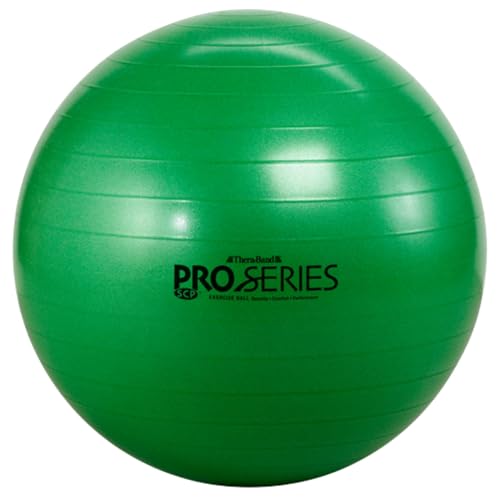
The THERABAND Pro Series takes a more focused approach with a documented 26-inch size for users between 5 feet 7 inches and 6 feet 1 inch. That clear guidance may be useful when a shopper does not want to compare several diameters. By contrast, ProBody and APEXUP provide five size choices, while the Fitvids listing provides a range from child and shorter-user sizes through larger adult sizes.
A small Pilates ball is a different tool rather than a smaller substitute for a stability ball. The ProBody Pilates Ball Small is intended for targeted positioning and resistance exercises, including placement between the knees or hands. It is easier to store and carry, but it is not presented as a replacement for a full-size ball used as an active seat.
The VEVOR Half Exercise Ball Trainer is also a distinct design. Its flat base and included resistance bands support balance and strength exercises, but shoppers should expect the movement experience to differ from a fully round ball. The kisnbld set combines both formats by including a large ball and a 9-inch ball, which may suit households that want equipment for varied routines.
Compare construction and grip
Look for explicit construction details rather than assuming that every inflatable ball has identical behavior. Several selected listings describe anti-burst or slow-deflate construction. ProBody, Trideer, APEXUP, YOTTOY, and Fitvids each provide evidence about materials or puncture behavior, although these are manufacturer or listing claims rather than independent test results.
Surface design matters for balance work. Trideer’s full-size ball lists anti-slip stripes and a frosted texture. APEXUP describes a textured anti-slip surface, while YOTTOY lists an improved anti-slip texture. Fitvids identifies commercial-grade slip resistance, and THERABAND describes a slight texture. These descriptions can help narrow the field, but they do not establish identical traction on every floor or during every movement.
A textured surface may also affect cleaning and handling. Fitvids and THERABAND state that their surfaces can be wiped with a damp cloth. Several listings caution against prolonged contact with wood or painted surfaces, so follow the individual product instructions and keep the ball away from sharp objects and pets.
Check size before ordering
Diameter is one of the most important specifications. ProBody lists sizes from 45 to 85 cm and gives height guidance for each size. APEXUP also lists five sizes from 45 to 85 cm. Fitvids provides several options from 38-45 cm through 78-85 cm. These ranges offer more flexibility than a single-size ball, but the shopper still needs to select the correct option at checkout.
The 65 cm size appears in several selected products, including the ProBody 65 cm ball and THERABAND’s 26-inch ball. The Trideer listings include common adult sizes, while YOTTOY’s selected listing specifies a 26-inch, 58-65 cm format. If the ball will be used as a chair, consider both user height and the desk or table height; an exercise ball that works for floor exercises may not create a comfortable seated position at every workstation.
Small balls are measured differently in practical use. The selected ProBody compact ball is 9 inches, a size used for targeted Pilates and rehabilitation-style movements. It can be useful in a small space, but it does not provide the same seated support or large balance surface as a full-size model.
Review the inflation package
Included equipment can make initial setup easier. The ProBody full-size ball includes a dual-action pump, two plugs, a stopper remover, and an exercise guide. APEXUP includes a pump and two plugs. Trideer’s first full-size listing includes a pump, two stoppers, and instructions, with the pump type varying by size. Fitvids and YOTTOY include foot pumps, while the kisnbld set includes a foot pump, straws, plugs, a plug puller, and manuals.
Do not assume that every selected model includes the same accessories. The THERABAND listing describes inflation instructions but does not state that a pump is included. The compact ProBody ball is designed for small-scale use, while the VEVOR trainer includes a pump along with resistance bands. Check the exact selected size and package contents before buying.
Match the ball to your routine
For general fitness and active sitting, prioritize a full-size ball with clear size guidance, grip information, and slow-deflate or anti-burst construction details. For yoga, Pilates, and balance work, surface texture and diameter are especially relevant. For targeted rehabilitation-style exercises, a compact ball may be more practical than a large stability ball. For strength training, the VEVOR half-ball format adds resistance bands, while the kisnbld set offers two ball sizes in one package.
Remember that listing specifications do not replace exercise instruction. Pregnancy, postpartum, physical therapy, and rehabilitation uses may require guidance from a qualified professional. Inflate the ball according to its instructions, inspect it before use, and use it on a suitable surface.
Final Recommendation
Trideer Exercise Ball for Yoga and Fitness ranks first overall in this specification-based comparison under the published weighted criteria.
The ProBody Pilates Yoga Ball 65cm is the first overall specification-based choice among these best workout exercise balls because it combines five size options, slow-deflate construction, a pump, and unusually broad documented uses. APEXUP is a strong alternative for shoppers who want five sizes and a textured surface, while Fitvids emphasizes slip resistance and setup support. Choose THERABAND when the documented 65 cm fit is right, YOTTOY when pregnancy-oriented features matter, and the ProBody compact ball when targeted Pilates or therapy-style movements are the priority. For the top workout exercise balls with added variety, kisnbld’s two-ball set and VEVOR’s half-ball trainer offer the most distinct packages.
Frequently Asked Questions
What size should I choose for the best workout exercise balls?
Use the manufacturer’s height guidance whenever it is supplied. ProBody documents choices from 45 to 85 cm, and APEXUP lists the same broad range. THERABAND identifies its 26-inch ball for users from 5 feet 7 inches to 6 feet 1 inch. If you plan to sit on the ball, also consider desk height and the posture you can maintain comfortably.
Are small Pilates balls the same as full-size exercise balls?
No. A 9-inch ball such as the selected ProBody Pilates Ball Small is intended for targeted exercises between the knees, hands, or lower back. Full-size balls are designed for larger balance, core, stretching, and active-sitting movements. The kisnbld set includes both formats for shoppers who want to combine those uses.
Which top workout exercise balls include a pump?
The ProBody full-size ball, APEXUP, Fitvids, YOTTOY, kisnbld, and VEVOR listings document included pumps. Trideer’s first selected listing includes a pump with the type depending on size. THERABAND’s supplied evidence gives inflation instructions but does not state that a pump is included, so verify package contents before ordering.
Can I use an exercise ball as an office chair?
Several selected listings describe active sitting, including ProBody, Trideer, APEXUP, YOTTOY, THERABAND, and kisnbld. A ball’s diameter should suit both your height and desk setup. Active sitting can feel different from a conventional chair, so begin cautiously, keep the ball on an appropriate surface, and follow the product’s safety instructions.
What should I inspect before using an inflatable ball?
Check the surface for visible damage, confirm that the plug is secure, and inflate it according to the supplied instructions. Keep it away from sharp objects, pets, and surfaces that the listing warns may cause damage. For pregnancy, postpartum, physical therapy, or rehabilitation routines, seek appropriate professional guidance before use.