Buying Guide
Choosing the best yoga foam rollers starts with the type of movement you want to support. A roller can be used for mobility drills, balance work, stretching, self-massage, or recovery routines, but size and surface design change how it fits into each activity. The products above are compared from listed specifications and features, not from hands-on testing.
Match the roller length to your practice
Length is one of the clearest practical differences. The Gaiam Restore 36-Inch Foam Roller provides the broadest documented coverage in this selection and is intended for the back, arms, legs, glutes, calves, and quads. That makes a 36-inch format useful for home routines where stability and body coverage matter more than compact storage.
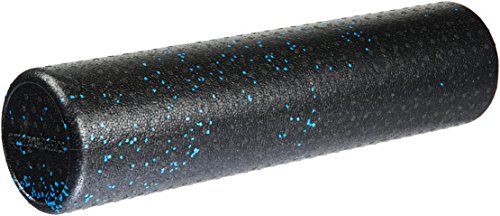
A 24-inch roller, such as the Amazon Basics 24-Inch High-Density Foam Roller, offers a middle ground. It is longer than a travel roller and is listed for balance, strengthening, and flexibility exercises, while remaining less cumbersome than a full-length model. Eighteen-inch rollers, including the ProsourceFit 18-Inch High-Density Foam Roller and OPTP PRO-Roller Soft Density 18-Inch, can provide useful coverage without taking as much room.
Compact models are better suited to isolated areas and portability. The Gaiam Restore Compact Textured Foam Roller measures 12 by 4 inches, while the Oceanfoam Ripple Travel Foam Roller is 11 inches long with a 3.35-inch diameter. These dimensions can be convenient for a gym bag, travel, or smaller muscle groups, but they may not support broad back movements as effectively as longer designs.
Choose pressure and density deliberately
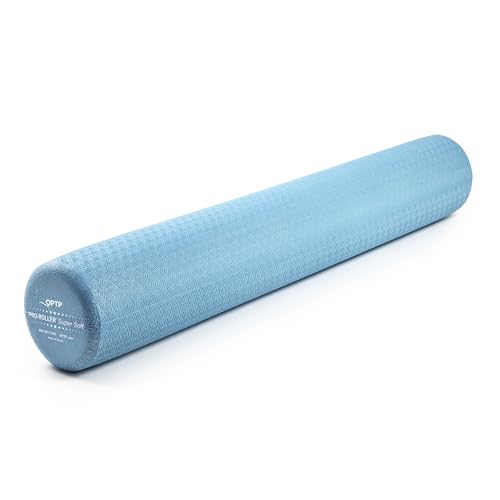
Density affects the expected feel, although a listing cannot replace personal experience. The OPTP PRO-Roller Soft Density 18-Inch is explicitly described as soft and is positioned for rehabilitation, self-massage, mobility, and beginner-friendly use. The ProsourceFit Flex Foam Roller is described as providing moderate pressure, another potentially approachable option for users learning technique.
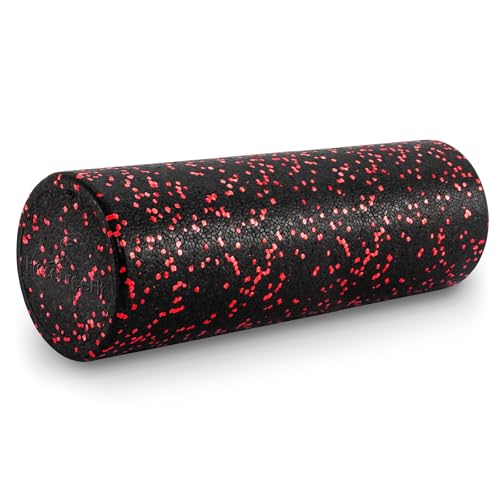
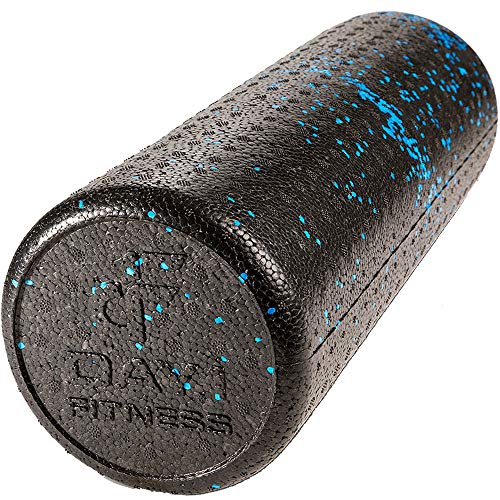
High-density EPP and polypropylene models generally emphasize firm support. The ProsourceFit 18-Inch, Day 1 Fitness High-Density 12-Inch Roller, and Amazon Basics 24-Inch High-Density Foam Roller all document firm or high-density construction. This may be useful for users who want a stable platform for balance or more consistent pressure during rolling.
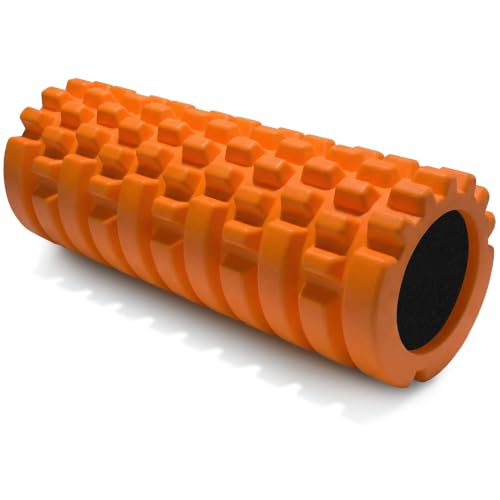
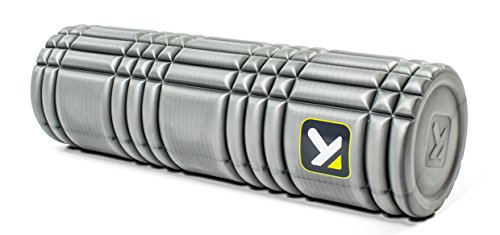
Textured and hollow-core designs can feel more focused. The TriggerPoint GRID 1.0 Foam Roller uses a three-dimensional pattern and a hollow core, while the 321 STRONG 3-Zone Massage Roller uses three projection sizes. These designs provide more contact variation than smooth cylinders. However, more texture is not automatically better for every yoga routine; sensitive users may prefer a smooth or soft-density option.
Consider smooth, light-textured, or zoned surfaces
Smooth rollers are simple and versatile. The Gaiam Restore 36-Inch model is described as smooth yet firm, and the Amazon Basics 24-Inch model has molded edges for comfort. These designs can be sensible when the main goal is support during flexibility, balance, or general mobility exercises.
Light texture adds some surface definition without the pronounced ridges found on deep-tissue rollers. The Gaiam Restore Compact Textured Foam Roller uses a light texture for smaller areas. It may appeal to users who want a compact massage tool but do not need multiple pressure zones.
For more targeted work, the TriggerPoint GRID 1.0, 321 STRONG, and Oceanfoam Ripple offer documented ridges, nodules, projections, or wave texture. The 321 STRONG is particularly distinct because its three zones are described as varying from fingertip-like to palm-like contact. The TriggerPoint GRID similarly provides multiple surface areas to rotate into position. These rollers are more specialized than a smooth cylinder and should be selected for their targeting options rather than assumed comfort.
Think about yoga-specific versatility
Yoga use can mean several things: supporting balance, assisting stretching, improving body awareness, or adding a recovery tool to a broader routine. The ProsourceFit Flex Foam Roller has the most specification-aligned design-specific evidence for balance and stabilization because it is a half-round model listed for balance exercises, spinal alignment, and body awareness. It may suit users who want the roller to participate directly in exercise drills.
The ProsourceFit 18-Inch model also lists Pilates core exercises, balance assistance, and body awareness. The Amazon Basics 24-Inch model is documented for balance, strengthening, and flexibility. These examples show why a standard cylindrical roller can still be useful for yoga without needing a massage-specific texture.
For recovery-oriented yoga sessions, the OPTP PRO-Roller and Gaiam Restore models emphasize mobility, rehabilitation, stretching, and self-massage. A compact roller such as the Oceanfoam Ripple or Day 1 Fitness model may be easier to keep beside a mat or carry between classes.
Check materials and cleanup details
Construction details help with practical ownership. Closed-cell foam is a recurring feature in the OPTP PRO-Roller and 321 STRONG, while the TriggerPoint GRID uses an EVA-foam wrap around a hollow core. The listings describe the OPTP model as easy to wipe clean and the 321 STRONG as water-resistant and easy to clean.
The ProsourceFit high-density models use EPP and are described as water-resistant. Amazon Basics specifies polypropylene, wipe-clean care, and molded edges. Oceanfoam identifies recycled foam and an algae-based outer layer. These material details do not prove long-term performance, but they help distinguish maintenance and construction approaches from one product to another.
Final recommendation
321 STRONG 3-Zone Massage Roller ranks first overall in this specification-based comparison under the published weighted criteria.
The final choice among the best yoga foam rollers depends on the documented features that match your intended use.
The TriggerPoint GRID 1.0 Foam Roller is the highest-scoring returned product and the first overall specification-based choice. Its combination of a 13-inch size, varied GRID surface, multi-density zones, EVA construction, and repeated-use positioning gives it the most complete feature set for targeted mobility and recovery work.
The top yoga foam rollers are not interchangeable. Choose the Gaiam Restore 36-Inch Foam Roller when broad coverage is the priority, the OPTP PRO-Roller Soft Density 18-Inch for a gentler density, or the ProsourceFit Flex Foam Roller when balance and stabilization are central. For portable use, the Oceanfoam Ripple Travel Foam Roller and Gaiam Restore Compact Textured Foam Roller offer the clearest compact formats. If you prefer firm, conventional foam, the ProsourceFit 18-Inch and Day 1 Fitness High-Density 12-Inch Roller provide straightforward alternatives.
These recommendations remain specification-based. The supplied listings describe materials, sizes, textures, and intended uses, but they do not establish that one roller will feel comfortable or effective for every person. Consider your sensitivity to pressure, available storage, and the movements you plan to perform before choosing.
Frequently Asked Questions
What should beginners look for in the best yoga foam rollers?
Beginners may want moderate or soft density and a shape that supports controlled practice. The ProsourceFit Flex Foam Roller is listed for beginners and moderate pressure, while the OPTP PRO-Roller Soft Density 18-Inch is explicitly described as soft and suitable for rehabilitation. Smooth surfaces may also be easier to approach than pronounced ridges, although individual comfort can vary.
Is a longer roller better for yoga?
Not necessarily. A longer roller can provide more support and coverage, as shown by the 36-inch Gaiam Restore model, but it requires more storage space. A compact 12-inch or 18-inch model may be easier to carry and can work well for isolated muscles, travel, and smaller practice areas. Select length according to your intended movements rather than assuming longer is always preferable.
Are textured foam rollers suitable for yoga?
Textured rollers can support targeted self-massage and mobility work, but they are not required for yoga. The TriggerPoint GRID 1.0 and 321 STRONG 3-Zone Massage Roller document varied surface patterns for targeted contact. Smooth rollers such as the Gaiam Restore 36-Inch model may be more appropriate when you primarily want broad support for stretching, balance, or positioning.
Which roller is easiest to take to class or travel with?
Compact models are generally the most convenient according to their listed dimensions. The Oceanfoam Ripple Travel Foam Roller is 11 inches long, and the Gaiam Restore Compact Textured Foam Roller is 12 inches long. The Day 1 Fitness High-Density 12-Inch Roller is another portable conventional cylinder. A longer 24-inch or 36-inch roller may be more difficult to fit into a small bag or limited storage area.
How should I choose between EPP and EVA foam?
The listings document both materials in this comparison, but material names alone do not determine which roller is best for you. EPP appears in the ProsourceFit and Day 1 Fitness models, while EVA is used in the OPTP, TriggerPoint, and 321 STRONG designs. Compare the complete specification set, including density, texture, length, shape, and cleaning information, rather than selecting from material alone.