Buying Guide
The best 1-inch raw lumber is the material that fits the project before you begin cutting. In this comparison, “1-inch” appears in several forms: square turning blanks, thin-sawn boards, and larger dimensional lumber. Those formats are not interchangeable. A 1 x 1 x 12-inch blank is suited to small lathe work or short components, while a 1 x 5 x 7-foot board is intended for much longer layouts. Read the full size rather than shopping by thickness alone.
Start with length and width. The Indian Rosewood Turning Blanks are 1 x 1 x 12 inches and supplied in a 12-piece set, so they are a logical fit for repeated small turning or craft work. The Birds Eye Maple board is 1 x 1.5 x 16 inches, giving slightly more width while remaining a compact piece. Sapele at 1 x 2 x 12 inches and East Indian Rosewood at the same nominal dimensions are also oriented toward small components.
For longer pieces, the Cherry and Spanish Cedar boards both measure 1 x 3 x 36 inches. Hard Maple expands the working area to 5 inches wide at the same 36-inch length. Ambrosia Maple measures 1 x 4 x 36 inches and is listed as a two-piece unit. Leopardwood occupies a middle position at 1 x 3 x 24 inches. These dimensions can help with panels, decorative strips, furniture details, and other parts where a short turning blank would create unnecessary joints.
The Sunrise Teak board is the outlier for scale. It is listed as 1 x 5 x 7 feet and S4S, making it the most suitable selected option for long layouts. However, its specifications also list a 0.87-inch height. Treat the nominal size and measured listing dimensions as different pieces of information, and confirm the actual stock size before designing a tight-fitting joint.
Consider how the lumber was prepared
Preparation affects the work remaining after delivery. Several selected products document kiln drying. The Indian Rosewood Turning Blanks, Hard Maple, Cherry, Black Palm, and Birds Eye Maple listings all provide kiln-drying evidence, although the amount of supporting detail varies. Birds Eye Maple goes further by listing a moisture content of 6% to 8%. Black Palm lists 6% to 7% moisture content and identifies the botanical name as Borassus flabellifer.
Pre-sanding is another meaningful distinction. The Indian Rosewood turning set is described as prepared and sanded, while Hard Maple and Cherry are described with pre-sanded surfaces. That can reduce initial surface preparation, but it does not establish a final finish or guarantee that every piece will need no additional sanding. The East Indian Rosewood pack is described as air-dried and thin-sawn, which is a different preparation route from kiln drying. Buyers should allow for acclimation and inspect the stock before machining.
S4S is documented for Sunrise Teak. That designation is useful when a project benefits from prepared faces and edges, but it does not remove the need to verify thickness. The Spanish Cedar, Ambrosia Maple, Sapele, and Leopardwood listings provide clear size or species information but less detail about drying and surface preparation. Their scores reflect that evidence gap rather than a claim that the wood is unsuitable.
Choose the species by the visual and design role
Species selection is primarily a design decision in this data set. The selected range includes Indian Rosewood, Sapele, Cherry, Spanish Cedar, Hard Maple, Ambrosia Maple, Leopardwood, Birds Eye Maple, and Teak, plus the distinctive Black Palm turning blanks. Listings identify some botanical names, including Birds Eye Maple as Acer saccharum and Black Palm as Borassus flabellifer. Do not infer color, hardness, grain behavior, or finishing results beyond what the listing states.
For decorative variety, figured or distinctive species may be attractive starting points, but the supplied evidence does not document how each piece will look beyond limited color fields and species names. Birds Eye Maple is explicitly named, while Sunrise Teak is listed as natural teak with a golden-brown color claim in its features. The Ebony listing was not selected because it supplied almost no supporting feature or specification evidence beyond a short title and size.
Check quantity before ordering
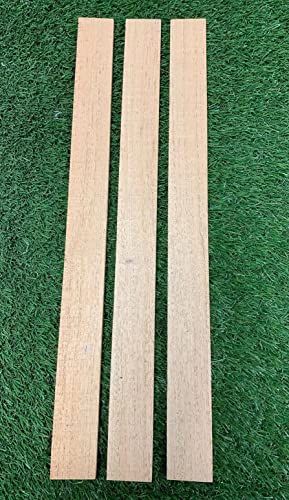
Quantity changes the practical value of a lumber listing. The Indian Rosewood turning set and Black Palm turning blanks each list 12 pieces. The East Indian Rosewood option lists three pieces, and Ambrosia Maple lists two. Multi-piece formats are useful when a project needs matched starting dimensions or when you want allowance for selection and cutting. They still do not prove that every piece will be visually identical.
Single-board listings can be preferable when a continuous length matters. Cherry, Spanish Cedar, Hard Maple, and Sunrise Teak all offer longer individual formats. A single 36-inch board may be easier to plan around than multiple short blanks, while the seven-foot teak board is aimed at an entirely different scale. Review the unit count as carefully as the listed dimensions.
Plan for measurement and acclimation
Product titles and specifications sometimes describe nominal dimensions differently. The Teak listing is the clearest example: its title gives a 1-inch nominal thickness, while the item dimensions list 0.87 inches. Other listings use phrases such as “thin stock” or “turning blanks,” which describe a product type rather than a universal finished tolerance. Measure the delivered material before cutting joinery or ordering a matching part.
Drying information is also not uniform. Kiln-dried products document one preparation method; the East Indian Rosewood pack states that it is air dried; several boards do not state a drying method in the supplied evidence. Store and condition raw lumber according to your normal woodworking practice, and avoid assuming that a brief product listing answers every moisture or movement question.
How this comparison was scored
This is a specification-based comparison using public listing data, not a hands-on test and not a summary of customer opinions. Products were first screened for semantic fit with 1-inch raw lumber and grouped by non-empty parent identifier. The editorial criteria are dimensional fit, preparation and stability evidence, project versatility, specification detail, and format or quantity utility. The scores do not use ratings, review totals, purchase activity, badges, or other marketplace popularity signals. The final ordering favors documented utility while keeping claims within the supplied evidence.
Final Recommendation
Indian Rosewood Turning Blanks, 12-Piece Set ranks first overall in this specification-based comparison under the published weighted criteria.
Indian Rosewood Turning Blanks, 12-Piece Set is the highest-scoring returned product and the first overall specification-based choice. Its 1 x 1 x 12-inch size, 12-piece format, and documented kiln-dried, precision-cut, sanded preparation make it the most complete small-project package in this group.
Hard Maple is the better fit when a wider 36-inch board is more useful than a pack of short blanks. Cherry and Spanish Cedar provide similar length with a narrower 3-inch width, while Ambrosia Maple adds a two-piece 4-inch-wide format. For compact projects, Sapele, Birds Eye Maple, and East Indian Rosewood offer manageable dimensions. Leopardwood fills the 24-inch middle ground. Sunrise Teak is the top 1-inch raw lumber choice for long stock, provided its listed 0.87-inch height is acceptable after verification.
In short, select by the complete dimensional profile, preparation evidence, and unit count. The best 1-inch raw lumber for a lathe project may be a square blank, while a furniture detail may call for a long, wide board. Confirm dimensions and condition before committing to precise joinery.
Frequently Asked Questions
What should I check first when buying the best 1-inch raw lumber?
Check the complete width and length, not only the one-inch designation. Then review whether the listing documents kiln drying, air drying, pre-sanding, S4S preparation, moisture content, and unit count. The selected products vary substantially: some are 12-inch turning blanks, while others are 36-inch boards or a seven-foot board.
Are turning blanks the same as thin stock boards?
No. Turning blanks are commonly presented as compact square pieces, such as the Indian Rosewood and Black Palm formats. Thin stock boards are longer, wider boards such as Cherry, Hard Maple, Spanish Cedar, and Leopardwood. Both can be raw lumber for woodworking, but their shapes support different starting applications.
Is kiln-dried lumber always the right choice?
Not automatically. Kiln-drying is documented for several selected products and can be useful information when planning material condition, but the supplied listings do not establish a universal performance result. East Indian Rosewood is described as air dried, while some products do not state a drying method. Inspect and condition the material for your project.
Which selected product is best for a long project?
Sunrise Teak has the longest listed format at 1 x 5 x 7 feet and is described as S4S, so it is the clearest long-stock option. Its listed height is 0.87 inches, however, so verify the actual dimensions before relying on it for a full-inch component. Hard Maple and Cherry are more compact 36-inch alternatives.
How many pieces should I buy?
Choose quantity based on the number of components and how much selection allowance you need. Indian Rosewood and Black Palm list 12 pieces, East Indian Rosewood lists three, and Ambrosia Maple lists two. A single long board may be preferable when the project requires an uninterrupted length rather than several short blanks.