Buying Guide
Choosing among the best 3-ring d-ring binders starts with the documents you need to store and how often you will open, close, or rearrange the rings. The products in this comparison are all genuine three-ring D-ring binders, but their capacities, mechanisms, cover designs, and pack sizes differ substantially. Treat the specifications as a planning tool rather than a hands-on performance claim.
Match ring size to the paper load
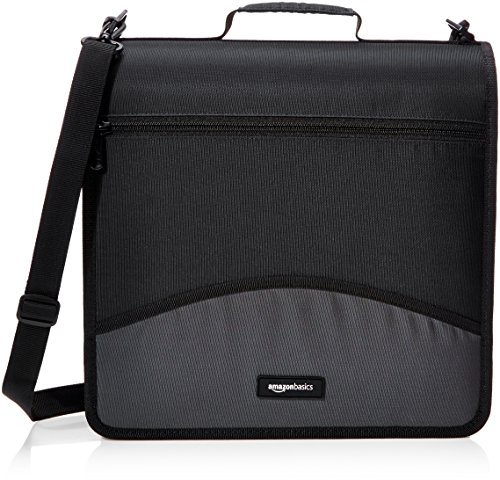
Capacity is the clearest dividing line. The Samsill 4-inch binder is documented at up to 775 letter-size sheets, while the Avery 3-inch models and Sooez 3-inch model are documented around 670 or more sheets. SUNEE lists capacity up to 650 sheets, and the Amazon Basics 3-inch binders list up to 600 sheets per binder. These larger formats are appropriate for thick project files, course materials, records, or documents that will grow over time.
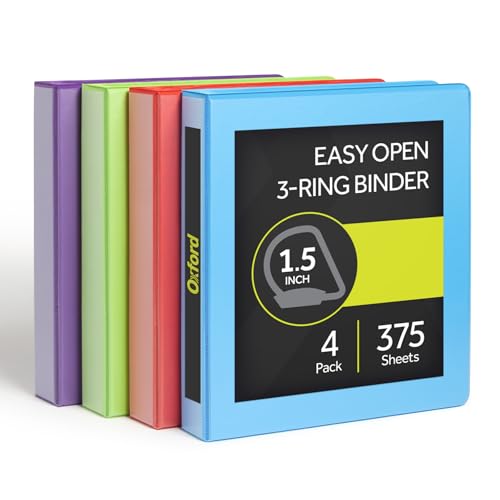
A 2-inch binder is often a better compromise when a 3-inch model would be unnecessarily bulky. The Oxford single binder lists up to 540 sheets, the Avery 2-inch binder lists 540 sheets, and the Oxford four-pack lists 530 sheets per binder. A 1.5-inch product such as the Oxford set lists up to 375 sheets, which can work well for presentations, reports, and separate subject files. Smaller capacities are easier to divide across several binders and may be more convenient on a desk or in a backpack.
Consider how pages enter the binder
Ring access matters when pages are frequently added or removed. Avery’s EZD mechanism and Oxford’s ONE-TOUCH mechanism are explicitly described as opening and closing with a single touch or press. Those designs are especially relevant for active school notes, rotating meeting materials, and working project files. The Oxford 2-inch single binder uses Slant-D rings, while the other listings describe D-ring mechanisms without always naming a special opening feature.
A D-ring shape can help pages sit more evenly than a basic round-ring layout, but this comparison does not independently test page alignment or turning. Use the documented mechanism as the basis for your decision, and allow extra room rather than filling a binder to its stated maximum if you expect frequent additions.
Look for construction details that fit your routine
The Avery Heavy-Duty View models document DuraHinge spines and DuraEdge edges. Oxford models document XtraLife hinges designed to resist splits or cracks at the seams. The Samsill binder adds a lay-flat spine, rivetless construction, and double boosters. These are useful distinctions for binders that will be opened regularly or carry a substantial file.
Other products emphasize different construction priorities. Sooez describes a reinforced mechanism and flexible material, while SUNEE describes sturdy material, rounded edges, and moisture- and dust-resistant construction. These claims come from the supplied listings; they should not be read as independent durability test results. For a shared office or classroom, hinge reinforcement and a secure ring closure may matter more than decorative color. For occasional home filing, a simpler construction can be sufficient.
Decide whether clear-view covers are useful
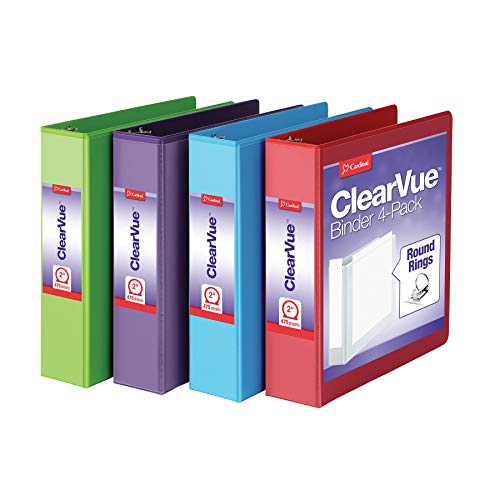
Clear front, back, and spine panels let you insert labels, project titles, or presentation covers. Avery, Oxford, SUNEE, Sooez, and Samsill listings document some form of view cover or clear customization area. This design is useful when files change subjects or need to be identified from a shelf. Oxford’s ClearVue format and Avery’s customizable clear covers are particularly explicit about three-sided labeling.
A clear-view binder is not automatically the right choice for every file. If the binder will be stored in a drawer and identified by a permanent label, cover customization may be less important than capacity or pockets. For presentations, reports, and color-coded school organization, the extra labeling surface can make the binder easier to sort.
Check pockets and material claims
Interior pockets are useful for loose handouts, unpunched sheets, notes, or small papers. Avery’s white 3-inch model documents four clear interior pockets. Oxford models document two interior pockets or extra storage pockets, while SUNEE lists two pockets and the Amazon Basics 3-inch model lists two. The Samsill listing also documents two clear pockets. These pockets add flexibility, but they do not replace a larger filing section for punched pages.
The listings associate these features with preserving pages or reducing ink transfer. Samsill additionally identifies 100% recycled fiberboard, while Sooez describes PVC-free, BPA-free, and recyclable materials. Material claims can help buyers narrow options when document storage or environmental preferences are part of the decision.
Choose between a single binder and a pack
Pack size changes the practical use of a binder. The SUNEE and Oxford products provide four-binder sets, making them suitable for several subjects, departments, or projects. The Amazon Basics 3-inch product provides two binders. Single-binder options such as the Avery 2-inch, Oxford 2-inch, and Sooez are easier to match to one specific filing need.
A multi-pack can simplify color coding, but it may leave unused binders if your filing system is small. Conversely, purchasing one high-capacity binder at a time may be more suitable when each project has a different paper load. Confirm the listed unit count and capacity before choosing based on pack convenience.
Final Recommendation
Avery Heavy-Duty View 3-Inch Binder, White ranks first overall in this specification-based comparison under the published weighted criteria.
Avery Heavy-Duty View 3-Inch Binder, White is the first overall specification-based choice among these best 3-ring d-ring binders. Its documented 670-sheet capacity, one-touch EZD rings, DuraHinge spine, DuraEdge edges, full-coverage panels, and four pockets give it the most balanced feature set for frequent general use.
Choose the Samsill Durable 4-Inch D-Ring Binder when maximum documented capacity is the priority, or choose the Sooez BinderX when high capacity and PVC-free, recyclable material claims are central. SUNEE is a practical multi-pack for color-coded filing. The black Avery is a strong alternative when a textured, formal finish is preferred.
For a smaller footprint, compare the Oxford and Avery 2-inch options. Oxford adds one-touch access in a four-pack, while Avery offers heavy-duty construction and four pockets in a single binder. The Amazon Basics 3-inch pair keeps the feature set straightforward. For moderate files, the Oxford 1.5-inch four-pack provides clear-view covers, pockets, and 375-sheet capacity. Together, these top 3-ring d-ring binders cover the main specification trade-offs without relying on ratings or customer sentiment.
Frequently Asked Questions
What size should I choose among the best 3-ring d-ring binders?
Choose by expected paper volume. The 3- and 4-inch models are aimed at large collections, with documented capacities from 600 to 775 sheets in selected listings. A 2-inch binder offers a middle ground around 530 to 540 sheets. A 1.5-inch binder lists up to 375 sheets and may be easier to carry or divide among subjects. Leave some room for future additions instead of selecting a size that will be full immediately.
Are one-touch rings worth considering?
They can be useful when you regularly add, remove, or rearrange pages. Avery’s EZD and Oxford’s ONE-TOUCH mechanisms are specifically described as opening and closing with a single press or touch. This is a documented convenience feature, not a claim about long-term performance. If pages rarely change, capacity, pockets, and cover style may deserve more weight than ring-opening speed.
Do clear-view covers make a difference?
Clear front, back, and spine panels provide places for inserts and labels. They are useful for shelf identification, presentations, and projects that change over time. Avery, Oxford, SUNEE, and Samsill selected products document clear-view customization in various forms. If your binder will remain inside a drawer or use a permanent external label, the benefit may be less important.
Which selected binders include interior pockets?
The supplied evidence documents pockets for many selected products. Avery’s white 3-inch model lists four clear interior pockets; Avery’s white 2-inch model also lists four. Oxford, SUNEE, Samsill, and Amazon Basics models document two pockets or extra storage pockets. The black Avery 3-inch listing does not specify interior pockets, so it is better selected for its capacity, finish, and construction features.
Is a multi-pack better than a single binder?
A multi-pack is useful when you need separate binders for subjects, departments, or projects. Oxford and SUNEE offer four-pack formats, while Amazon Basics offers a two-pack among the selected products. A single binder may be more efficient for one large file or when you want to choose a capacity precisely. Compare the unit count with your actual filing plan before prioritizing pack size.