Buying Guide
Choosing among the best inch exercise mats comes down to matching a mat’s dimensions, thickness, and material to the way you actually train. The picks above share a wide-format footprint near 48 inches across, which opens up space for full-body movement, but they differ meaningfully in cushion depth, surface traction, and build weight. Use the sections below to translate listing details into a confident decision.
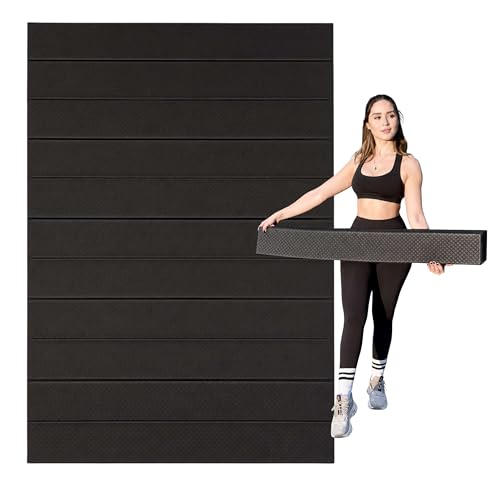
A 48-inch width is the defining trait of this category, and it matters most when your training involves wide stances, supine floor work, partner routines, or shared household use. Every product in this guide offers roughly 72 by 48 inches of usable area, which is significantly more space than a standard mat. If your routines are limited to seated meditation or compact standing sequences, a narrower mat may suffice, but for yoga flows, pilates, stretching, and light cardio, the wider footprint prevents constant repositioning.
Consider this elongated format only when floor protection under heavy gear is the priority, since it changes the mat’s role from a movement surface to a vibration-dampening base.
Read Thickness the Right Way
Thickness numbers tell you how much cushion sits between your joints and the floor, but more is not always better. The Hatha Yoga mat at 1/2 inch delivers the deepest cushion in this guide and is well suited to users with sensitive knees or hard subfloors. The CAMBIVO PVC mat at 8mm and the Gorilla Mats 8mm option sit in a middle band that supports kneeling poses and floor drills without sacrificing stability. The 6mm TPE mats, including CAMBIVO 6mm, FrenzyBird, HAPBEAR, Stepwaver, and Feetlu, prioritize a balance between cushion and grounded feel, which many practitioners prefer for balance work and standing poses.
For barefoot training and equipment-free routines, 6mm is often the sweet spot. For shoe-friendly home gym work or higher-impact floor moves, 7mm to 1/2 inch options offer more forgiveness. Avoid assuming that the thinnest mat is the most stable, since material density and base texture also influence how planted a surface feels during planks and lunges.
Evaluate Surface Grip and Base Texture
Surface traction is the difference between holding a warrior pose and sliding out of it. Across this category, double-sided non-slip patterns are the norm, often pairing a textured top with a wave, honeycomb, or patterned underside. The CAMBIVO 6mm mat, FrenzyBird, HAPBEAR, Stepwaver, and CAMBIVO 8mm mat all advertise two-sided grip with distinctive base patterns. ActiveGear and Gorilla Mats lean into denser rubber and PVC bodies with textured finishes that handle shoes and equipment contact.
If you train on hardwood or tile, prioritize mats whose underside pattern is engineered to grip smooth surfaces. For carpeted rooms, denser rubber mats like Gorilla Mats and ActiveGear tend to hold position more reliably.
Consider Material Quality and Safety
Material choice affects feel, weight, odor, and skin contact. TPE mats such as CAMBIVO 6mm, FrenzyBird, and HAPBEAR emphasize phthalate-free compositions and lighter weight, which makes them approachable for daily use. PVC mats like CAMBIVO 8mm and HULKFIT tend to feel denser and heavier but bring added tear resistance and floor-shielding properties. POE options, including Feetlu, are positioned as a non-toxic alternative with a softer, lighter feel than many TPE mats. Rubber builds, such as ActiveGear and Gorilla Mats, are heavier but stand up to shoe use and dropped accessories.
A quick scan of listings for terms like phthalate-free, recyclable, non-toxic, or certified can clarify which products prioritize material safety. If you have skin sensitivities or share the mat with children, these phrases carry more weight than marketing language.
Weigh Portability and Storage
Large mats demand a plan for storage, especially in smaller rooms. The lightest TPE and POE options in this guide weigh roughly 3 to 4.75 pounds, which makes rolling and carrying manageable. Heavier rubber and PVC mats, including ActiveGear and Gorilla Mats, can approach 14 pounds, so a carry bag or dedicated storage corner matters. Feetlu’s accordion-fold design is the most space-efficient option for closets and under-bed storage, while bundles that include straps, bags, or towels, such as CAMBIVO, HAPBEAR, and Stepwaver, simplify transport to studios or outdoor sessions.
Listing language often hints at intended use. TPE and POE mats are typically recommended for barefoot work, pilates, and yoga, while rubber and PVC mats market themselves as shoe-friendly for home gym and equipment protection. Mixing shoe use with mats designed for bare skin can shorten mat life and reduce traction, so align your surface with your dominant training style.
Final Recommendation
Hatha Yoga 72x48 1/2 Inch TPE Exercise Mat ranks first overall in this specification-based comparison under the published weighted criteria.
The final choice among the best inch exercise mats depends on the documented features that match your intended use.
The CAMBIVO 72x48 Extra Wide TPE Exercise Mat stands out as the first overall specification-based choice, combining a true 48-inch width, a balanced 6mm cushion, phthalate-free TPE construction, and strong portability through its low weight and included towel and straps. For shoppers weighing alternatives among the top inch exercise mats, it represents the most flexible blend of footprint, cushion, and grip. Users who want the deepest cushion should consider the Hatha Yoga 1/2 inch mat, while those outfitting a home gym with heavy equipment should compare the HULKFIT and Gorilla Mats options.
Frequently Asked Questions
Among the best inch exercise mats, what thickness is best for an exercise mat near 48 inches wide?
For most barefoot training and pilates, 6mm strikes a useful balance between cushion and stability, which is why it appears in several of the best inch exercise mats above. For sensitive knees or hard flooring, 8mm to 1/2 inch adds noticeable joint relief. For equipment-focused use, 1/4 inch dense rubber or PVC often provides enough protection while keeping the mat stable under machines.
Are 48-inch exercise mats large enough for two people?
A 72 by 48 inch footprint is wide enough for shared routines such as partner stretching, side-by-side yoga, or parent-and-child sessions, though two adult practitioners performing full flows at the same time may still feel tight. For primarily solo use, the format is generous and reduces the need to reposition between poses.
Can I use these mats with shoes or gym equipment?
TPE and POE mats are typically recommended for barefoot work, and using shoes on them may shorten surface life and reduce traction.
How do TPE, PVC, POE, and rubber mats differ in feel and care?
TPE mats such as the CAMBIVO 6mm, FrenzyBird, and HAPBEAR options tend to feel lighter and softer, with a focus on phthalate-free compositions. PVC mats, including CAMBIVO 8mm and HULKFIT, are denser and heavier, often chosen for tear resistance and floor protection. POE mats like Feetlu sit between those profiles with a soft, light feel and non-toxic framing. Rubber mats, including ActiveGear and Gorilla Mats, are the heaviest and most durable for shoe and equipment contact. Most surfaces wipe clean with a damp cloth and mild detergent, though specific care steps vary by listing.
Where should I store a large 48-inch exercise mat?
Lightweight TPE and POE mats roll into compact bundles that fit in closets, under beds, or behind furniture, and the Feetlu foldable design is especially space-efficient. Heavier rubber and PVC mats are best stored in a garage corner, basement, or dedicated gym space where their weight is less of a concern. Including straps or a carry bag, as many of the picks above do, simplifies moving the mat between sessions.